Mapping Ecological Health: An Introduction to the Nature Conservation Index 2025

In the vast, interconnected tapestry of life on Earth, every species, ecosystem, and biological process is a vital thread. For decades, humanity has viewed nature as a background to progress—a resource to manage or a scenic view to preserve. As we enter a decade defined by climate volatility, the narrative has shifted from quiet appreciation to urgent survival. We can no longer treat environmental protection as an abstract ideal. We need hard data, clear accountability, and practical tools..
Enter the Nature Conservation Index (NCI) 2025. Developed by BioDB in collaboration with the Goldman Sonnenfeldt School of Sustainability and Climate Change at Ben-Gurion University, the NCI provides a comprehensive, data-driven assessment of biodiversity and conservation efforts across 180 countries. It evaluates nations using 26 performance indicators across four core pillars: land management, threats to biodiversity, capacity and governance, and future trends. It acts as a sophisticated diagnostic tool, translating ecological complexity into a transparent roadmap for governments, researchers, and the public alike.
The Missing Piece: The Biodiversity Intactness Index
Every year, scientific methods evolve to offer a more accurate picture of our planet’s health. The standout addition for the 2025 version of the NCI is the integration of a vital new parameter: the Biodiversity Intactness Index (BII).
To understand why the BII is a game-changer, we must look at how conservation has traditionally been measured. For years, a country’s green credentials were often judged by the sheer size of its protected areas. If a nation declared 20% of its territory a national park, it received a badge of success. However, this approach created a loophole known as “paper parks”—regions that are strictly protected on a map but are, in reality, severely degraded, deforested, or devoid of wildlife.
The Biodiversity Intactness Index changes the conversation by measuring quality rather than just quantity. It models how ecological communities (animals, plants, and fungi) have changed in response to human pressures. Instead of merely looking at a reserve’s borders, the BII estimates how much of a region’s original, natural biodiversity remains intact. A higher BII score indicates an ecosystem that is close to its original, natural state, where species thrive at sufficiently high abundances to withstand environmental shocks. By including this metric, the NCI 2025 ensures a much more honest assessment of global conservation, rewarding nations that prioritize true ecological health over empty declarations.
Why the NCI Matters Now: The Imminent Climate Threat
The release of the NCI 2025 arrives at a time when climate change is no longer a distant warning for future generations; it is an imminent reality playing out in real-time. As global temperatures rise, the undeniable synergy between biodiversity loss and climate instability becomes clear.
We cannot solve the climate crisis without solving the biodiversity crisis. Healthy, intact ecosystems are the planet’s primary defense mechanisms against warming. Old-growth forests, peatlands, mangroves, and seagrass meadows function as natural carbon sinks, quietly absorbing and locking away vast amounts of atmospheric carbon dioxide. When these ecosystems are degraded, they don’t just stop absorbing carbon—they actively release the carbon they’ve stored back into the atmosphere, accelerating global warming.
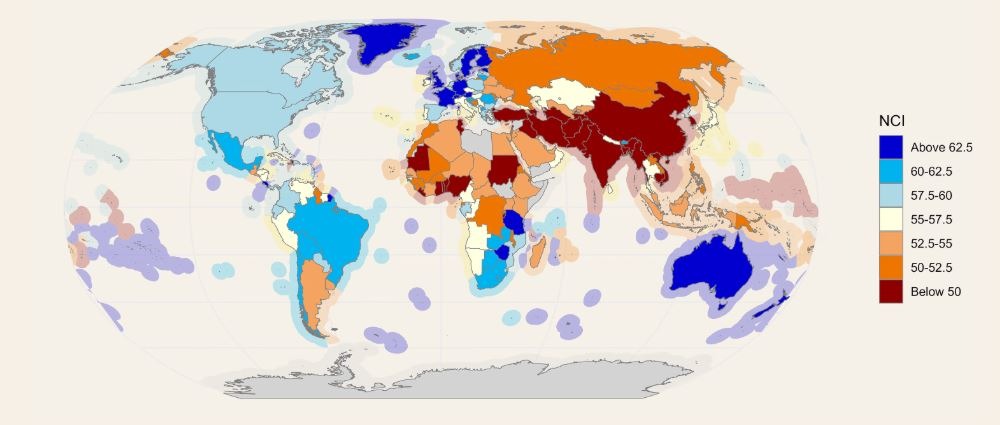
This relationship is a two-way street. Climate change drives biodiversity loss as erratic weather patterns, severe droughts, and wildfires push species past their biological limits. In turn, a degraded ecosystem loses its resilience. A forest stripped of its natural biodiversity is far more vulnerable to disease and pests, making it less able to withstand drought or prevent soil erosion during a typhoon. The NCI 2025 highlights this loop, showing us that protecting wildlife and plants is a direct investment in atmospheric stability.
Shaping National Efforts and Global Commitments
The true value of the Nature Conservation Index 2025 lies in its ability to anchor global environmental targets to national accountability. Under the international Kunming-Montreal Global Biodiversity Framework, nearly 200 countries have committed to the ambitious “30×30” goal—a pledge to protect at least 30% of the world’s land and oceans by the year 2030.
While making a global pledge is simple, implementing it at the national level is incredibly complex. Every country faces unique challenges, whether from geographic constraints, economic pressures, or gaps in governance capacity. The NCI 2025 breaks down these barriers by providing localized, structured data. It allows individual nations to pinpoint exactly where their strategies are succeeding and where they are falling short.
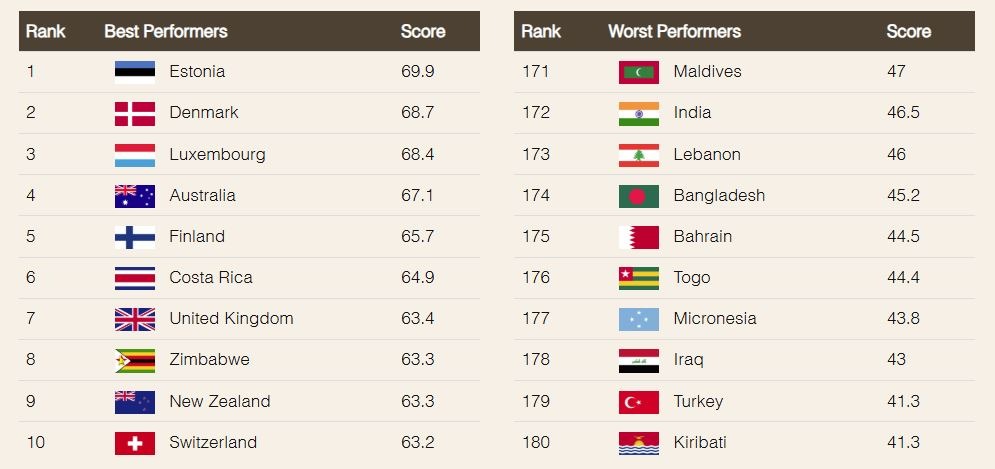
For instance, the 2025 rankings reveal that Northern and Baltic European countries—with Estonia ranking first globally at 69.9, followed closely by Denmark and Luxembourg—are leading the charge due to strong governance and a focus on ecological integrity. Meanwhile, countries facing severe habitat conversion or limited resources rank lower on the index, signaling where international support and targeted funding need to be directed.
By utilizing the NCI, a country can ensure that its climate mitigation funds are spent effectively. Instead of funding random green initiatives, governments can use NCI data to invest in restoring highly degraded areas with immense carbon-sinking potential, or in protecting areas with high BII scores that serve as irreplaceable biodiversity strongholds.
Moving From Awareness to Action
In an era frequently dominated by overwhelming and discouraging environmental headlines, the Nature Conservation Index 2025 offers a refreshing, practical perspective. It moves the conversation away from vague political promises and anchors it firmly in measurable, verifiable outcomes.
Maintaining the functional integrity of our natural world is not a luxury or an afterthought; it is the foundation of the systems that provide our air, water, food, and climate stability. The NCI 2025 provides the clarity we need to protect what remains and restore what has been lost, proving that nature remains our greatest and most reliable ally in creating a resilient future.