Exhibiting in the US for the First Time: What’s Different and How to Prepare
Entering the US exhibition market can give companies a huge opportunity to pull in fresh customers, partners, and investors. Yet, for many overseas exhibitors, their very first appearance in the United States can present unexpected challenges, mostly because the event layout, logistics, technical demands, and even the business culture can differ significantly from what they are used to. That is why preparing for an American event requires special attention to detail, from choosing a venue to insurance and equipment delivery.
Start With the Venue — Because Everything Else Follows From It
Choosing a convention center affects almost every aspect of participating in an event. It is the venue that determines the size of the exhibition stand, logistical routes, installation rules, and even the overall project budget. Many companies focus on the design of the exhibition stand, but it is the exhibition venue that sets the framework for all subsequent decisions.
It is especially important to understand the scale of American exhibition complexes. Before planning your participation, it is worth studying the largest convention center in the US and other large convention centers to realistically assess the scope of the project.
The categories of top convention centers and biggest convention centers include venues capable of simultaneously hosting tens of thousands of visitors. That is why even an experienced exhibition company needs to adapt its participation strategy to a specific facility in advance.
What’s Genuinely Different About US Trade Shows
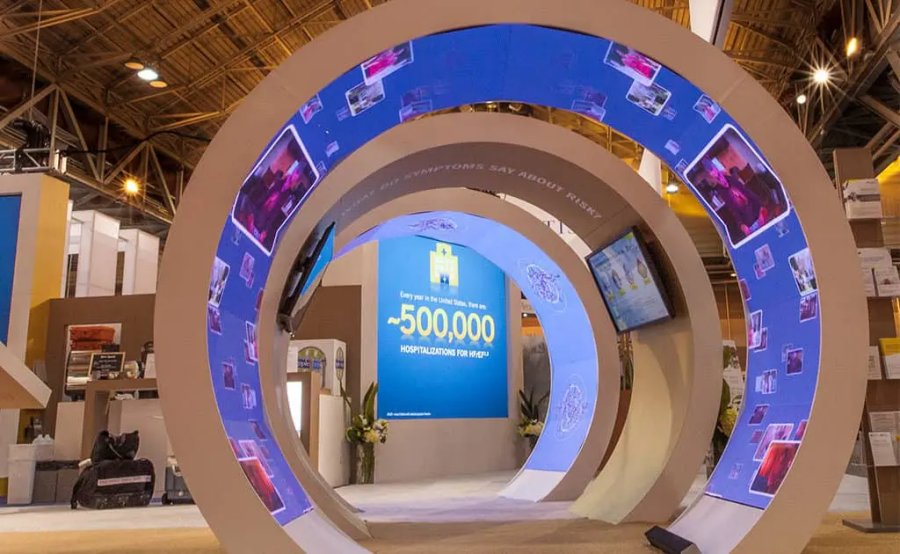
American trade shows are known for their dynamic atmosphere. Presentations, product demonstrations, competitions, interactive zones, and promotional activities are widely used. Unlike European events, where networking tends to be more restrained, in the USA, exhibitors are expected to be highly active and constantly interact with the audience.
While in Europe competitors are often grouped into themed pavilions, at American exhibitions they can be located in different parts of the hall. This requires a more thoughtful approach to the visual design of the stand.
At certain sites, company personnel are not allowed to assemble structures, connect electricity, or install carpeting on their own. Such work is performed only by certified specialists.
For a standard linear booth, a maximum height of about 8 feet is often set, which may come as a surprise to international participants.
The Logistics and Costs That Catch First-Timers Off Guard
One of the least understood costs for first-time exhibitors is drayage. This is the fee for moving exhibition materials from the unloading area to the stand.
No less important are the strict delivery deadlines. If the cargo does not arrive at the advance warehouse within the established time, it is automatically transferred for delivery directly to the site, which significantly increases costs.
Also, many exhibitors underestimate the additional fees for handling packages. Hotels and convention centers may charge a separate fee for receiving each package.
Among the costs that often come as a surprise:
- drayage;
- warehousing services;
- shipment handling;
- additional late fees;
- union services.
How to Prepare So Nothing Surprises You on Setup Day
Successful preparation begins with insurance. In most cases, local company policies do not meet the requirements of American exhibition sites. Therefore, obtaining temporary exhibitor liability insurance is essential.
In 2026, the processing time for visa applications for citizens of certain countries may be several months, so the process should be started as early as possible.
Another important decision is to work with local contractors. Experienced exhibition stand builders and a professional trade show exhibit company are well acquainted with the peculiarities of American venues, safety regulations, and local requirements. Thanks to this, the risk of errors during installation is significantly reduced, and the project can be delivered more efficiently and with fewer risks.
Proper preparation allows you to avoid most problems and maximize the value of participating in American trade shows. This is especially true when working with the best convention centers in the US and the most popular conference venues, where competition for visitors’ attention is extremely high.