

Turkey Tail for Dogs: What the Label Won’t Tell You
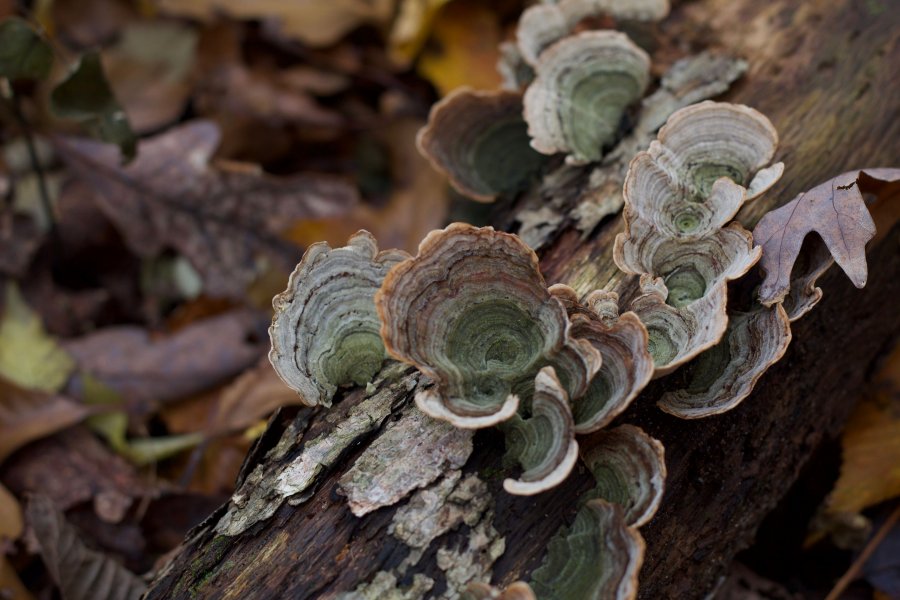
Twelve dollars. That’s the gap between the cheapest turkey tail powder on a pet aisle shelf and the bottle sitting two rows over, and most dog owners have no idea what that gap actually buys. I’ve stood in that aisle with a phone in one hand and two labels in the other, and I can tell you the front of the bottle is nearly useless. The back tells you more. What’s missing tells you everything.
Here’s the short version: turkey tail supplements for dogs vary wildly in how they’re made, what part of the mushroom ends up in the jar, and whether the dose on the label matches anything a vet would recognize. If you’re buying Turkey Tail Mushrooms for Dogs or any competing bottle, you need a way to separate a real product from decorative powder. That’s what this guide gives you: five things to check before checkout, and the reasons each one matters.
You don’t need a mycology degree. You need about four minutes and a willingness to flip the bottle around.
The part of the mushroom you’re actually paying for
A mushroom has two rough halves: the fruiting body you’d see growing on a log, and the mycelium, the root-like network underneath. Plenty of cheap supplements grind up mycelium grown on grain and call it a day. That’s not automatically dishonest, but it does mean a chunk of the powder by weight is grain, not fungus. Read the ingredient line and look for “fruiting body” as a stated source. If the label just says “mushroom powder” and nothing else, assume the cheapest interpretation until proven otherwise.
This is the first place your twelve dollars goes. A fruiting body product costs more to grow and harvest, and the difference shows up in what’s actually in the scoop.
Extraction: the step most bottles skip
Turkey tail is a tough, woody mushroom. You can’t just dry it and grind it and expect your dog’s body to do much with it. Extraction, usually with hot water, sometimes with alcohol as a second pass, pulls the compounds out of that tough cell wall. A dual-extracted product goes through both passes. A “raw powder” product goes through neither.
Flip the label and search for the word “extract.” If it’s not there, you’re buying ground mushroom, not extracted mushroom, and the dose on the back becomes close to meaningless. This is my least negotiable check. I’d rather buy a smaller bottle of a properly extracted product than a giant tub of raw powder, because the giant tub is mostly fiber your dog doesn’t need.
Does the dose on the label match the scoop?
Dosing for dogs is weight-based, and reputable makers publish a guide rather than leaving you to guess. You’ll see ranges tied to body weight, usually split into small, medium, and large dog brackets. What you want is a stated milligram amount per bracket, not a vague instruction like “sprinkle on food.”
Here’s the trap: a label can say “500 mg turkey tail extract” and still be a weak product if the extract itself is diluted. Ask what ratio the extract uses if the maker publishes it. If they won’t tell you, that’s an answer too.
The practical move is to start at the low end of the weight range for two weeks and watch how your dog handles it. Some dogs take to powders instantly. Others turn their nose up at anything that smells earthy, and you’ll need to mix it into something stronger than kibble, like a spoon of wet food or plain yogurt if your dog tolerates dairy.
Where the mushrooms come from, and why it’s on the label
Sourcing is the check most buyers skip, and it’s the one that separates careful brands from casual ones. Turkey tail grows widely in temperate forests, and a lot of it is wild-harvested. That’s fine in principle, but wild harvesting lives or dies on knowing exactly what you picked. Misidentification is a real risk in foraging, which is why the U.S. Forest Service and university extension programs treat mushroom identification as a skill, not a guess. A brand that names its harvest regions or its cultivation method is telling you it thought about this. A brand that says nothing probably didn’t.
You can also check whether the finished product was made in a facility that follows current good manufacturing practice. The FDA oversees dietary supplements under that framework, which means a maker claiming compliance is claiming something specific and checkable.
If a brand can’t tell you where the mushroom came from or how it was processed, don’t pay the premium. Buy the plain bottle and save your money.
The five-point bottle check
Run this before you add anything to your cart. It takes less time than reading reviews.
- Fruiting body named. The ingredient line says fruiting body, not just mushroom powder or mycelium.
- Extract, and ideally dual-extract. The word extract appears, and the maker explains the method.
- Milligrams per weight bracket. A real dosing guide, not a sprinkle instruction.
- Named sourcing or cultivation. A region, a method, or both.
- Third-party testing mentioned. Heavy metals and microbial testing are the two you want to see named.
Score the bottle out of five. Anything under three is a pass. I’d personally hold out for four, and I wouldn’t fault anyone for refusing to buy below five.
Powder, tincture, or capsule?
Powder mixes into food and is the easiest to adjust dose on a small dog. Tinctures go under the tongue or into the cheek and are handy for a dog that refuses anything in the bowl, though the alcohol base puts some owners off. Capsules are the tidiest and the priciest per milligram. I’d pick powder for a food-motivated dog and a tincture for a picky senior who’s already suspicious of dinner.
Store powder somewhere dry and dark. Turkey tail powder clumps fast in a humid kitchen, and a clumpy jar is a jar you’ll stop using.
A quick word on expectations
Supplement labels lean hard on the word “immune,” and it’s worth knowing what that word can and can’t promise. Under U.S. labeling rules, a supplement can’t claim to treat or prevent disease. The USDA and other agencies maintain the broader regulatory picture, but the simple version is this: a label that promises to cure something is telling you it doesn’t respect the rules, and that’s a bad sign for everything else on the bottle too.
What you’re buying is support, and support is a reasonable thing to want. Just don’t buy hope at a premium.
The takeaway you can act on tonight
The bottle in your hand either names its fruiting body, explains its extraction, gives you a real dose, and tells you where the mushroom grew, or it doesn’t. You now know which questions to ask and which answers are non-answers. That’s the whole game, and it’s a game you can win in the aisle.
So flip the next bottle around. What does the back actually say, and would you pay full price for it?