Why Industrial Reliability Matters for Panama’s Ports, Energy Projects, and Heavy Industry
Panama is often discussed through ships, canal revenue, port expansion, and trade routes. Yet behind that larger story sits a quieter question: can the equipment keep working when pressure, heat, salt air, vibration, and tight schedules all meet in the same place? For ports, energy sites, fabrication yards, fuel systems, and heavy industrial facilities, reliability begins long before a visible breakdown, which is why many operators include heat treatment services in a wider plan for welded components, piping, pressure equipment, and other metal assets exposed to demanding conditions. Panama’s ports moved about 9.9 million TEUs in 2025, up 3.6% from the previous year, while the Panama Canal reported FY2025 revenue of about $5.7 billion and 13,404 vessel transits. Those numbers say one thing clearly: when activity grows, equipment gets less room for error.
Panama’s Growth Depends on Equipment That Holds Up
Panama’s logistics position gives the country a rare advantage, but it also raises the cost of weak maintenance. It can affect cargo timing, fuel movement, repair crews, inspection schedules, and client confidence. In a service economy tied so closely to movement, downtime is never just a technical problem. It becomes a commercial problem almost immediately.
This is especially true after the canal’s recovery from drought-related restrictions. Higher transits and stronger revenue are good signs, but they also point to heavier use of connected infrastructure. More vessel movement means more pressure on terminals, supporting facilities, storage systems, repair operations, and industrial contractors. For operators, the practical point is simple enough: growth does not reduce stress on equipment. It usually increases it.
Where Metal Problems Turn Into Business Costs
Industrial assets often fail in small, unglamorous ways. A welded area may retain stress after repair. A line may need controlled preheating before work begins. The ship may need certain procedures after welding before it resumes operations. This does not sound serious at all on paper, but when it comes to finances, missing out on any of these may prove very costly indeed.
The real cost is rarely limited to one part. Labor gets rescheduled. Contractors wait. Equipment sits idle. A planned repair turns into a longer stoppage. In port and energy settings, even a short delay can create pressure across several teams because many jobs depend on one another. That is why serious maintenance planning looks beyond whether something can be fixed. It asks whether the fix will hold, whether the metal will behave predictably after welding, and whether the asset can return to service without creating another problem later.
What Heat Treatment Adds to Industrial Maintenance
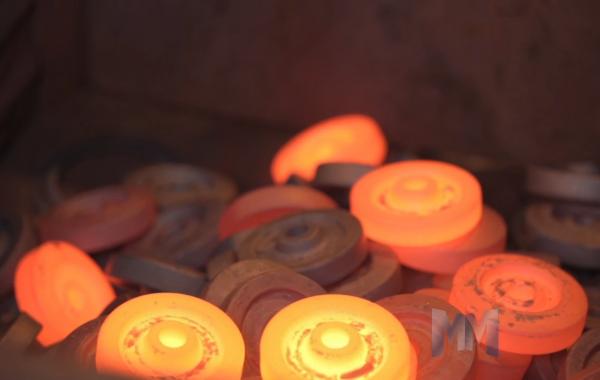
Heat treatment is easy to misunderstand if it is viewed only as a factory process. In heavy industry, controlled heating can also happen on-site, around equipment that is too large, too costly, or too inconvenient to move. The goal is not cosmetic. It is about changing how metal responds after welding, repair, or prolonged service under pressure.
In practical maintenance terms, this can help with:
- reducing harmful residual stress after welding;
- lowering the chance of cracking in high-load areas;
- preparing certain components for inspection;
- supporting pressure equipment that must meet strict requirements;
- keeping large assets in place instead of sending them away for shop work.
This is where a provider such as Axiom HT fits into the wider industrial picture without needing to be the center of the story. The useful part is the method itself: controlled heating, documentation, technician experience, and work that supports the larger maintenance plan. For Panama’s industrial operators, that type of service becomes more relevant as facilities handle larger volumes, tighter schedules, and more complex energy-related work.
Why On-Site Work Matters for Large Assets
Moving a large industrial component is not like sending a small part to a workshop. It can require lifting plans, transport permits, isolation work, extra safety checks, and more downtime than the repair itself. In some cases, the asset is built into a system that was never meant to be removed quickly. On-site heat treatment changes that calculation because technicians bring the equipment to the job rather than forcing the asset to leave the facility.
That matters in port corridors, industrial zones, ship-related services, and energy sites where space and timing are limited. A maintenance team may have only a narrow window between operations. An inspection crew may need documentation before approving the next step. A project manager may be trying to avoid a delay that grows from hours into days. On-site work does not remove the need for planning. It simply gives industrial teams a better way to manage repairs without turning every metal issue into a logistics project.
The benefit is especially clear for welded piping, pressure vessels, tanks, and heavy fabricated components. These assets often sit at the center of larger systems. When they are out of service, other equipment may also be unable to operate. Treating them in place can protect the schedule while still giving engineers the temperature control and records needed for responsible maintenance.
Energy Projects Raise the Standard for Reliability
Panama’s industrial future is not only about shipping containers. Energy is becoming a larger part of the country’s infrastructure conversation. The planned interoceanic gas pipeline and energy corridor, launched as part of a wider Canal strategy, is expected to move through concessionaire selection by the fourth quarter of 2026. That kind of project does more than add another asset to the map. It raises expectations for fabrication, welding, pressure systems, inspection, and long-term maintenance.
New energy infrastructure also sits beside existing needs. Fuel handling, power generation, repair yards, storage facilities, and supporting industrial services all depend on metal systems that must perform under stress. For Panama to assert its relevance in international business and energy logistics, machine dependability is one factor that can play a part in the country’s competitiveness. This refers to the extent to which investors and operations are assured of machinery being reliable, having controlled downtime, and preventive maintenance.
The Real Value Is Fewer Surprises
Industrial reliability rarely gets attention when everything works.This is exactly the idea. Maintenance that is done best tends to be the kind that avoids a story or a failure to deliver something on time, or even a rushed job due to some inspection failure. In Panama, where everything is so interconnected, less surprise could mean greater efficiency.
The country’s recent port and canal figures show momentum. Keeping that momentum requires more than expansion plans and public investment. It requires disciplined care for the physical systems that carry the work every day: welds, pipes, vessels, tanks, and fabricated structures. When those systems are treated as business-critical assets rather than background details, industrial growth becomes easier to sustain.