The Moment People Realize Chocolate Begins as Fruit
By Lyn Bishop
Founder, Quetzal Cacao
Certified Organic Cacao Estate, Panama
Under the Cacao Trees
At the end of April, during a small hands-on chocolate workshop on our farm in the lowland jungle of Chiriquí, we walked beneath the cacao trees searching for a ripe pod.
It was one of those clear mornings where everything felt alive. The green of the trees stood sharply against the blue sky while birdsong moved through the orchard as we followed the paths between the cacao. Everyone in the group already loved dark chocolate, but very few had seen cacao growing on a tree before.
We eventually found a pod blushing from green to yellow and hanging low enough to reach by hand.
I picked it carefully and handed it to one of the guests, guiding her toward a large rock nearby where she could break it open. When the shell cracked apart, the entire group leaned in immediately. The look on her face as she split the pod open was priceless.
Inside was not what she expected. The color was not brown, the seeds were not dry, and nothing about it resembled chocolate. Instead, the pod was filled with slippery white fruit wrapped around large seeds.
Sami reached for one first.
She placed the fruit-covered seed in her mouth and paused. A few others quickly followed, tasting fresh cacao pulp for the first time while trying to describe it. Some tasted mango, others pineapple or lychee.
And that is often the moment everything changes because most people never see, much less taste, this part. Chocolate usually arrives wrapped and finished, already transformed into bars, desserts, candies, and drinks.
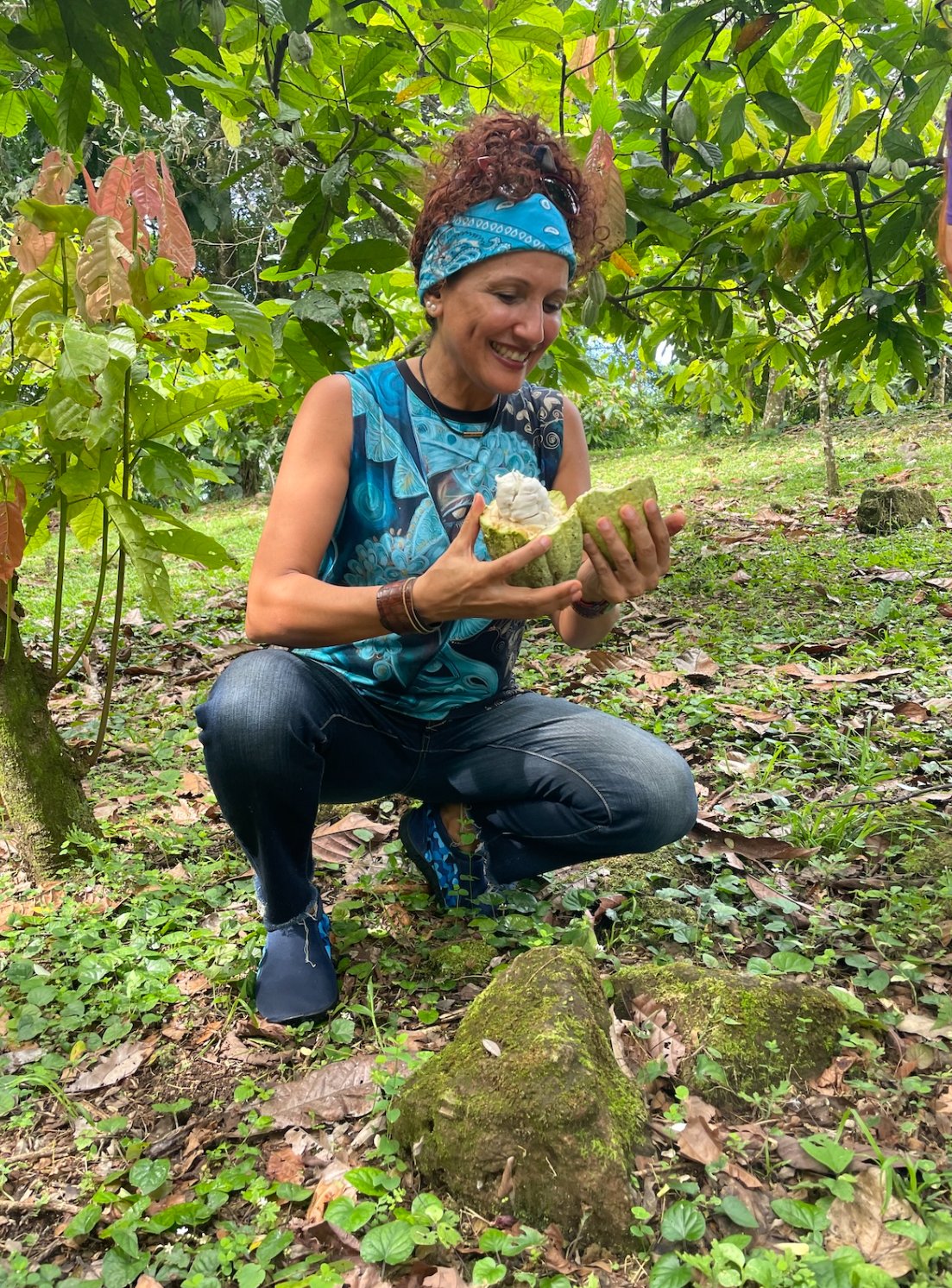
Chocolate Begins Here
As we continued walking through the farm, we talked about fermentation, the stage where fresh cacao seeds slowly begin transforming from fruit into something recognizable as chocolate.
After the pods are opened, the seeds and fruit pulp are gathered together and allowed to ferment naturally over several days. Yeasts and microbes feed on the sugars in the fruit, heat rises within the cacao, and the flavor begins changing from something bright and tropical into something deeper and more complex.
The flavor of chocolate begins long before roasting or grinding, in the fruit itself, the fermentation, and the countless small decisions made during harvest and drying.
Many people discover during these workshops that chocolate is far closer to agriculture than they imagined. Once you have stood beneath the trees, tasted the fresh fruit, and smelled fermentation beginning to unfold, it becomes difficult to think of chocolate as something that simply appears fully formed from a factory.
Fire, Smoke, and Stone
Later, we moved into the back terrace of the cacao casita where the next stage of the workshop began.
A small fire had already been prepared in the fogón outside, and before long the aroma of roasting cacao began filling the air. Rich, warm, and deeply chocolaty, the aroma drifting through the casita reminded several people of brownies baking in the oven.
Everyone gathered close as we toasted the beans over the fire, continuously stirring them slowly to keep them from burning while the aroma deepened around us.
Then came one of my favorite parts of the day.
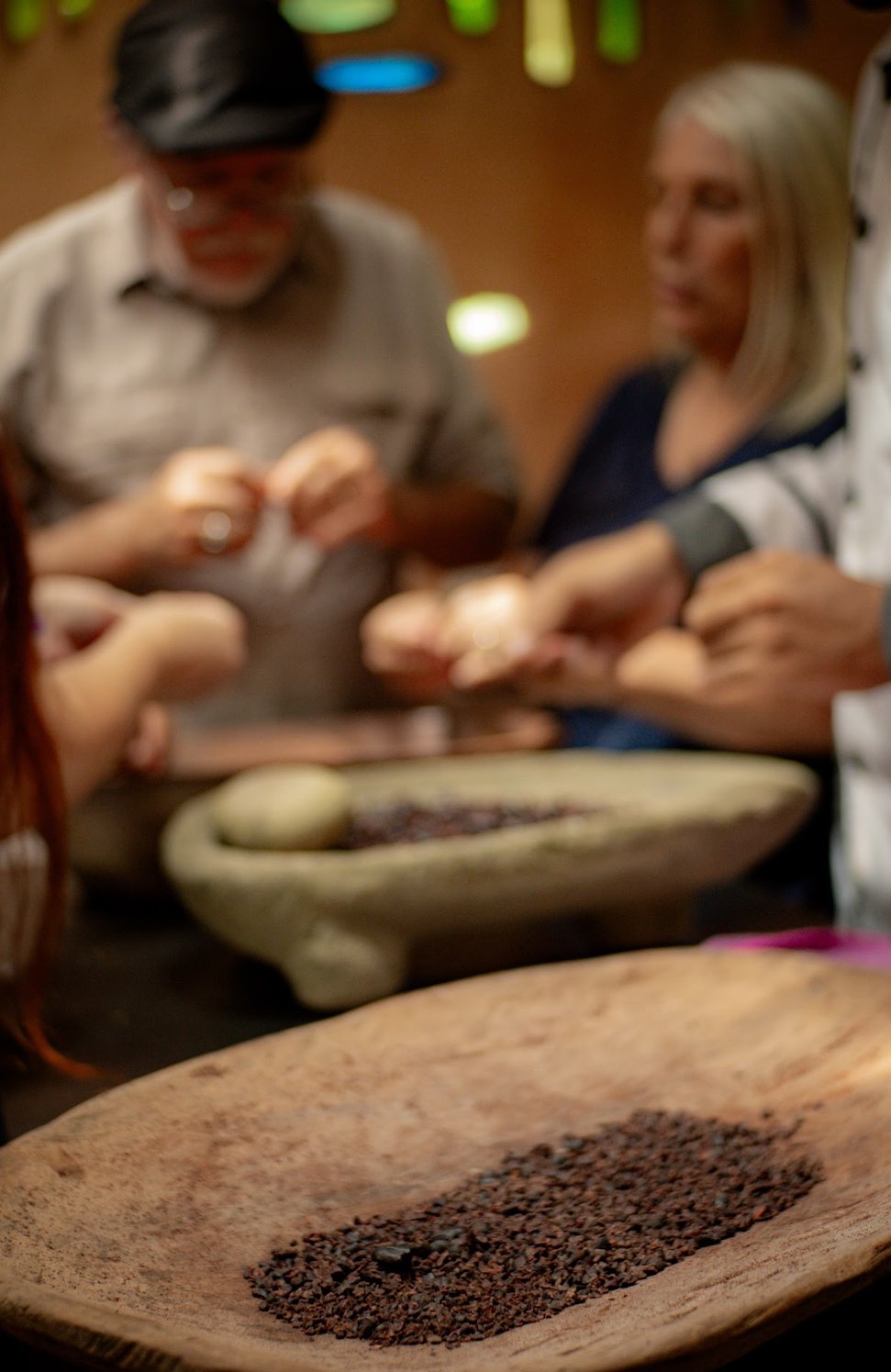
It reminded me of my time studying with the grandmothers in Oaxaca, where we would sit together around the table cracking and peeling roasted cacao beans by hand while stories and conversation unfolded naturally around us. Slow repetitive work with the hands changes the energy of a group. Conversations deepen while community strengthens quietly around the table.
The roasted cacao beans were still warm and, when pressed between the fingers, crushed easily into intensely fragrant nibs. It is nothing like the sweet chocolate most people are used to tasting. Our hands became dusty with bits of shell while conversation mixed with the steady whirl of the melanger, slowly grinding roasted nibs into liquid chocolate between stone wheels.
Earlier that morning we had been discussing tropical fruit and fermentation beneath the trees. Now everyone was participating in the transformation itself.
The Alchemy of Tempering
As the chocolate continued refining in the melanger, we moved into the tempering stage using chocolate liquor that had already completed the refining process. Tempering is one of the most delicate parts of chocolate making, where the chocolate is carefully raised, lowered, and raised again through a series of temperatures that create the shine, snap, and structure of a finished bar.
During the workshop, John smiled quietly and said, “I didn’t realize there was so much alchemy in the process.”
The word stayed with me because chocolate making often feels exactly like that, a balance of science, intuition, rhythm, attention, and care.
By the end of the afternoon, everyone had the chance to pour liquid chocolate into molds and top them with inclusions like raisins, nuts, nibs, and salt. They designed their own packaging, wrapped the finished bars carefully, and carried them home at the end of the day.
Somewhere along the way, the experience of chocolate had shifted, not because anyone had been instructed to change their thinking, but because they had experienced the process directly with their own hands.
Tasting Chocolate Differently
What I continue noticing during these workshops is that people begin paying attention in a new way once they understand where chocolate actually begins.
When you realize cacao is a fruit, when you smell fermentation warming in the air, and when you roast beans over fire and crack them open by hand, chocolate stops feeling disconnected from the land that produced it.
You begin noticing things that once felt hidden, the fruit, the brightness, the long finish that lingers after the chocolate melts away. Even the texture and snap of dark chocolate begin to feel connected to everything that happened long before the bar existed. If you have chocolate at home, you might try something simple tonight.
Break off a small piece and allow it to melt slowly before chewing. Notice what appears first, whether it is fruit, warmth, bitterness, flowers, earth, or something else entirely. Then notice how long the flavor lingers after the chocolate has disappeared.
Most of us were never taught to taste chocolate this way, but once you experience cacao closer to its source, it becomes difficult to think about it quite the same way again.
If you would like to stay close to the rhythms of the farm, workshops, seasonal chocolate releases, and the ongoing story unfolding here beneath the cacao trees, you are warmly invited to visit:
lynbishop.com/hearth
—
Lyn Bishop grows cacao at Finca Las Heliconias in Chiriquí Province, Panama, where she founded Quetzal Cacao, an organic tree-to-bar chocolate brand.