A Truck Bringing in ‘Caliche’ Near Tocumen Airport is Detained by the Ministry of the Environment
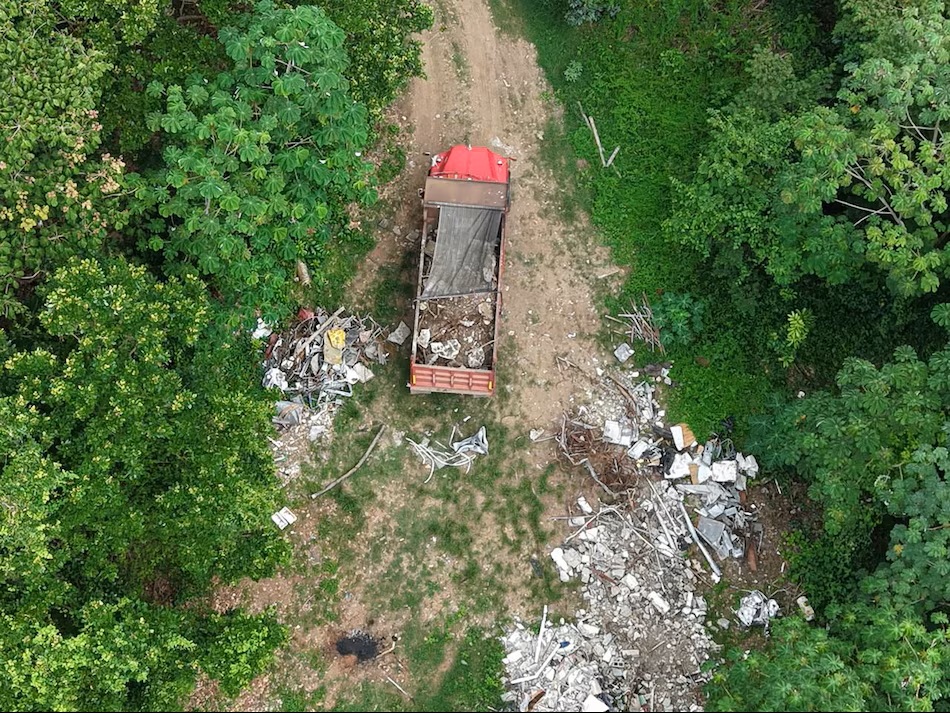
Technicians from the Ministry of Environment and Environmental Police units detained a dump truck under environmental surveillance that was bringing caliche-type material to a site near Tocumen International Airport.
Caliche is a whitish-gray or cream-colored sedimentary layer found in arid and semi-arid regions. It forms when groundwater dissolves calcium carbonate and re-precipitates it, cementing sand, clay, gravel, and silt together into a hardened, rock-like deposit just beneath the topsoil.
Key Characteristics & Impacts
- Appearance: Ranges from a soft, chalky powder to an incredibly dense, solid layer (often called “hardpan” or “calcrete”).
- Agricultural Headache: Because it forms a concrete-like barrier, caliche prevents water drainage and blocks plant roots from growing deep into the earth. Gardeners in the American Southwest typically must break through or amend this layer to grow plants.
- Construction & Industry: It is frequently quarried and crushed for use as an unpaved road base, or processed to make quicklime and Portland cement.
Regional Variations
- North America: In the U.S. Southwest (e.g., Arizona, Texas, Nevada, New Mexico), it commonly refers to these hardened calcium carbonate soil crusts.
- South America: In the Atacama Desert of Chile, caliche refers to nitrate-bearing mineral ores historically mined for fertilizers and gunpowder.
For tips on dealing with or gardening in these deposits, check out the New Mexico State University Extension Guide or learn more about engineering and building around these soils at GeoKansas.