There are Major Structures that Dominate the Criminal Landscape in Panama
According to the police, behind the 121 identified groups there are eight main currents that function as superior structures.
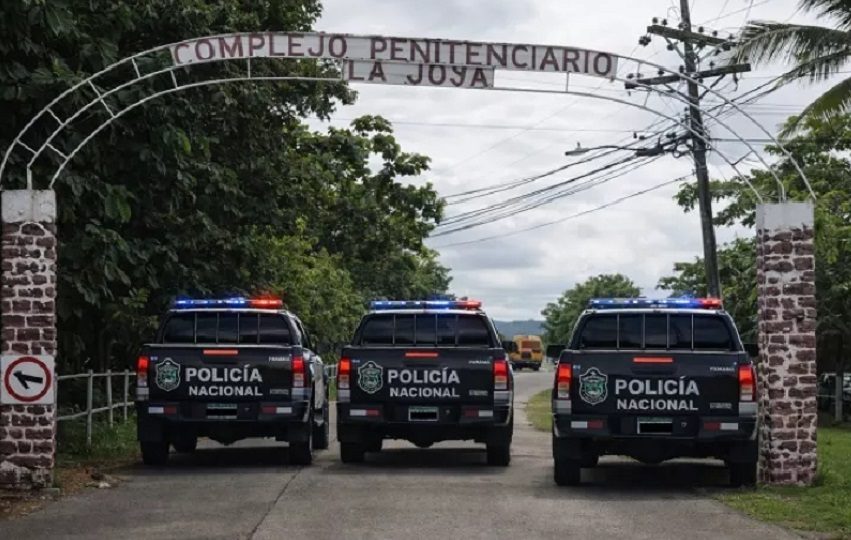
Panama’s criminal landscape is dominated by two massive rival federations, Bagdad and Calor Calor. Rather than traditional cartels, Panamanian organized crime operates primarily as territorial street networks (pandillas) that manage local drug distribution, extortion, contract killings, and provide logistics for international cartels.
The Two Dominant Gang Federations
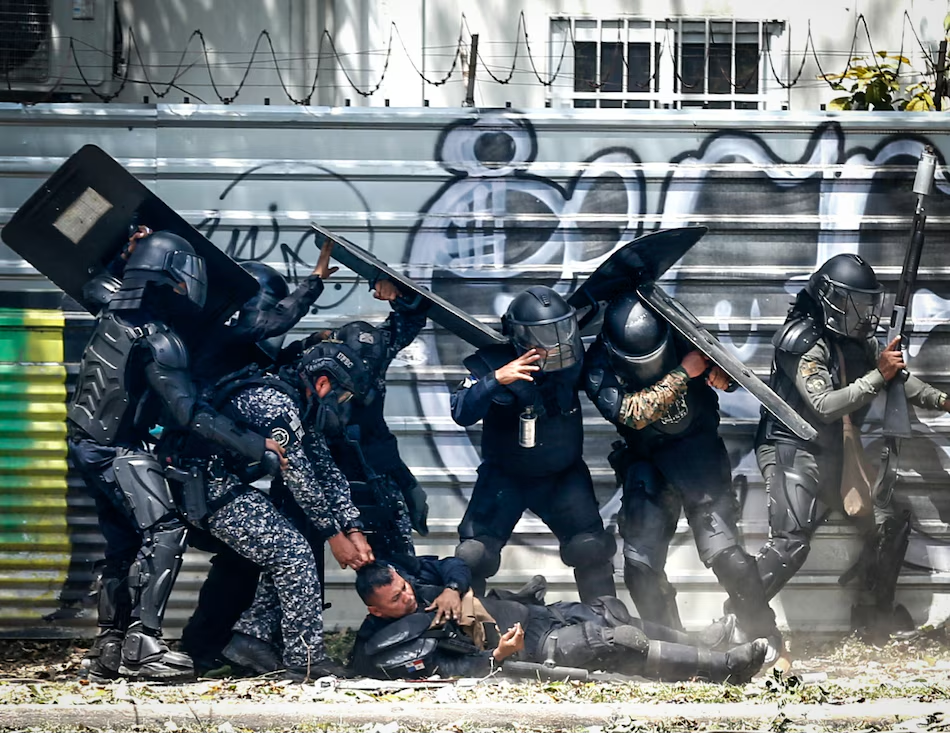
- Bagdad: Originating in the El Chorrillo neighborhood of Panama City, this is one of the largest syndicates in the country. It acts as a federation of 30 to 40 smaller gangs, controlling substantial cocaine shipments along the Pacific coast and charging logistical fees to larger trafficking organizations.
- Calor Calor: Formed as a direct rival to Bagdad by gangs attempting to push back against the syndicate’s monopoly. They are heavily involved in micro-trafficking, container contamination at port facilities, and prison-based extortion rackets.
Fragmented, Cartel-Linked, and Local Gangs
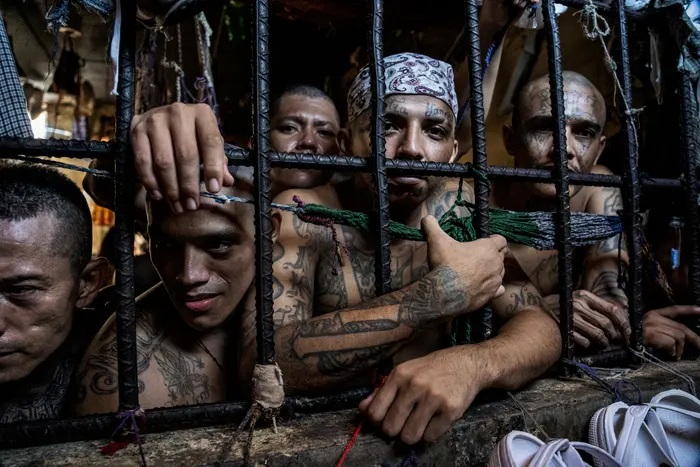
While Bagdad and Calor Calor are the largest, the criminal landscape has become increasingly fragmented with the emergence of smaller, highly organized, cartel-linked groups.
- HP: A prominent group that holds significant territorial and trafficking control in East Panama.
- Los Galleros: Known for operating independently in the Azuero region while maintaining direct ties with Colombian and Mexican cartels.
- Los Cofos Time: Another key local actor that has assumed significant territorial dominance and operational independence.
Transnational Organizations
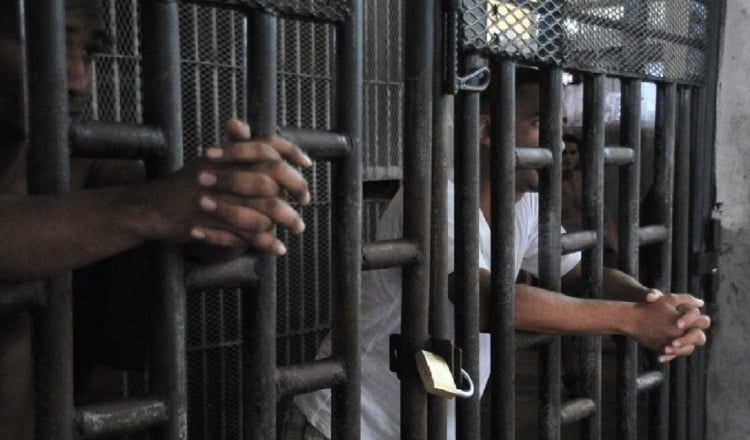
Panama’s strategic location makes it a primary transit country for cocaine moving from South America to the United States and a hotbed for money laundering via its secretive financial sector.
- Mexican Cartels: Groups like the Sinaloa Cartel maintain a strong logistical presence to protect and expedite their drug shipments moving through the isthmus.
- Colombian Traffickers: Groups such as the Clan del Golfo and remnant dissidents operate in and around the Darién Gap, facilitating the movement of illicit goods and engaging in the extortion of migrants.
For localized, city-by-city breakdowns of gang territories and crime statistics, consult the Global Organized Crime Index for Panama or the InSight Crime Panama Profile for continuous updates on their evolving structures.
The Transformation of Gangs: From the Barrio to the Drug Cartel
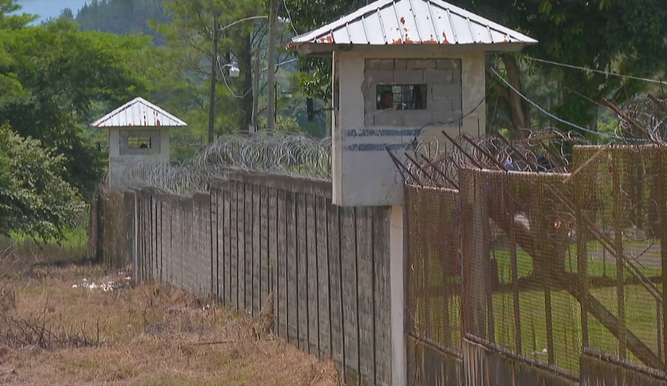
According to authorities, there are eight major criminal networks associated with contract killings, drug trafficking, container contamination, and control of maritime routes. The National Air and Naval Service (SENAN) has identified six maritime routes used by drug trafficking networks to move drugs through Panama to markets in Europe and the United States. The evolution of localized street gangs into transnational drug cartels represents a shift from territorial, neighborhood-based defense to highly organized, profit-driven corporate syndicates. This transition fundamentally changes both the structural dynamics of organized crime and the communities these organizations control.
1. From Territorial Defense to the Criminal Economy
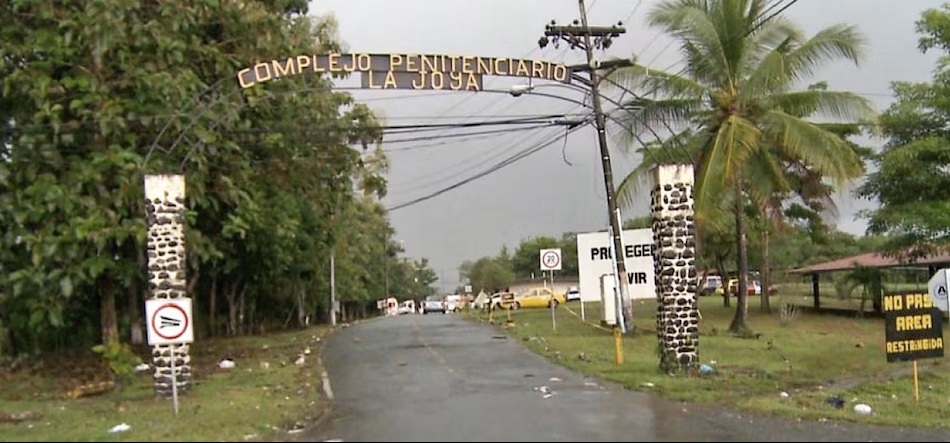
- Historical Origins: Street gangs largely began as social, neighborhood-centric groups—often formed in marginalized communities or “barrios”—to protect local turf and provide a substitute family.
- Economic Corporatization: The introduction of crack cocaine in the 1980s and the expansion of illicit drug markets proved highly lucrative, driving a shift in gang priorities away from basic territorial control toward illicit revenue generation.
- Transnational Reach: Many local gangs matured into sophisticated syndicates, expanding their operations from localized street corners to international smuggling, human trafficking, and money laundering.
2. The Barrio-to-Cartel Pipeline
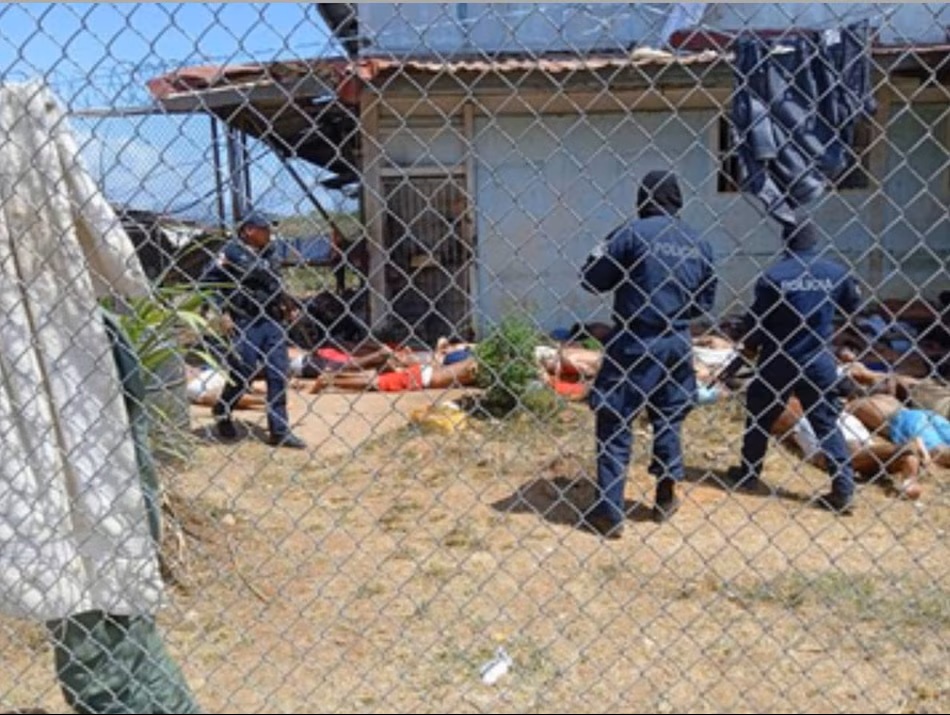
- Criminal Labor: As larger cartels expanded their influence, they required local “criminal labor” and began coopting street gangs to act as street-level distributors or hitmen (sicarios).
- Hybrid Gangs: In many regions along the US-Mexico border, this relationship gave rise to powerful “prison-barrio-cartel hybrids.” Groups like Barrio Azteca evolved from basic prison factions into cross-border syndicates that act as direct extensions of major drug cartels.
3. Altered Neighborhood Dynamics
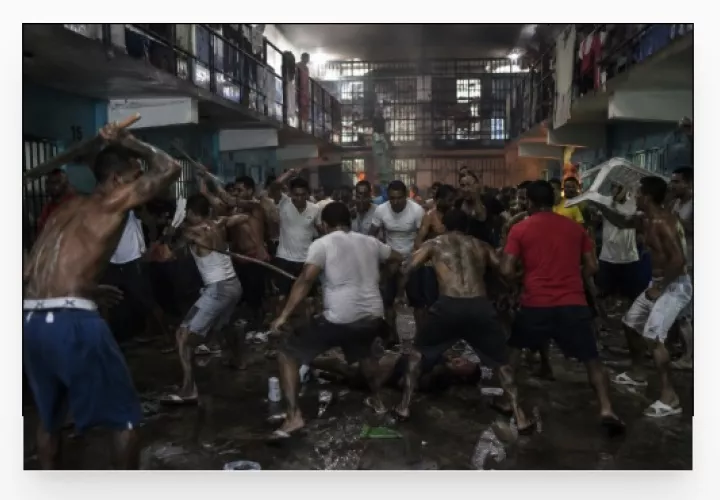
- Protective Social Base: The power dynamic in inner-city neighborhoods and marginalized barrios frequently changes once a gang reaches cartel status. Local communities often become dependent on the gang for social and financial support, turning these areas into a protective “social base” against law enforcement.
- Violence and Governance: Central American gangs like MS-13 and Barrio 18 evolved into massive extortion rackets and organized crime forces that effectively govern entire territories and shape local security dynamics.
- Macro-Level Conflict: As these local groups escalate into powerful organizations, the territorial disputes that once involved a few city blocks morph into brutal cartel turf wars.
Sociologists studying inner-city gang transitions highlight that this evolution is directly tied to a history of structural marginalization, poverty, and local disinvestment. Research regarding modern, community-level gang dynamics in places like Chicago and Central America can be further explored through platforms like Harvard’s ReVista.
How Drug Trafficking Operates on the Coasts of Panama: Critical Routes
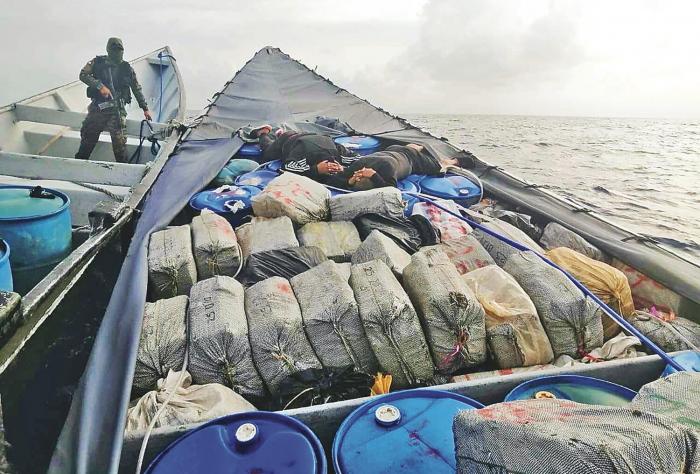
The National Maritime Service (Senan) maintains operations in areas considered critical through which boats from Colombia carrying drugs usually pass.
Drug trafficking on Panama’s coasts operates primarily through a dual-coastal system of maritime corridors and port infiltration, with the Caribbean province of Colón recently overtaking the Pacific as the primary zone for high-volume seizures bound for Europe. Operations are driven by transnational cartels from Colombia and Mexico who exploit Panama’s status as a global logistics hub, utilizing the Panama Canal, six major container ports, and remote archipelagos like the Las Perlas Archipelago for storage and redistribution.
Critical Maritime Routes
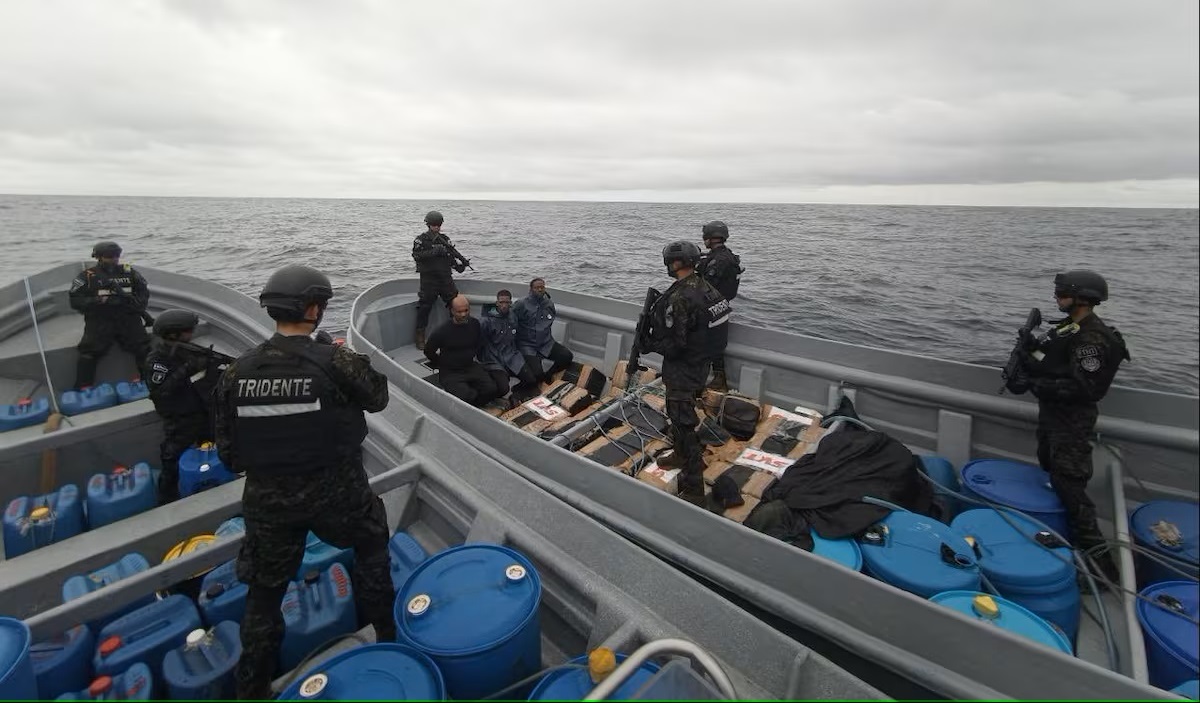
- The Caribbean Corridor (Colón): This is the most active route for shipments destined for Europe (notably Belgium, Spain, and France). Traffickers frequently “contaminate” legitimate cargo containers at major terminals like the Colón Container Terminal and Cristóbal with cocaine hidden in exports like fruit, charcoal, or furniture.
- The Pacific Corridor: Traditionally used for northbound shipments toward the United States and Mexico. In late 2025, authorities intercepted a record 13.5-ton cocaine haul from a Colombian tugboat in Pacific waters, highlighting the massive scale of individual shipments on this route.
- The “Atlantic Cocaine Highway”: Large “mother vessels” collect drugs in Latin American waters and move them into international waters, where high-speed craft perform mid-ocean transfers to avoid coastal detection.
Key Operational Hubs
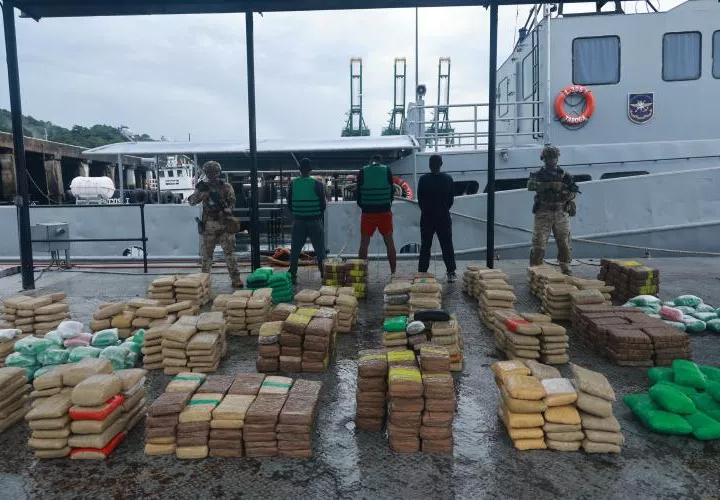
- Las Perlas Archipelago (Pacific): Consolidating as a strategic enclave, islands such as Isla San José and Isla del Rey serve as logistical hubs for transshipment via go-fast boats and concealed offshore storage.
- Major Ports: According to El País, six key ports handle the majority of trafficking activities:
- Pacific Coast: Balboa, PSA, and Almirante.
- Atlantic Coast: Colón Container Terminal, Manzanillo, and Cristóbal.
- The Darien Gap: While primarily a land route, it functions as a feeder for coastal operations. “Mules” carry up to 25kg (55 lbs) of cocaine through the jungle to coastal transfer points in Guna Yala or Colón.
Trafficking Methods (2025–2026)
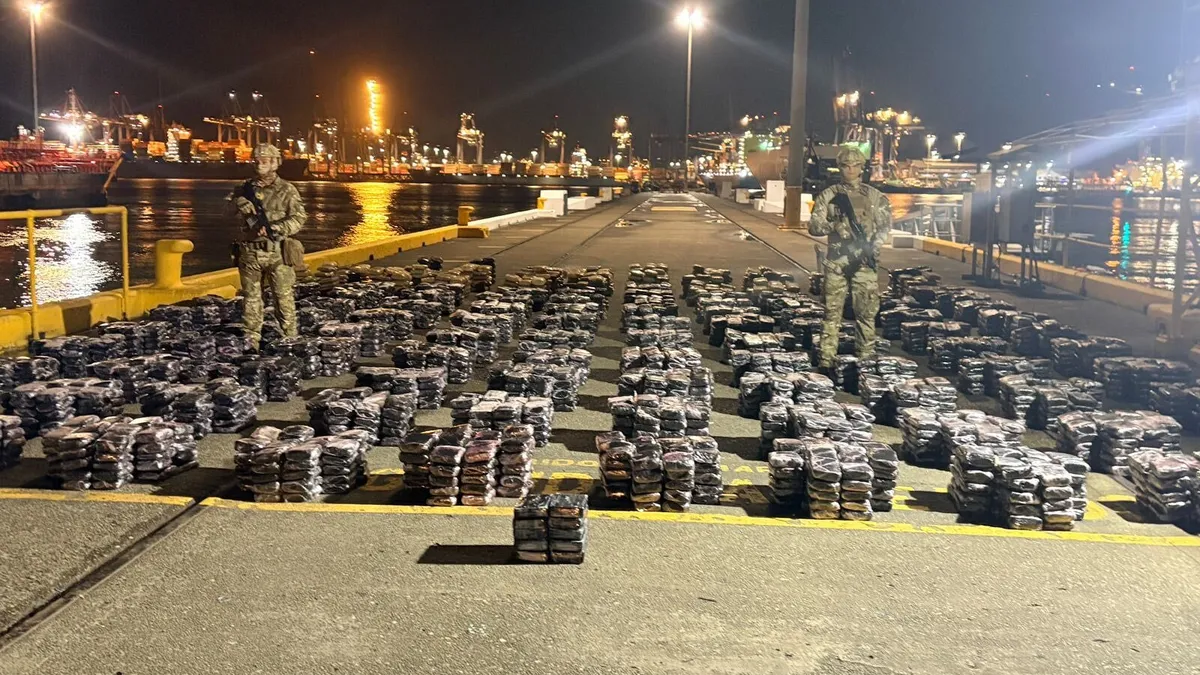
- Container Infiltration: Local gangs, such as those in Colón, bribe port workers (known as “cuadrillas”) to hide drugs in container walls or false bottoms.
- Stealth Vessels: Smugglers use a mix of go-fast boats, fishing vessels as facades, and semi-submersibles. Recent reports from Windward note that up to 70% of small craft near deep-water terminals operate with their Automatic Identification Systems (AIS) turned off to remain invisible to conventional monitoring.
- Offshore Drops: Drugs are sometimes left at sea with GPS trackers to be retrieved later by vessels bound for international markets.