Should Chocolate Taste the Same Every Time?
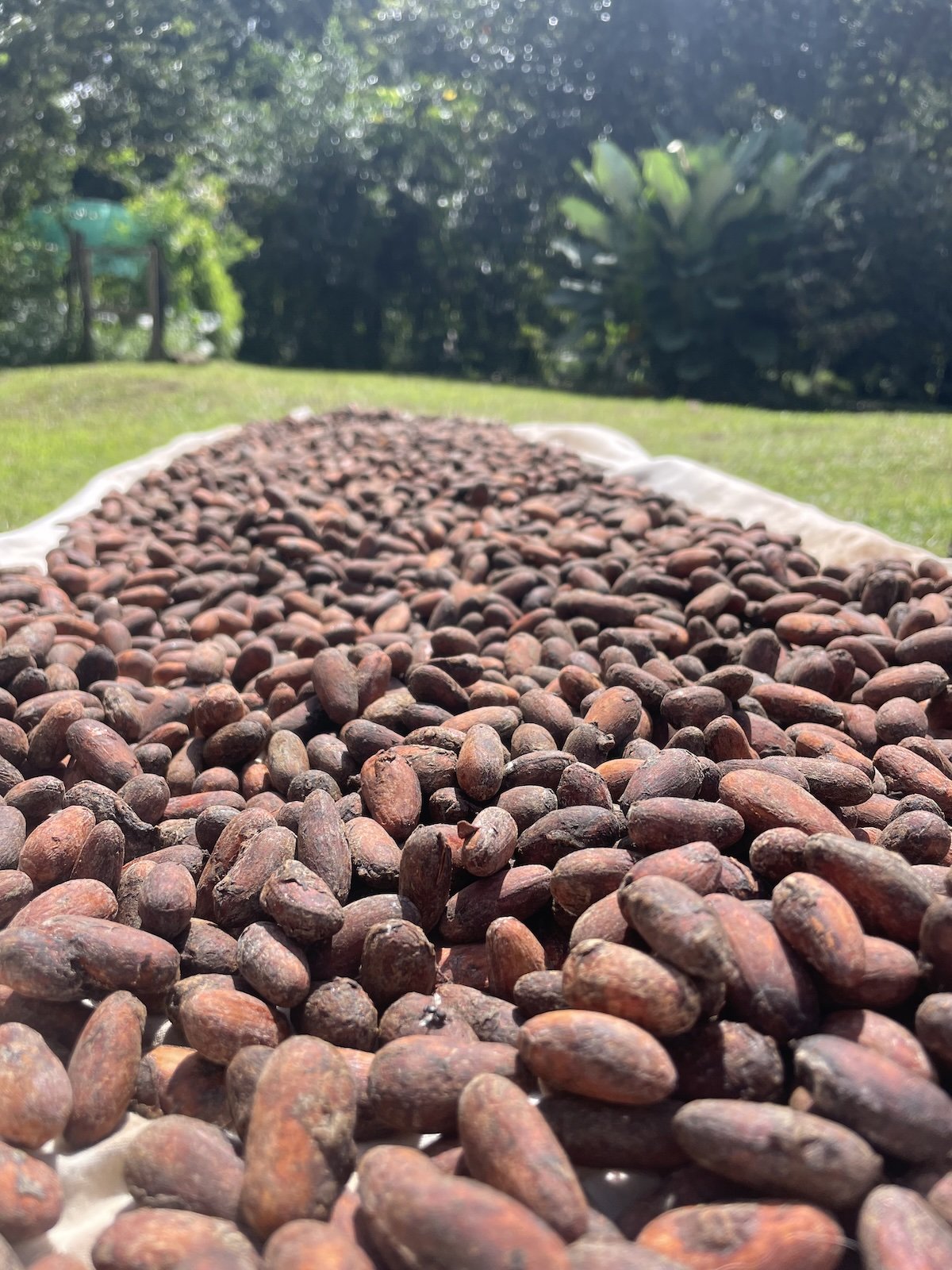
Cacao drying at Finca Las Heliconias in Chiriquí, Panama.
By Lyn Bishop
Founder of Quetzal Cacao
Finca Las Heliconias, Chiriqui, Panama
When Familiar Cacao Tastes Different
When you grow cacao and make chocolate from it yourself, you become familiar with its character in a way that is difficult to separate from the farm itself. You know which trees produced the fruit, how the season unfolded, how the fermentation behaved, and how the beans dried before they ever reached the chocolate kitchen.
This year, as I have tasted cacao from one fermentation to the next at Finca Las Heliconias in Chiriquí, some batches have seemed softer and earthier, while others have been brighter and more lively on the palate. They are recognizably ours, but they are not copies of one another.
Most of us have been taught that consistency is one of the signs of a good product. If we find a chocolate we love, it seems reasonable to expect the next bar to taste exactly the same. The longer I grow cacao, however, the more I question whether sameness is always the right measure for chocolate made from traceable cacao.
Chocolate Begins on the Farm
Chocolate made from traceable cacao begins on a farm, where weather, ripeness, tree health, and the timing of a harvest are never repeated in quite the same way.
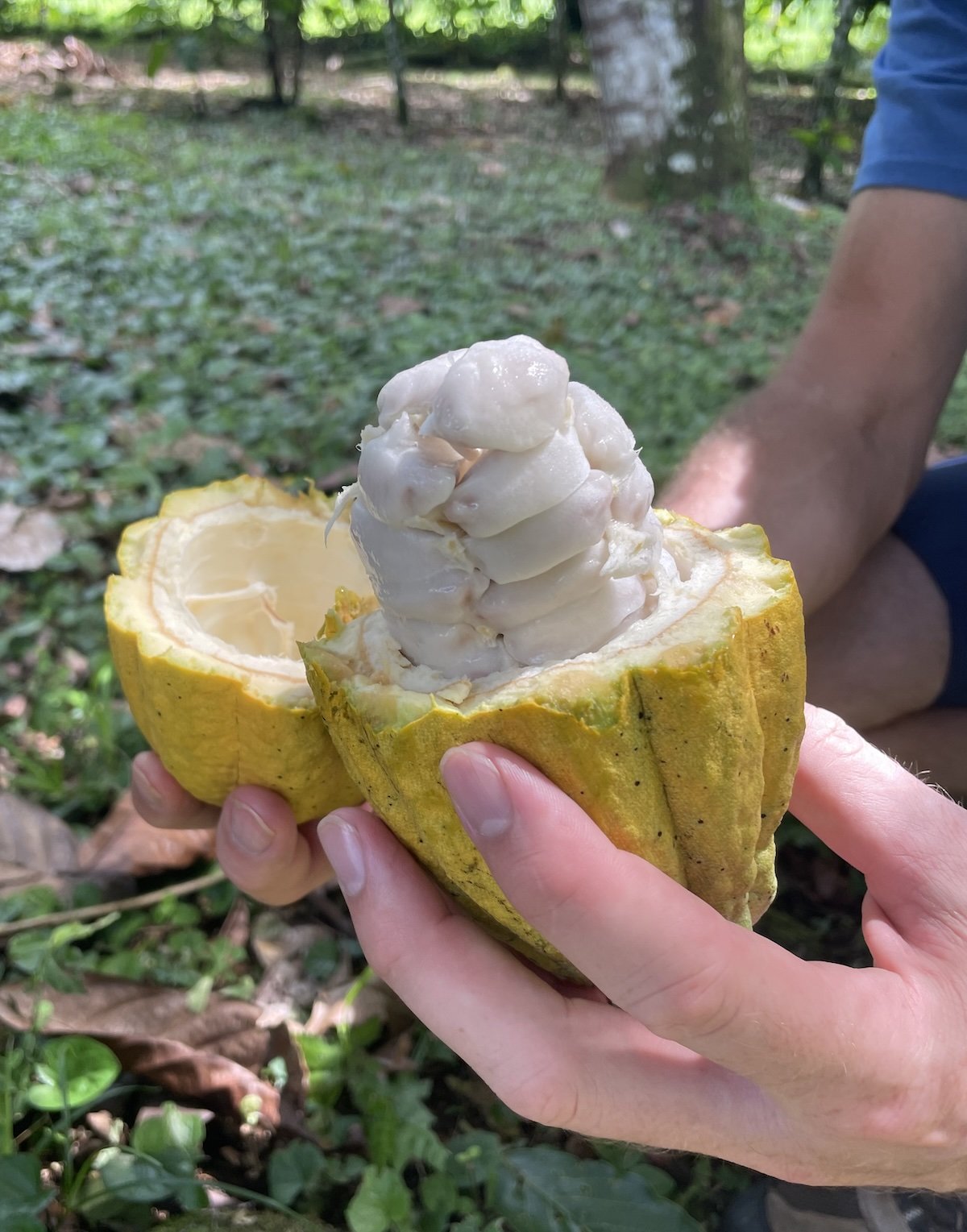
At Finca Las Heliconias, cacao grows under a tropical canopy alongside the rest of our organic farm. Rainfall changes, sunlight shifts through the year, and some trees carry heavier crops than others. By the time we harvest ripe pods, the cacao has already passed through months of conditions that will not be repeated exactly.
After harvest, we ferment the fresh cacao and pay attention to how the temperature rises, how the aroma develops, and how the texture of the beans changes over several days. Drying requires another kind of care. If beans dry too quickly, the outside can harden before moisture has moved evenly from the center of the seed, trapping moisture inside and creating problems later.
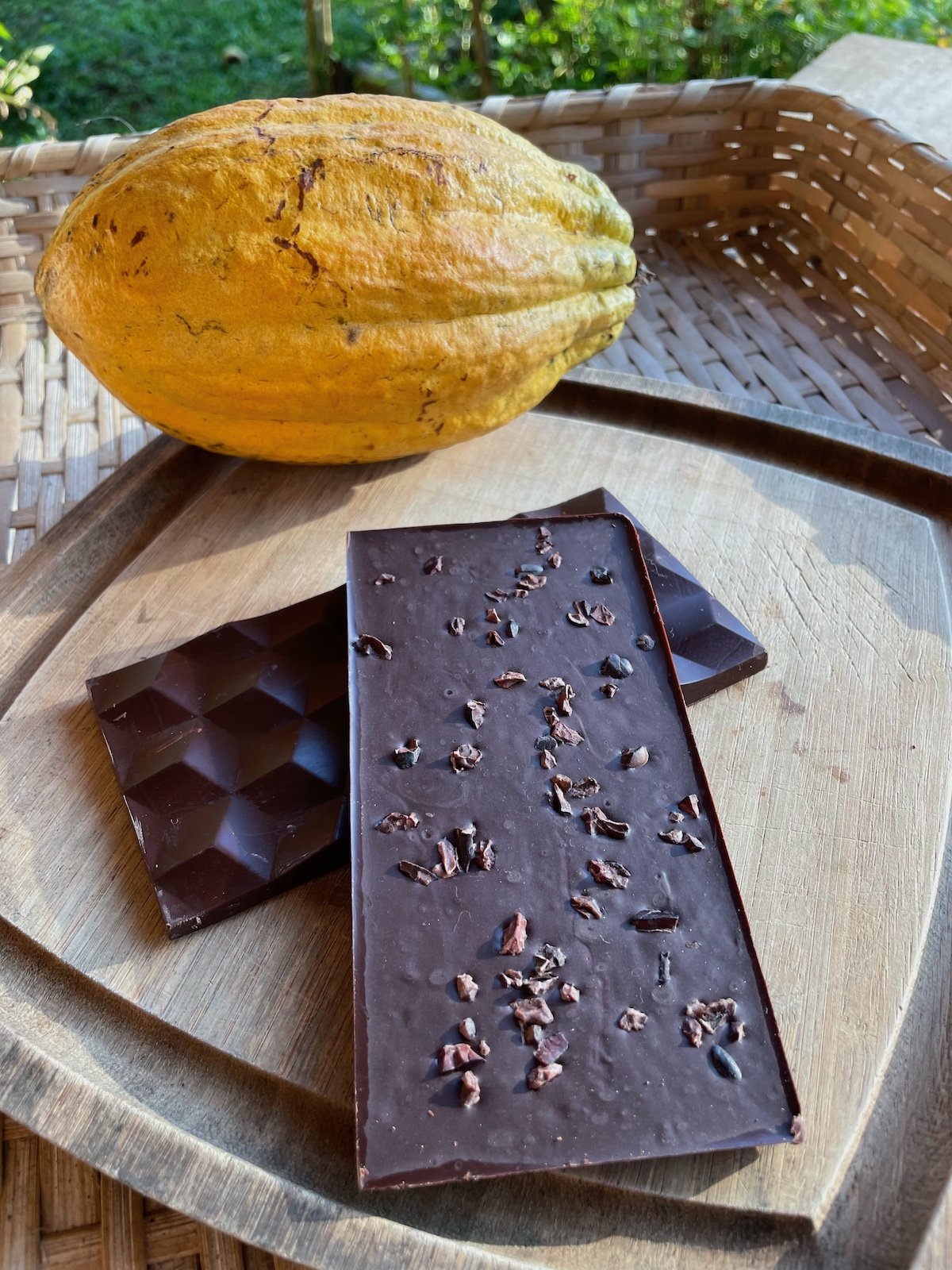
Only then does the cacao reach the chocolate kitchen, where it is roasted, ground, refined, and made into chocolate.
Making chocolate from cacao we grow ourselves allows me to follow flavor in both directions. If something changes in the finished chocolate, I can think back through the harvest, the fermentation, the drying, and sometimes even the trees themselves.
A Different Idea of Consistency
When the raw material itself is alive and seasonal, consistency begins to mean something different.
For me, it increasingly means bringing the same level of care, attention, and judgment to each harvest rather than forcing every harvest to taste identical.
With some of our larger ferments this year, I have been testing different roasting profiles to see how the flavor changes and how much of each batch’s character carries through into the finished chocolate.
A softer, earthier batch and a brighter one may both be well made. The difference may tell us something about the season, the fruit, or the way that particular fermentation unfolded. Over time, I have learned to pay attention to what the cacao is showing me and how best to work with it rather than assuming every batch should be pushed toward the same result.
What Wine and Coffee Already Teach Us
With wine, we already accept that one vintage may taste different from the next because weather and harvest conditions change. The vineyard and winemaker may be the same, yet the wine still carries something of the year in which the grapes were grown.
Coffee offers another familiar example, especially this October as World of Coffee comes to Panama City. Coffee drinkers already understand that farm, variety, harvest, altitude, fermentation, and processing can shape what ends up in the cup, and that a new harvest may carry its own character.
Chocolate is often given less room to behave like the agricultural food it is. A familiar wrapper can make us think of chocolate as a fixed formula, an expectation that makes sense for large commercial brands built around consistency.
When the cacao can be traced to a particular farm, producer, or harvest, small differences can become part of what makes the chocolate worth noticing.
What the Farm Teaches Me to Taste
Living with cacao changes the way you taste chocolate because you stop experiencing the finished bar as a separate thing and begin tracing its flavor backward through the work that came before.
A softer note may remind you of a certain fermentation. A brighter edge may send your mind back to a particular harvest. A shift in aroma, brightness, or finish can bring your attention back to the way the cacao was dried and roasted.
That kind of familiarity develops slowly through handling the fruit, smelling fermentations, turning cacao, checking the drying beans, and then tasting the finished chocolate weeks later.
Flavor accumulates over time, and while the farm’s rhythms return each season, the expression of the cacao changes with them.
Learning to Notice What Changes
Part of the pleasure of chocolate made from traceable cacao is noticing what is present in this bar, from this harvest, rather than measuring it only against the one we remember.
Perhaps the fruit is more noticeable. Perhaps the chocolate feels rounder or darker. Perhaps something that once sat quietly in the background has moved forward.
Remembering that chocolate begins as something grown changes the way we receive those differences. Variation can connect us back to the season, the trees, and the work that brought the cacao from fruit to chocolate.
A farm returns to many of the same rhythms year after year, but it never repeats itself exactly. The longer I work with cacao, the more I think the skill lies in paying enough attention to understand which differences are worth preserving.
That kind of attention is what I try to carry through all of my work on the farm, and it is what I share through The Hearth, where I write about what we are growing, tasting, learning, and making through the seasons. You can join me at lynbishop.com/hearth.
Lyn Bishop grows cacao at Finca Las Heliconias in Chiriquí Province, Panama, where she founded Quetzal Cacao, a tree-to-bar chocolate company. Photo credit: Lyn Bishop