Why Panama’s Convention Boom Makes Las Vegas Exhibit Logistics the Smart Play
Two million passengers a year now pass through Tocumen’s terminals, and a growing share of them are wearing lanyards. Panama is bidding for serious convention traffic, and that means local companies are suddenly looking north at the biggest trade show market on the planet. Las Vegas alone hosts some of the largest events in North America, and every one of them is a doorway for a Panamanian brand that wants distribution, partners, or investors.
The catch is what happens after you decide to exhibit. You need a booth on the floor, and you need it on a continent where you don’t own a warehouse, a truck, or a single power drill. That’s the moment most first time exhibitors start pricing custom builds and quietly panicking. It doesn’t have to go that way. A trade show booth rental Las Vegas package covers structure, graphics, delivery, install, and teardown, which means your team flies in with a suitcase and a deck instead of a shipping manifest.
I’ve watched this play out from both sides. The exhibitors who do well aren’t the ones with the biggest budgets. They’re the ones who treated the booth as a logistics problem first and a design problem second.
What Panama’s Convention Push Actually Changes for Exhibitors
For years, a Panamanian company that wanted international visibility had one practical route: attend as a visitor, walk the floor, collect cards, and go home. Exhibiting was a different tier of cost and risk. The country’s convention and tourism investment has shifted that math. More international events land in Panama City, more local companies get comfortable with the format, and more of them start asking whether they can do the same thing in Miami, Houston, or Las Vegas.
The answer is yes, but the failure rate on first attempts is high, and it’s almost never about the product. It’s about underestimating what it takes to put a branded physical space on a show floor 3,000 miles from your office.
Here’s the part that surprises people: the show itself is manageable. The paperwork isn’t.
Where First Time Exhibitors From Panama Usually Get Stuck
You’ll hit four walls, roughly in this order.
- Customs and paperwork. Bringing structural materials, giveaway inventory, and electronics across borders means dealing with U.S. entry rules. A trade show booth rental Las Vegas arrangement sidesteps the structural side entirely because the booth already lives in the country.
- Freight timing. Advance warehouse deadlines typically fall weeks before the show opens. Miss one and you’re paying material handling surcharges that can rival the booth cost.
- Labor rules. Most major venues require union labor for installation and dismantling. You can’t just unwrap your own crates and start building.
- Storage between shows. If you exhibit twice a year, you either pay for storage or rebuild from scratch every time.
The customs wall is the one that catches people off guard. According to U.S. Immigration and Customs Enforcement, which oversees trade compliance enforcement alongside partner agencies, commercial goods entering the country need accurate documentation and declared value. That’s a real obligation, and it applies to the pallet of branded tumblers you were planning to hand out.
Renting slashes most of that. You’re not importing a structure. You’re not storing anything. You show up to a built booth with your laptop and your pitch.
Rent, Ship, or Build: A Straight Comparison
I’d push almost every first timer toward renting. Not because owning is bad, but because the economics only flip after you’ve exhibited enough times to know exactly what your booth should look like.
| Option | Upfront Cost | Repeat Show Effort | Best For |
|---|---|---|---|
| Custom build and own | Highest | Storage, freight, and refresh costs every cycle | Brands exhibiting six or more times a year |
| Ship your own booth | Moderate, plus freight | Customs, crating, and labor coordination each time | Companies with in house logistics staff |
| Rent a finished booth | Lowest and predictable | Pick a package, approve graphics, show up | First timers, testing new markets |
| Rent with LED elements | Moderate | Same as renting, with more visual pull | Brands competing for aisle traffic |
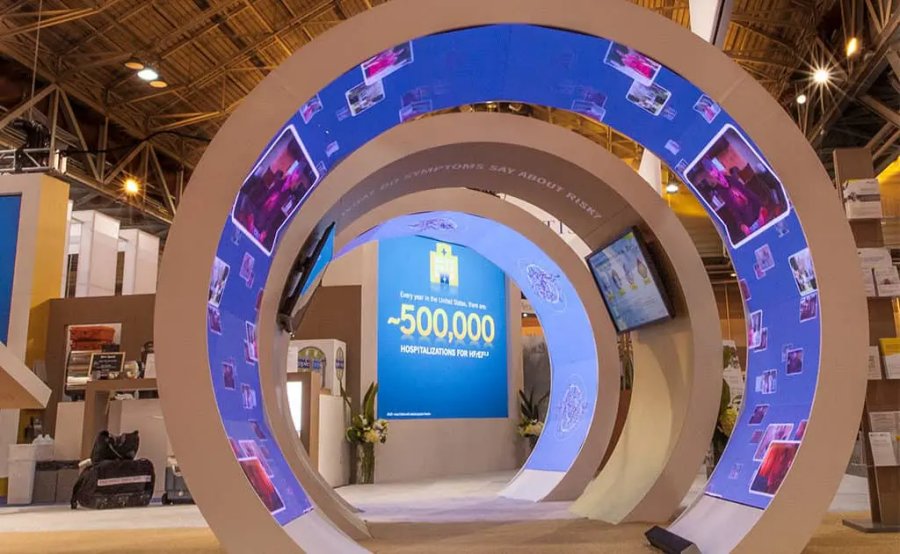
The last row matters more than it used to. LED walls, hanging signs, and lit counters have moved from luxury to baseline expectation at large U.S. shows. Walk a Las Vegas floor and you’ll see why. A static backlit graphic next to a moving digital wall doesn’t stand a chance at drawing a crowd.
What Small and Mid Sized Panamanian Firms Should Budget For
Panama’s economy runs on small and mid sized businesses, and that shapes how you should think about a U.S. show. According to the U.S. Small Business Administration, small firms make up the overwhelming majority of businesses and employers in the United States. Your typical booth neighbor in Las Vegas is a company roughly your size, working with a similar budget. You’re not competing against the Fortune 500 brands with 50 foot double decks, and you don’t need to.
Budget in five buckets and don’t raid one to feed another.
- Booth rental package. Structure, graphics, counters, and furniture, usually one line item.
- Install and dismantle. Often quoted separately from the rental. Ask.
- Freight for your own goods. Giveaways, samples, brochures, demo units.
- Travel and lodging. Flights from Panama City aren’t cheap at short notice. Book early.
- Show services. Electricity, internet, rigging, and lead retrieval. These add up fast.
Bucket five is where new exhibitors blow their budget. A booth with a video wall and no power drop is a very expensive piece of furniture.
Getting Your Team and Goods Into the Country Without Drama
Your people need the right entry status, and for a short business trip that means understanding what a B-1 visa covers. The International Trade Administration’s SelectUSA program outlines how business visitors are treated under U.S. immigration rules, including the activities permitted on a temporary business visit. Read it before you book flights, not after.
Your goods need a broker. Hire one early, and have them handle the show shipments rather than testing your luck at the airport with a duffel bag full of samples. If you have nothing to import because the booth is rented, your paperwork drops to almost nothing.
One more thing: send at least two people who can close a conversation. Solo exhibitors can’t leave the booth to use the restroom, let alone chase a lead down the aisle.
A Dress Rehearsal Beats a Bigger Booth
Here’s the framework I’d hand any Panama City company considering its first U.S. show. Think of it as a two show ladder.
Show one is the rehearsal. Small booth, rented, modest footprint, one clear message. Your only goal is to learn the mechanics: how the floor works, how attendees move, how long your pitch holds up after the fourth repetition. Measure one thing, qualified conversations.
Show two is the commitment. Same city, bigger package, LED elements, better placement, pre-booked meetings. By now you know what your booth needs to say, because you said it 200 times in a smaller space.
I’ve seen companies skip the ladder and buy a custom build for their first show. It sits in a storage unit within two years. The ones who climb the ladder end up owning their booth eventually, and they own the right one.
Nothing about this is exotic. It’s just sequencing, and sequencing is cheap when you do it in the right order.
Start With the Floor Plan, Not the Flight
The real edge in exhibiting abroad isn’t budget or design taste. It’s deciding early that you’re not going to build anything, ship anything structural, or store anything. Panama’s convention growth is creating a generation of companies with international ambitions, and the ones that succeed at U.S. shows will be the ones who treat logistics as the main event and design as the finishing touch.
So before you book the flight, answer one question: what’s actually standing in that booth when you walk onto the floor? If the honest answer is “someone else’s build, with our logo on it,” you’re ahead of most first timers already.