Amid Polarization Violence and Uncertainty Colombia Elects a President
Colombia goes to the polls today to elect its next president—the legislative elections were held in March—with a government-backed candidate as the favorite, a fragmented right-wing opposition, armed groups that have expanded their operational capacity, public discontent with insecurity and corruption, an intense social media campaign amplified by AI, marked by high emotionality and disinformation, and a fiscal legacy that will force the next government to undertake severe austerity measures.
Adding to this is the institutional tension that marked the end of the campaign: the Council of State ordered Petro to refrain from disseminating campaign propaganda. The stakes are unusually high. Voters will decide whether to extend the political cycle inaugurated by Gustavo Petro in 2022—who, by constitutional mandate, cannot seek reelection—or whether there will be a shift to the right, in line with the prevailing trend in Latin America today.
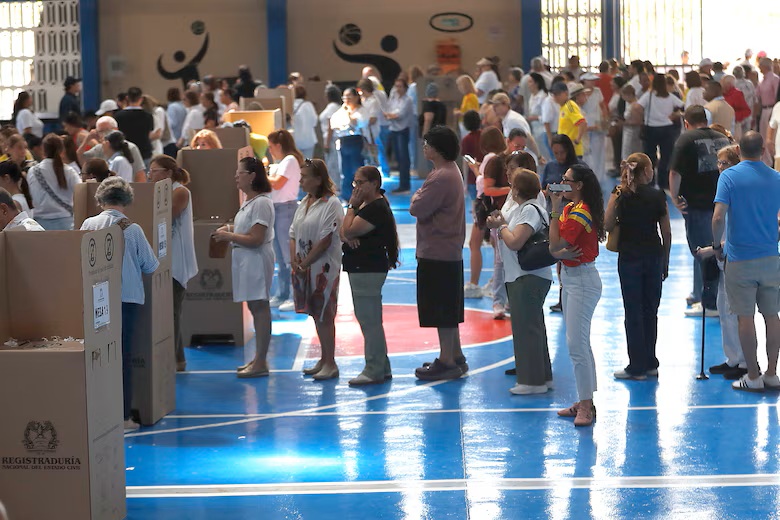
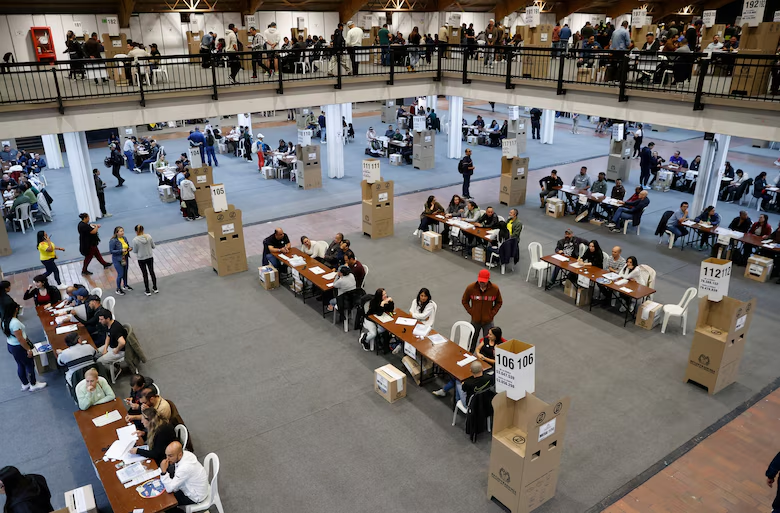
Colombia’s presidential elections kicked off this Sunday with the opening of polling stations for more than 41 million citizens who are eligible to vote in the first round for the successor to the current president, Gustavo Petro.
Latest news: Abelardo de la Espriella and Iván Cepeda will compete in the second round of the presidential election in Colombia. Second on the list is left-wing senator Iván Cepeda, from the Historical Pact, the party of Colombian President Gustavo Petro. Far-right candidate Abelardo de la Espriella leads the vote count in the presidential elections, obtaining 814,783 ballots (43.19%), with 12.51% of the polling stations counted.
“Today, millions of Colombians voted peacefully, turning out in large numbers to the different polling stations and voting tables,” said the National Registrar, Hernán Penagos, after the closing of the elections. Once the polling stations closed, the National Registry, the entity that organizes the elections, began counting the votes and is expected to have consolidated results about two hours later. Polling stations have closed in Colombia. According to the National Registry, the body in charge of the election, the first preliminary results could be released before 6:00 pm.
The first round of Colombia’s presidential elections is proceeding peacefully and without incident this Sunday, past the halfway point of the day, despite concerns about political violence during the campaign, which included the assassination of a candidate. According to the Electoral Observation Mission (MOE), so far there have been minor security incidents in a rural area of the municipality of Tibú, in the troubled Catatumbo region (northeast), due to clashes between illegal armed groups, and in the southern department of Caquetá, where an explosive device was activated.
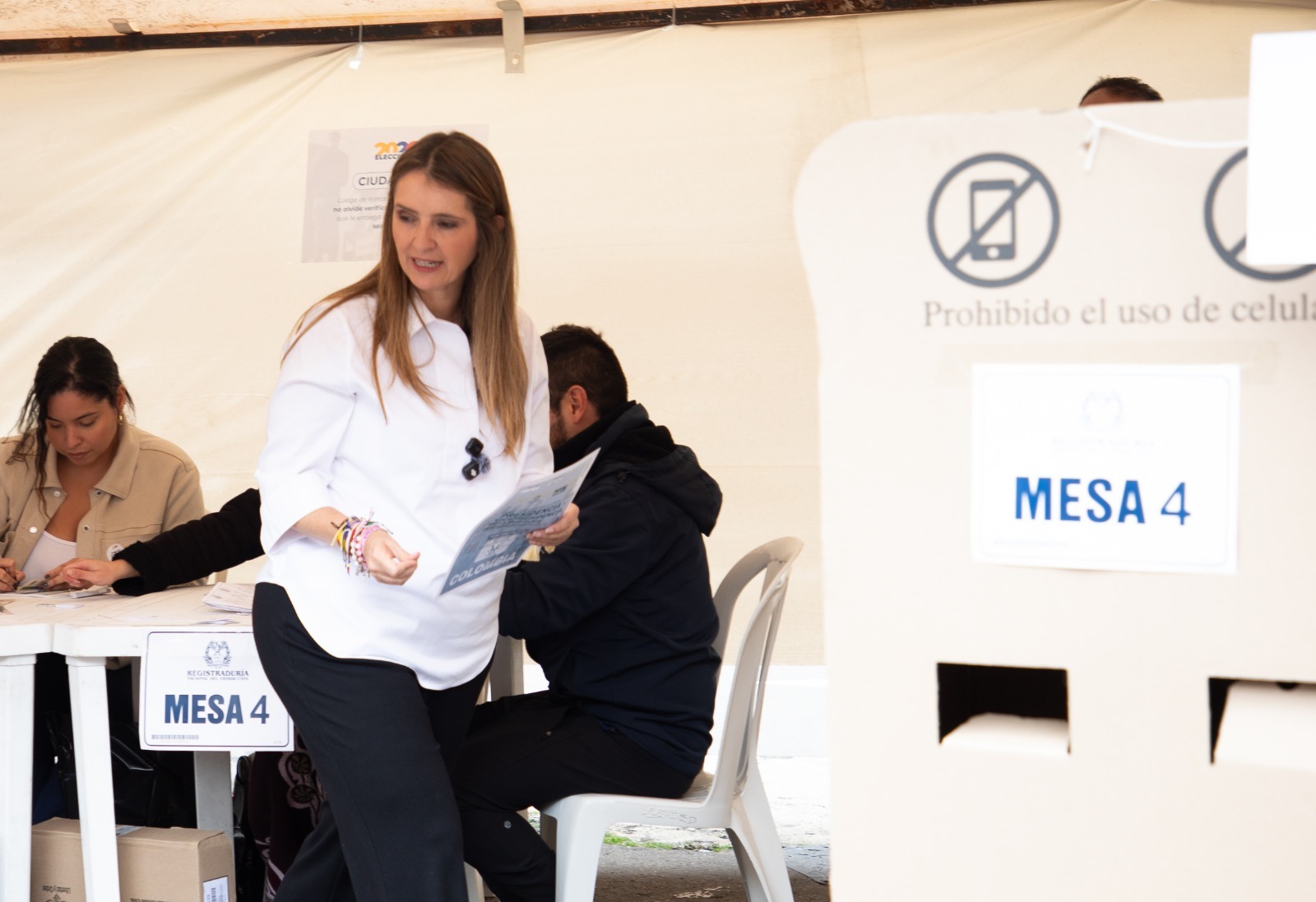
None of these affected the normal course of the day,” the MOE added in a statement. Presidential cansidate Paloma Valencia pictured above, from the right-wing Democratic Center party, voted this Sunday in northern Bogotá with the hope of advancing to the second round of elections and becoming the first woman to reach the Presidency of Colombia. Valencia was the last of the three main candidates to go to the polls, as early in the morning she was in Rionegro (Antioquia) accompanying former President Álvaro Uribe (2002-2010), founder, top leader of her party and her political mentor, to vote.
In Panama, a high influx of Colombian citizens is being recorded at the Plaza Paitilla Inn hotel, located in front of the Colombian embassy, during the election day in which the next president of that country will be elected for the period 2026-2030.
Colombia will Go to a Second Round Between Abelardo de la Espriella and Iván Cepeda
The far-right candidate Abelardo de la Espriella, from the Defenders of the Homeland movement, and the leftist Iván Cepeda, from the Historical Pact, will compete in the second round for the Presidency of Colombia on June 21 after being the most voted in the first round.
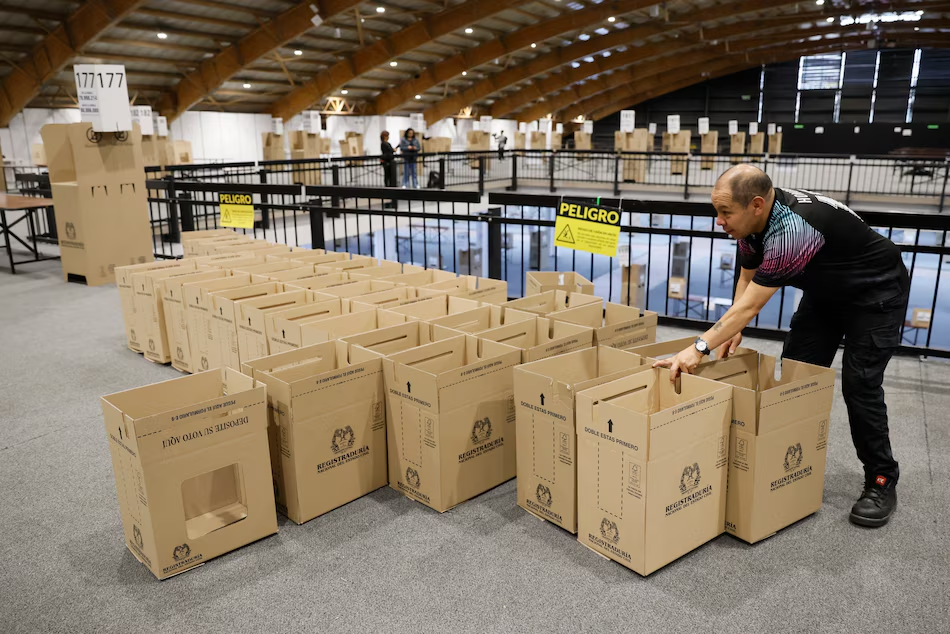
Abelardo de la Espriella and Iván Cepeda will compete in the second round of the presidential election in Colombia.
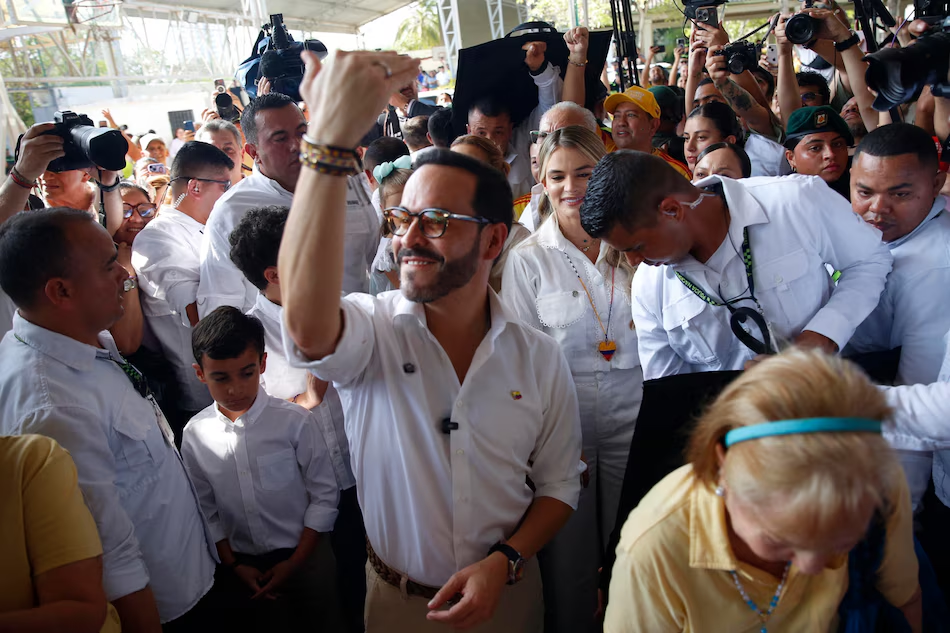
Presidential candidate Abelardo de la Espriella (center), representing the Defenders of the Homeland movement, voted this Sunday in Barranquilla, Colombia.
The far-right candidate Abelardo de la Espriella, of the Defenders of the Homeland movement, and the leftist Iván Cepeda, of the Historical Pact, will compete in the second round for the Presidency of Colombia on June 21 after being the most voted in the first round held this Sunday. With 92.85% of the polling stations counted, De la Espriella is the surprise winner with 9,515,558 votes (43.63%) and Cepeda with 8,977,429 (41.17%), numbers that make them unreachable for the rest of the candidates when less than 10% of the polling stations remain to be reported by the National Registry. Third place goes to Senator Paloma Valencia, from the Uribista Democratic Center party, who receives 1,492,468 votes in this partial measurement (6.84%), a percentage much lower than what the voting intention polls gave her, and even lower than the 3.2 million votes she obtained on March 8 in the center and right party primary in which she was chosen as a candidate.