Should Panama Exclude the Merchant Marine from the Economic Substance Law?
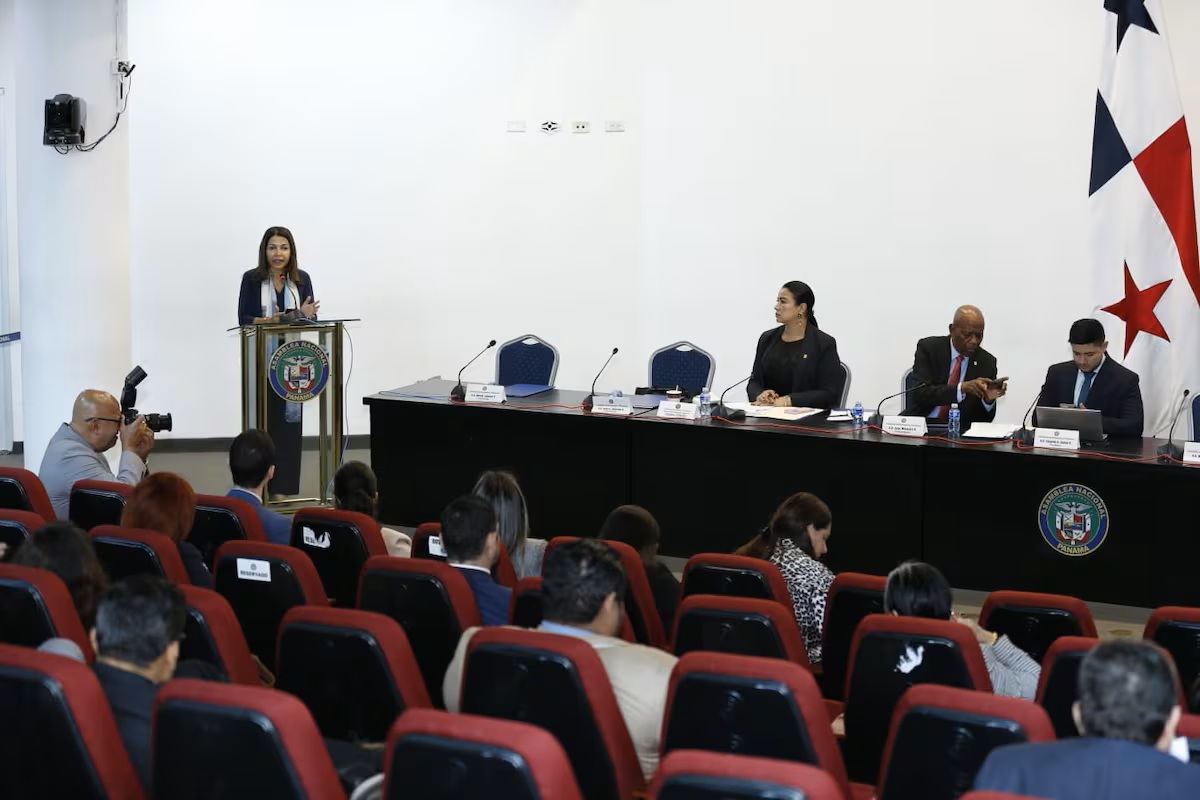
Jazmina Rovi, pictured below left, former president of Apademar, during her presentation to the Committee on Economy and Finance. International lawyers and maritime law specialists warn that imposing economic substance on the merchant marine puts the registration of ships in Panama at risk.
Panama is actively strengthening its ship registry oversight to align with international standards, which, while increasing compliance risks for certain vessels, is designed to ensure the long-term viability of the world’s second-largest flag registry. Proposed [Draft Law No. 641 (May 2026)] aims to introduce economic substance requirements to remove Panama from EU non-cooperative jurisdiction lists, which could tax foreign-source passive income for entities—including shipping structures—that fail to demonstrate local substance.
Key Implications for the Panama Ship Registry (2026):
- Economic Substance Requirements: Entities (such as ship-owning SPVs) part of a multinational group receiving foreign-source passive income must prove local substance, including employing qualified staff, having adequate facilities, and conducting strategic decision-making within Panama.
- “Non-Qualified” Entities: Entities lacking local substance will be classified as “non-qualified,” resulting in taxation of foreign-source income and potential fines.
- Rigorous Vetting (Precheck): The Panama Maritime Authority (PMA) utilizes a precheck process to conduct risk assessments for new registrations, focusing on sanction exposure and operational history.
- Targeted Restrictions: To avoid international scrutiny, Panama has prohibited the registration of oil tankers and bulk carriers older than 15 years, targeting the “shadow fleet”.
- Automatic Deregistration: Panama now enforces automatic cancellation for vessels involved in sanctions evasion (e.g., trading with Iran), illegal, unreported, and unregulated (IUU) fishing, or improper ship-to-ship transfers.
- Quality Over Quantity: The registry is prioritizing safety and environmental compliance over fleet size, specifically targeting “dark fleet” vessels that often lack insurance or operate in contravention of international standards.
While these measures introduce immediate compliance challenges for operators lacking local presence, they are intended to bolster the reputation and longevity of the Panamanian flag in the global maritime sector.