The Future of Cross-Border Retail: How LatAm Businesses are Leveraging Agile Logistics and Dropshipping
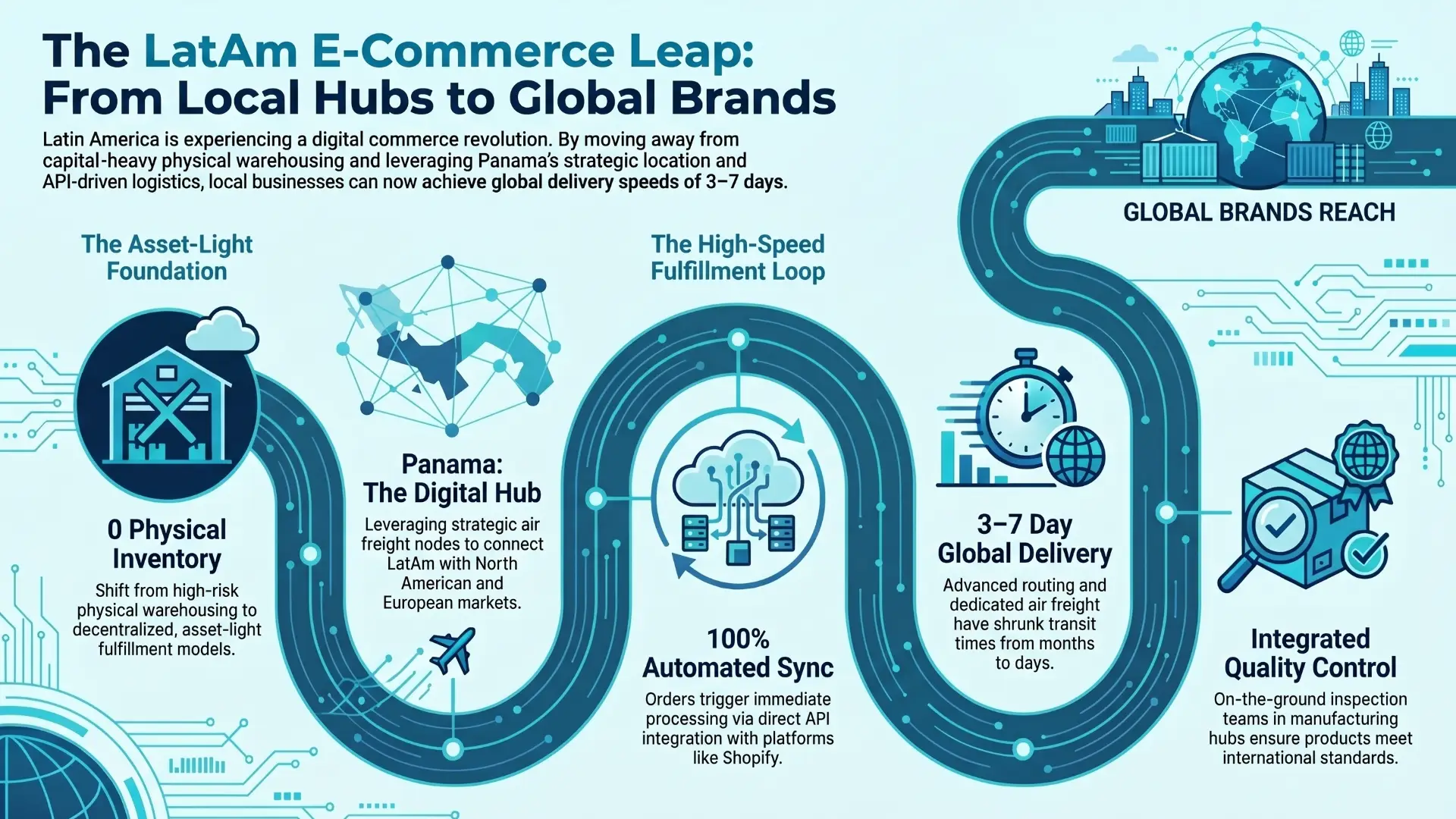
The retail landscape in Latin America is undergoing a profound transformation. Driven by increased internet penetration and changing consumer habits, the region has rapidly become one of the fastest-growing digital markets globally. For modern entrepreneurs, this shift presents unprecedented opportunities to build scalable businesses.
Historically, launching an international retail brand required immense capital, physical warehouses, and complex localized distribution networks. Today, the barriers to entry have drastically lowered.
By leveraging agile logistics and asset-light fulfillment models, Latin American businesses are now competing on a global stage. This article explores how modern supply chain strategies are reshaping cross-border commerce and driving regional economic growth.
The E-Commerce Boom in Latin America and Panama’s Strategic Role
The transition from traditional brick-and-mortar retail to digital commerce in Latin America has accelerated at an unprecedented pace. Consumers across the region are increasingly relying on digital storefronts for both essential goods and discretionary purchases.
This digital pivot has forced businesses to rethink their operational frameworks. In this evolving ecosystem, Panama’s strategic geographical position offers a distinct competitive edge. Long recognized as a traditional maritime and logistics hub, Panama is now successfully translating its physical infrastructure advantages into digital trade capabilities.
By serving as a central node for regional air freight and digital free-trade zones, the country facilitates smoother cross-border transactions. Localized entrepreneurs are utilizing this infrastructure to streamline operations, reduce transit times, and connect Latin American markets with North American and European consumer bases.
Breaking the Inventory Barrier: The Rise of Agile Supply Chains
The most significant shift in modern e-commerce is the transition toward asset-light business models. In the past, holding physical stock was a prerequisite for retail success, tying up vital cash flow and exposing businesses to massive inventory risks.
Today, local entrepreneurs can sell globally to the United States and Europe without ever touching the products they sell. To compete globally without the immense capital required for warehousing, e-commerce entrepreneurs are abandoning fragmented supplier networks in favor of comprehensive supply chain partners.
For instance, partnering with a reliable one-stop dropshipping service—SpeedBee allows business owners to seamlessly sync store data, automate order fulfillment, and scale cross-border operations rapidly without the traditional risks associated with inventory management.
By decentralizing inventory, brands can pivot their product offerings based on real-time consumer data. This agility ensures that Latin American businesses remain resilient against localized economic fluctuations while tapping into high-value international markets.
Overcoming Quality Control Challenges in Global Sourcing
While asset-light models eliminate inventory risks, they introduce complexities in vendor management. Relying on overseas manufacturers means that maintaining strict quality control becomes the primary operational hurdle for emerging e-commerce brands.
Fragmented supplier networks often result in inconsistent product quality, packaging errors, and brand reputation damage. Vetting global suppliers, particularly in major manufacturing hubs like China, requires robust oversight and standardized inspection protocols.
Integrated supply chains solve this challenge by consolidating vendor management. Modern fulfillment partners employ on-the-ground quality assurance teams to inspect goods before they are dispatched to the end consumer, ensuring that international quality standards are strictly met.
Bridging the Gap: Last-Mile Delivery and Tech Integration
Historically, cross-border shipping from Asia to the Americas or Europe could take upwards of a month. This delay heavily restricted the viability of international dropshipping. Today, advanced tech integrations and 3PL (Third-Party Logistics) partnerships have revolutionized transit times.
By integrating automated systems directly into storefront platforms like Shopify or WooCommerce, merchants can trigger immediate order processing. Modern logistics networks have effectively shrunk global shipping times down to just 3 to 7 days.
This rapid turnaround is achieved through a synchronized fulfillment process:
- Automated Syncing: Customer orders are instantly transmitted to the fulfillment center via API.
- Intelligent Routing: Algorithms select the fastest and most cost-effective shipping carriers based on the destination.
- Dedicated Air Freight: Packages are consolidated and flown via direct cargo routes rather than traditional, slow ocean freight.
- Optimized Last-Mile Delivery: Local couriers handle the final delivery leg, providing end-to-end tracking for the consumer.
Key Takeaways
| Area | Key Takeaway | Impact/Data |
| Strategy | Shift to asset-light models | Zero inventory capital risk |
| Logistics | Leverage Panama/Air freight | Shipping cut from 30 to 3-7 days |
| Operation | Automate via API/SpeedBee | Instant fulfillment sync |
| Quality | Centralize vendor management | Localized QA ensures standards |
| Growth | Target US/EU markets | Become a “micro-multinational” |
The Economic Outlook for LatAm Digital Trade
The long-term economic potential for entrepreneurs who adopt these agile, asset-light models is substantial. As logistics infrastructure continues to mature, the friction of international trade will only decrease, paving the way for a new generation of micro-multinational companies in Latin America.
The surge in digital adoption across the region is actively reshaping traditional business models. According to recent insights regarding the growth of global retail e-commerce, Latin America continues to emerge as a powerhouse for digital trade, presenting unprecedented opportunities for localized entrepreneurs looking to build global brands.
Ultimately, the future of retail belongs to those who prioritize agility. By leaning into automated fulfillment, stringent quality control, and optimized last-mile delivery, Panamanian and Latin American businesses are perfectly positioned to capture a significant share of the global e-commerce market.