Panama Chamber of Commerce Calls for a Transformation of Water Management: ‘Without Water There Is No Progress’
The association pointed out that Panama receives 2.5 times more rain than the world average, which shows that the problem is not scarcity, but a lack of management.
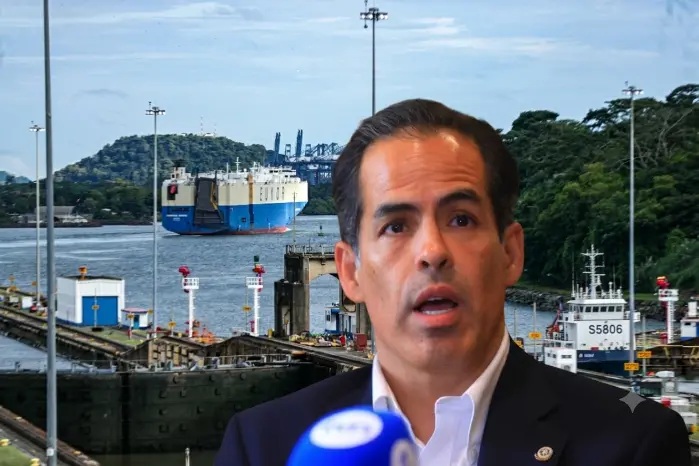
The president of the Chamber of Commerce, Industries and Agriculture of Panama (CCIAP), Aurelio Barría Pino, warned that the country faces an urgent challenge: transforming the abundance of water into an efficient and sustainable management model. In his Sunday column, Barría highlighted that Panama is a privileged country, capable of turning water into its greatest strategic asset through the Panama Canal, a global example of vision and excellence in management. However, he stressed that the real challenge is not the availability of the resource, but its management and distribution.
“The Río Indio project will guarantee water for human consumption and the operation of the Canal for decades to come. It is a wise decision. But securing the resource is not enough. The challenge is to manage and distribute it efficiently for all Panamanians,” he said.
The president of the Cciap listed the current deficiencies: obsolete networks, high levels of loss, frequent interruptions, overloaded water treatment plants, backlogs in sanitation, contamination of water sources and an institutional framework that does not respond to the needs of the country. “Without water there is no health, productivity, competitiveness and progress,” he emphasized.
Barría pointed out that Panama receives 2.5 times more rain than the world average, which shows that the problem is not scarcity, but a lack of management. Therefore, he urged the replication of the Panama Canal’s world-class model for managing drinking water and its commercial and industrial use. This, he said, implies modernizing infrastructure, reducing losses, protecting watersheds, and, above all, promoting an institutional transformation that guarantees technical, autonomous, transparent, and long-term management. As a concrete proposal, the CCIAP suggested reactivating the Inter-Union Water Committee, an entity that would bring together the public sector, unions, academia, specialists and civil society to design a roadmap with sustainable solutions.
“Water is our greatest resource and our greatest challenge. Panama must build a water management model that ensures well-being, competitiveness, and development for future generations,” Barría concluded.