Petro’s Successor in Colombia: The Options are Cepeda on the Left (Petro’s Party) or the Far Right with De la Espriella
Photographs of Colombian presidential candidates Iván Cepeda (left) and Abelardo de la Espriella on the right. USA Trump’s support is for De la Espriella, but Colombia will choose their President.
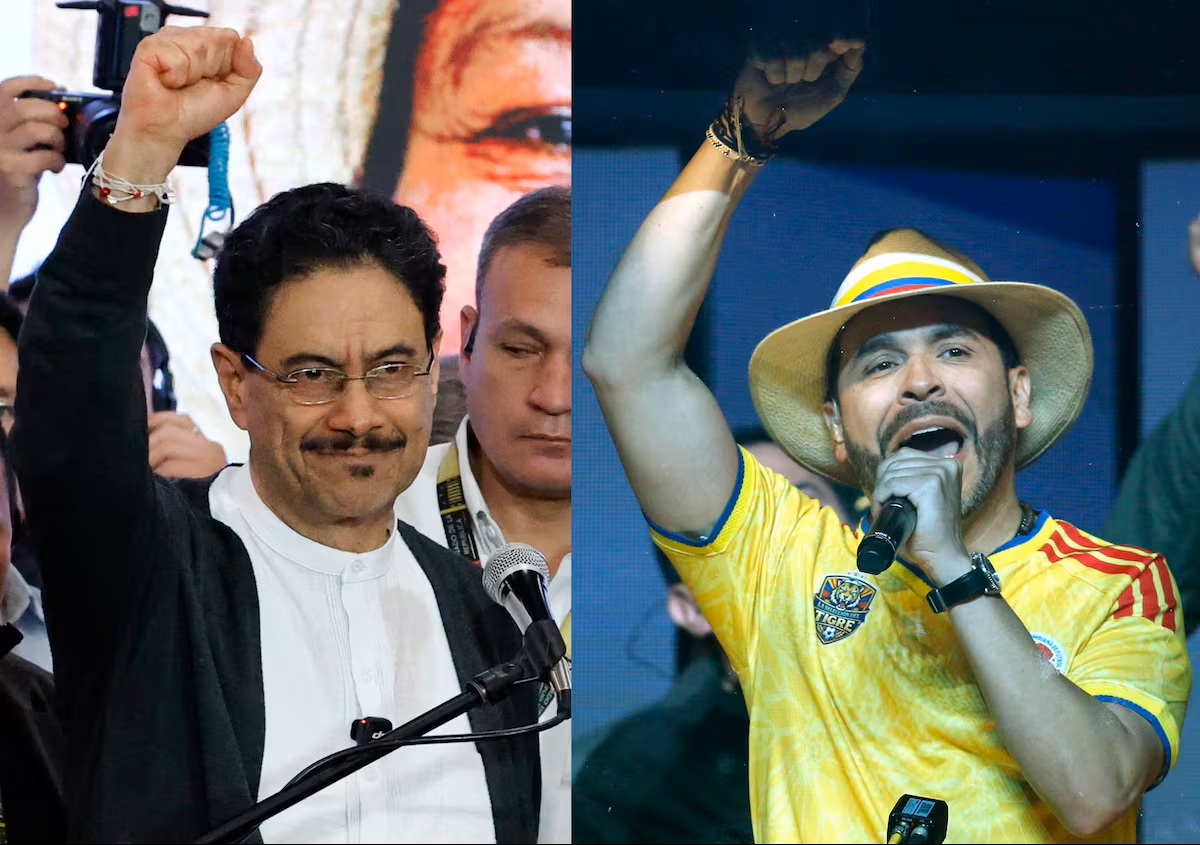
Colombians return to the polls Sunday, June 21 to elect in a second round the president who will govern the country in the constitutional period 2026-2030, between the far-right Abelardo de la Espriella and the leftist Iván Cepeda, after a virulent campaign in speeches and social networks. A total of 41,421,973 citizens are eligible to vote in these elections in the country and abroad, where voting began on June 15 and will also conclude this Sunday.
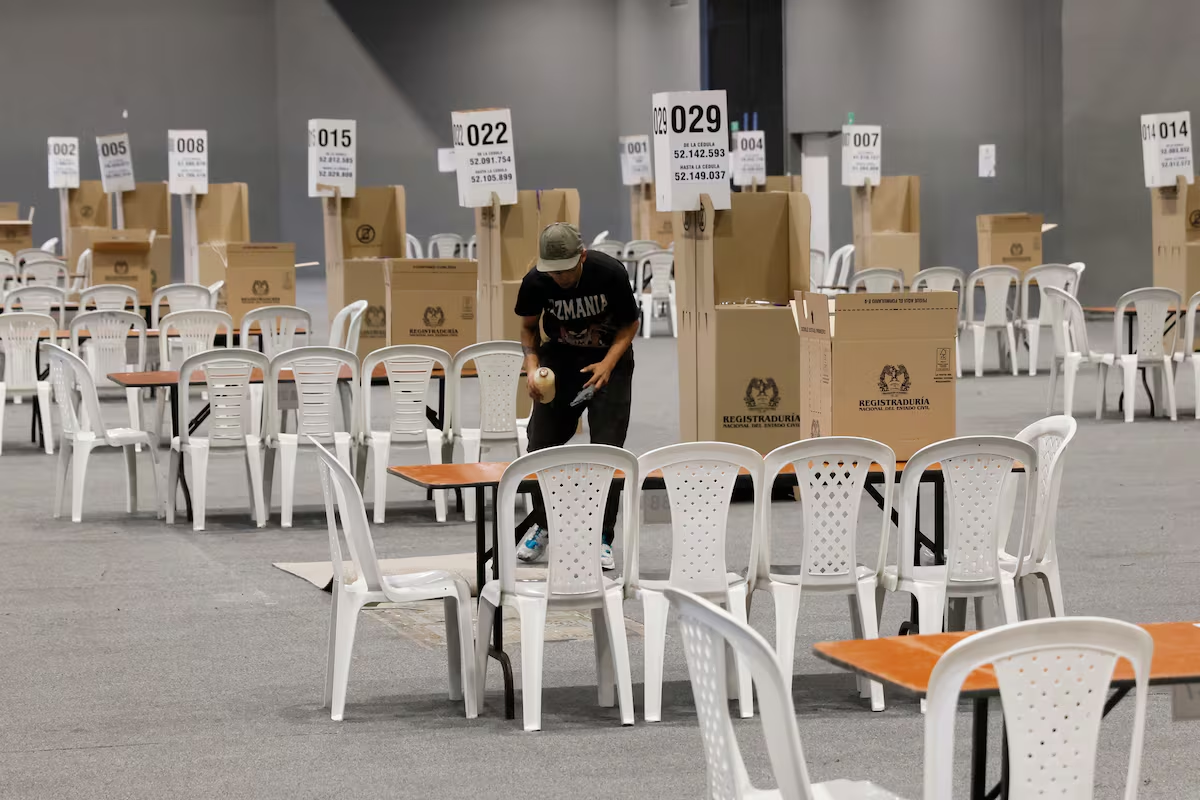
A person prepares a polling station this Saturday at the Corferias fairgrounds in Bogotá, Colombia.
More than half of the electorate are women (21.2 million), while men number 20.1 million, registered at 122,016 polling stations distributed across 13,742 voting centers. In the first round, on May 31, which had a 57.88% turnout, De la Espriella, from the Defenders of the Homeland movement, obtained 10.3 million votes (43.78%), while Cepeda, from the Historical Pact, the party of Colombian President Gustavo Petro, was second with 9.7 million (40.98%). All the polls for the second round show De la Espriella, called ‘the Tiger’ by his followers, as the favorite, with a voting intention that varies between 48.6% from the National Consulting Center and 50.9% from AtlasIntel, while Cepeda ranges between 43.1 and 44.7%.
“Mobilize the electorate, protect the vote, and on the 22nd get up early to work to build the second progressive government,” said Cepeda, considered Petro’s heir, in a meeting with alternative and community media. De la Espriella, for his part, urged his supporters not to be complacent about the polls. “We’ve come a long way thanks to the efforts of millions of Colombians, but the game only ends when the referee blows the final whistle. That’s why I ask you to go out and vote early this June 21st, bring your families, invite your friends, and keep adding more people to this great movement,” he said on X.
Volatile Campaign
Colombians go to the polls after a campaign marked by extreme polarization in which not only Cepeda and De la Espriella exchanged accusations and insults, but also the presidents of Colombia, Gustavo Petro, and of the U.S., Donald Trump, added volatility to the process. Petro, who has been accused of interfering in politics and who did not accept the results of the first round held on May 31, insists on denouncing alleged irregularities in the electoral process. “I request a peaceful vote count, without violence between anyone, but with maximum citizen oversight,” Petro stated on Friday on his X account, where he has repeatedly expressed his distrust of the electoral process, which is being conducted by the National Registry.
The National Registrar, Hernán Penagos, has ruled out any possibility of fraud and in an interview with news reporters this week was emphatic in stating: “There is no reason to doubt the election results published by the Registrar’s Office. The facts support the electoral authority.” This position is supported by the various international observer missions that will monitor the elections with 1,694 delegates spread throughout the country. “The organization is impeccable; a lot of control measures have been adopted to ensure transparency. We haven’t seen any irregularities,” an international observer, who asked not to be named because they cannot make public statements, told news media.
Another factor that has caused controversy in this process is Trump’s support for De la Espriella, stating that Colombia will have “the full support and strength” of the United States if the far-right candidate wins, a position rejected by the Petro government, which considers it interference in internal affairs. The elections will be closely monitored by a large military and police contingent to prevent interference from illegal armed groups, mainly in rural areas where the armed conflict is most acute and where there are reports of threats to voters and the civilian population in general.
“The entire public force will be deployed at full capacity. Directly involved will be 248,000 men and women from our Military Forces and the National Police; another 160,000 will be in support roles, for a total of 408,000 uniformed personnel,” stated Defense Minister Pedro Sánchez Suárez. The minister acknowledged that authorities have intelligence about possible riots and violent actions once the results of the presidential runoff are known, and noted that this “is one of the most significant threats we face” and one for which they are prepared.