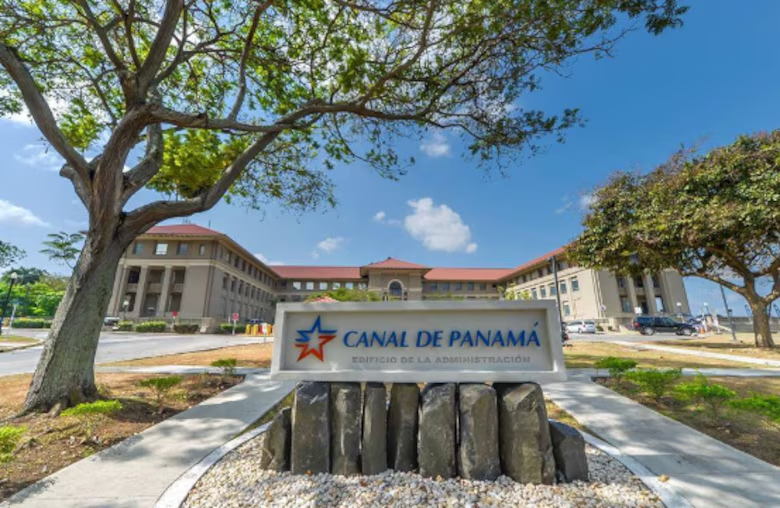
A Century of Railway History Facing the Threat of Demolition: Balboa Station
Long before the Panama Canal linked the Atlantic and Pacific Oceans, a railway line crossed the isthmus and became one of the most important engineering works of the 19th century.
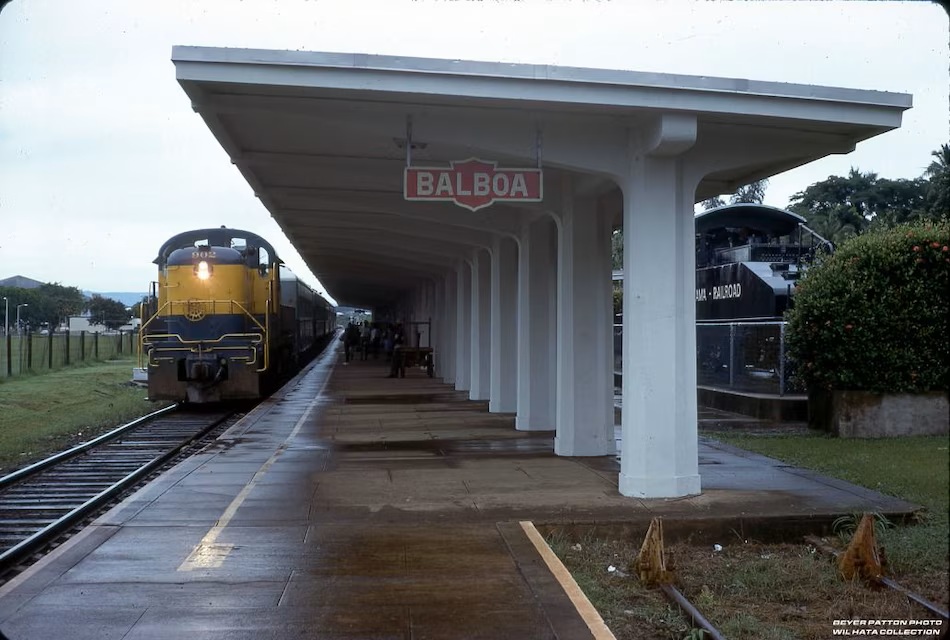
The history of the Panama Railroad is closely linked to the major events that shaped the country. Long before the Panama Canal connected the Atlantic and Pacific Oceans, a railway line crossed the isthmus and became one of the most important engineering feats of the 19th century. Today, one of its most representative symbols, the Balboa station, faces an uncertain future. The controversy stems from the Fourth Bridge project. According to the Ministry of Public Works (MOP), the station is located in the path of one of the structures of the new road interchange and will have to be demolished. The decision has sparked opposition from residents and organizations who believe the loss would be irreparable.
A Key Piece in the History of the Isthmus
The Panama Railroad was inaugurated in 1855 and transformed transit between the two oceans. Its strategic importance attracted the interest of foreign investors and ultimately made it an indispensable asset for projects seeking to unite the seas. According to records from Panama Railroad History, when the Frenchman Ferdinand de Lesseps pictured below, spearheaded the construction of a sea-level canal in Panama, the railroad company represented both an ally and an obstacle.
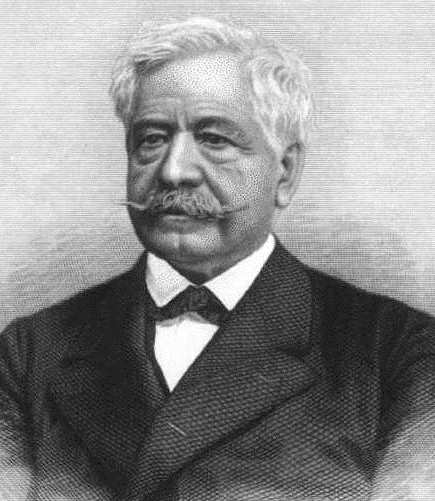
The high transportation costs charged by the company led the French to purchase it in 1879 for approximately $25 million. During the years of the French company’s operation, the railway reached one of its busiest periods. In 1886, it transported nearly 800,000 passengers, an extraordinary figure for the time. However, the financial failure of the French canal project also brought down the company. In 1902, the United States acquired the assets of the failing French company, including the railroad. A year later, during the events leading to Panama’s separation from Colombia, the railroad played a decisive role.
U.S. troops used the railroad to halt the advance of Colombian forces toward Panama City, in accordance with commitments made under the Mallarino-Bidlack Treaty of 1846. The construction of the Canal subsequently necessitated one of the most complex railway operations of the era: the relocation of a large portion of the railway line between 1907 and 1912 to allow for the excavation and creation of Gatun Lake. The work, overseen by the U.S. administration, cost approximately nine million dollars. With the opening of the Canal in 1914 and the subsequent development of the road network, especially the trans-isthmian highway opened in 1943, the commercial importance of the railway began to decline.
The Station that Connected Two Oceans
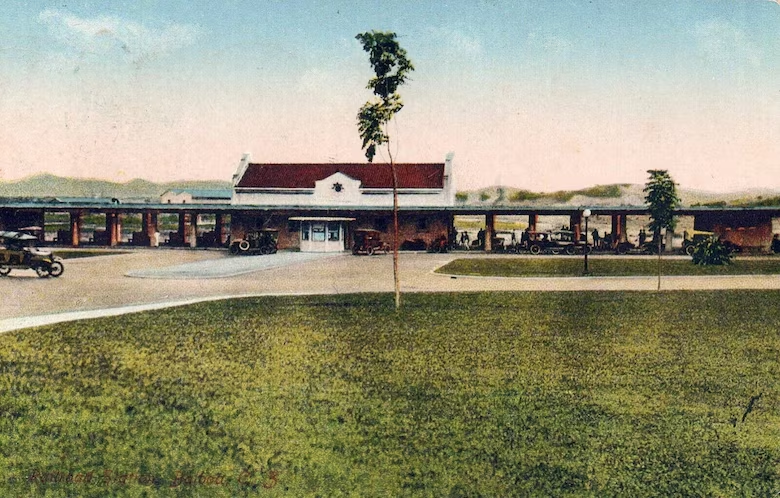
Within that history, the Balboa station occupies a special place. Located at the Pacific entrance to the Canal, it was conceived as the railway terminal that completed the journey between the oceans. For the Association of Canal Area Communities (ACAC), its value goes beyond the building itself. The station is part of an urban complex designed to integrate seamlessly into the development of Balboa, one of the most emblematic communities in the former Canal Zone.
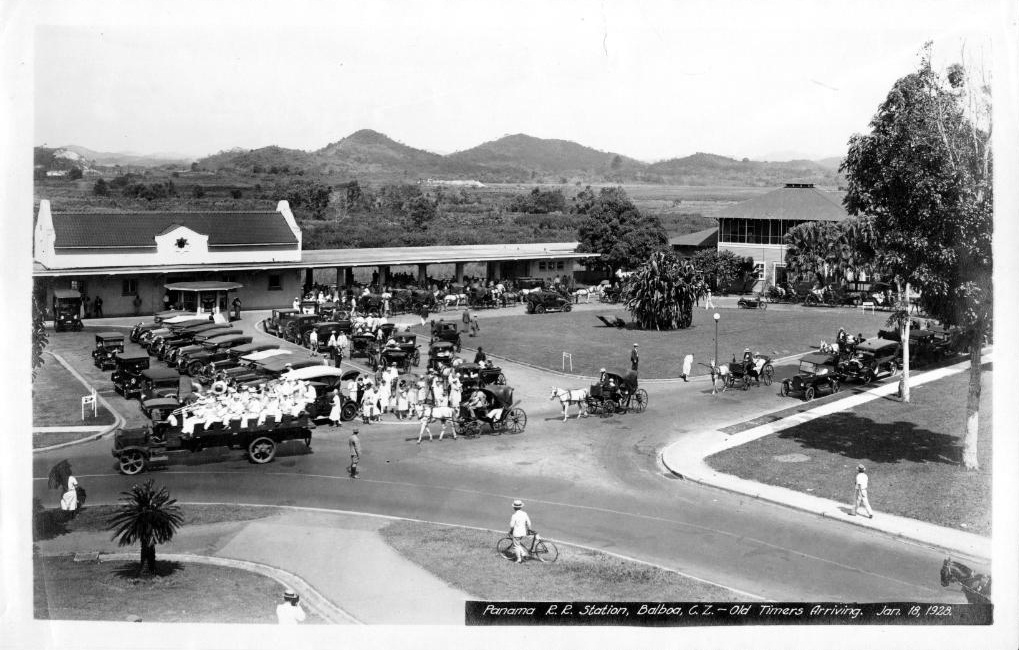
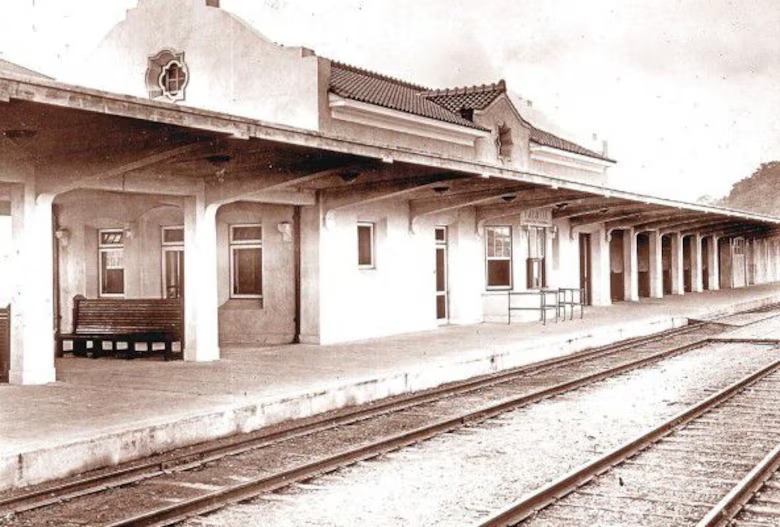
According to the book *The Panama Canal and Its Architectural Legacy (1905-1920)*, by Carol McMichael Reese and Thomas F. Reese, the station was designed by architect Samuel Merritt Hitt and completed in May 1915. Its architecture combines historical and modern elements within a Spanish Baroque Neocolonial style, with curved finials and windows inspired by Moorish tradition. The building featured a central volume for offices and a waiting room, flanked by spacious passenger porches.

The project also occupied a strategic position within Balboa’s urban planning. The original plans envisioned a direct connection between the station and the main plaza located in front of the Administration Building, reinforcing its role as an entry point and hub for the canal community. According to the authors, its importance was such that other permanent constructions in Balboa had to be postponed while the railway lines continued to be used to transport excavation material during the construction of the Canal.
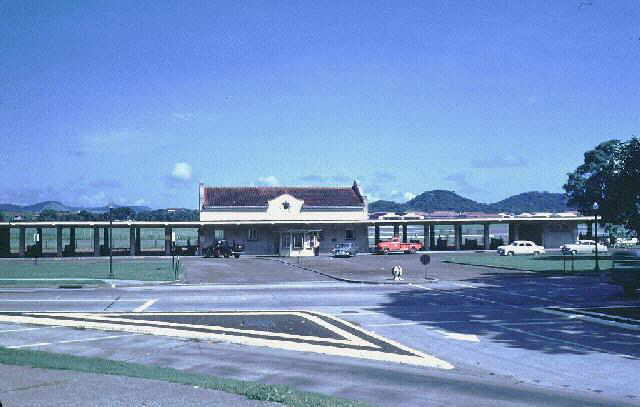
More than a century later, the building still stands and remains one of the most representative architectural testimonies of the urban development driven by the construction of the interoceanic waterway. In recent years, although part of the structure and its surroundings showed signs of deterioration and little activity, the property continued to have commercial use. Among the businesses that operated on the site, the “Balboa McDonald’s” stood out, which operated in the old railway station and allowed the building to maintain a certain presence in the daily lives of area residents and tourists fascinated by learning more about the country’s history.
The Debate Over its Future
The current controversy revolves around the redesign of the eastern interchange of the Fourth Bridge over the Canal. In the initial stages of the project, the preservation of the station and its transformation into a Railway Museum were envisioned. However, subsequent modifications to the design altered those plans. The new addendum to the project raised the total cost of the work to approximately $2.387 billion and proposes moving the museum to another location. For heritage advocates, moving the building would strip it of much of its historical significance. The ACAC, along with local residents and community groups, has organized demonstrations and campaigns demanding alternatives that would allow the structure to remain in its original location.
One of the most frequently repeated arguments is that heritage is not limited to bricks or walls. It also includes the urban context, the landscape, and the historical relationship between buildings and the territory where they were conceived. Pablo Guarde, an architect and member of ACAC, noted that the organization has been promoting efforts for years to protect the Balboa Station and other historical properties in the Canal Zone. He explained that although the building does not currently have a formal declaration as a historical landmark, the community has requested such protection from various administrations due to its architectural and urban significance. Guarde recalled that when the original designs for the Fourth Bridge were presented, there was an expectation that the station would be restored and converted into a Railway Museum.
“We were hopeful that it would be restored because the original plans designated it as a museum,” he stated. The architect argues that the problem lies not in building a museum in another location, but in the possible loss of the historical value of the building when it is removed from its original environment. Guarde also questioned the state of conservation of the structure, which remains under the custody of the Panama Maritime Authority (AMP). In his opinion, the deterioration accumulated over the years has contributed to a lack of awareness among some of the population regarding the building’s historical importance. In response to these concerns, the Ministry of Culture reported that on June 2nd it held a meeting with representatives of the Association of Communities of the Canal Area (ACAC) to address the situation of the old station and the possible impacts of the projects being developed in the area.
In a statement issued on June 5, the institution clarified that the Balboa railway station does not currently have a heritage declaration, a condition regulated by article 119 of Law 175 of 2020. However, he assured that the National Directorate of Cultural Heritage maintains permanent supervision of the areas directly impacted by the projects underway and monitors them. I am committed to the conservation and protection measures established to prevent damage to the heritage resources under your jurisdiction. In response to the proposed changes to the project, ACAC and community members have called for a peaceful demonstration this Sunday, June 7, at 4:00 pm, at the old Balboa train station.
MiCultura Determines that the Balboa Heights Station is Not a Historical Landmark
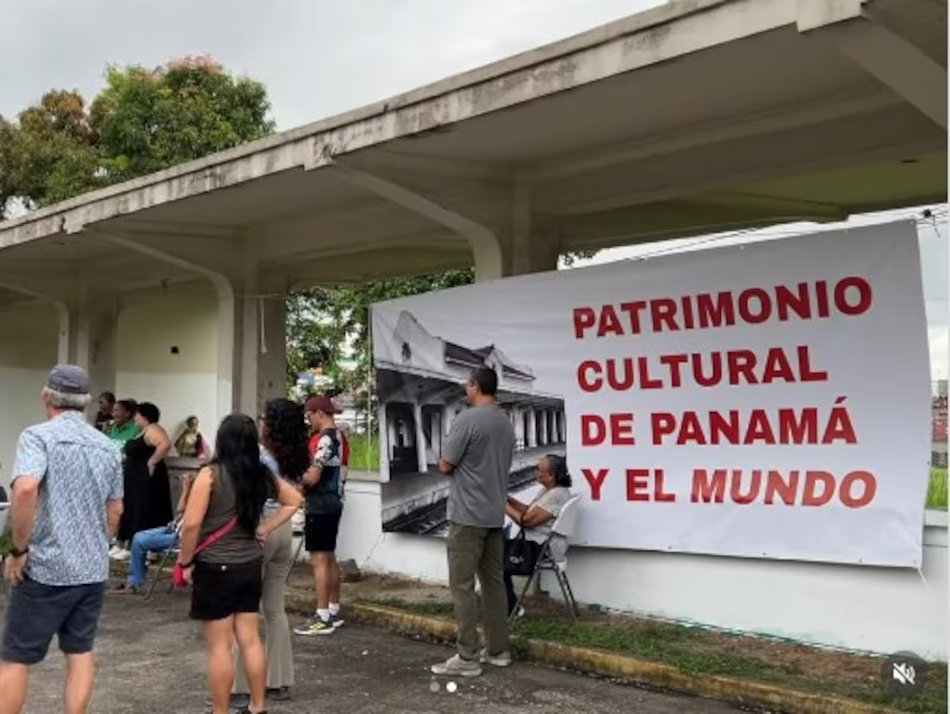
The Ministry of Culture (MiCultura) determined that the old Balboa Heights railway station, in the district of Ancón, does not have a declaration of Historical Heritage, but rather corresponds to a structure with cultural value, amidst the execution of the works of the East Interchange of the Fourth Bridge over the Canal project. In a statement, the Ministry of Public Works (MOP) indicated that the Fourth Bridge project was tendered nine years ago and that the route of the East Interchange has remained unchanged since then.
MiCultura indicated that the old railway station has cultural value, but lacks a heritage declaration. The Ministry of Culture is holding working meetings with the Panama Fourth Bridge Consortium and the Ministry of Public Works.