On This Day in Panama History: The Birth of a Panamanian Martyr in the Execution of Victoriano Lorenzo
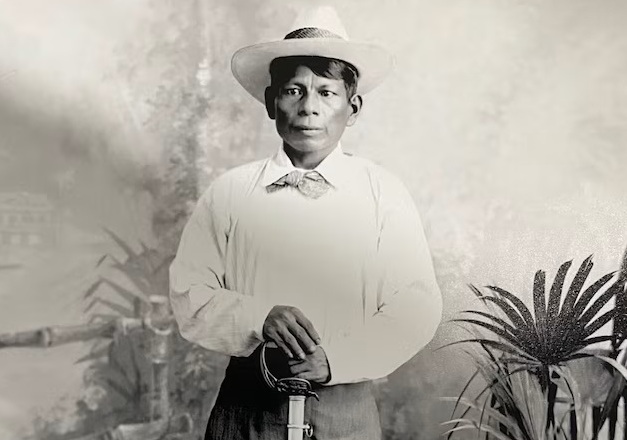
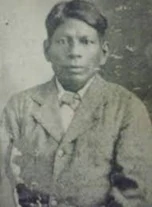
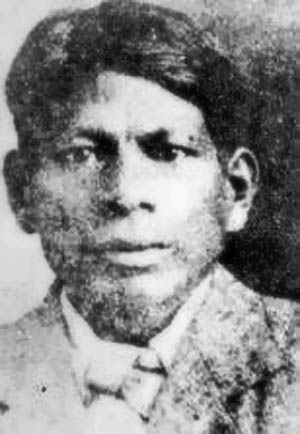
On May 15, 1903, Victoriano Lorenzo was executed in public in Chiriquí Square, now Plaza de Francia, before a crowd of about 3,000 people. The first volley did not kill him, and a second was fired before his body finally fell still. For many Panamanians, the event became one of the most symbolic moments in the country’s path toward independence. Lorenzo, a campesino and Indigenous leader from Coclé, had become one of the most feared commanders of the Thousand Days’ War. Born in 1867 near Penonomé, Lorenzo came from a rural Indigenous family and had little formal schooling. He learned to read with Jesuit priest Antonio Jiménez in Capira and later served as corregidor of El Cacao at age 22.
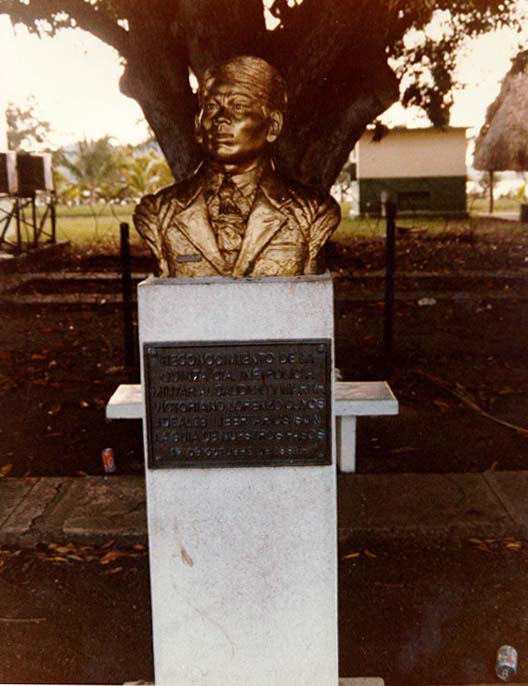
Monument to Victoriano Lorenzo, located at Amador, Panama City
His political awakening came through conflict over land, abuse, and the treatment of Indigenous communities. After killing Pedro de Hoyos in what was presented as self-defense, Lorenzo was sentenced to nine years in Chiriquí Bodegas. Prison became his political education, and after his release he denounced the exploitation of Indigenous people in a memorial to the vice president. When the Thousand Days’ War broke out, Lorenzo joined the Liberal cause. After the defeat at Puente de Calidonia in July 1900, he hid his weapons and moved into guerrilla warfare in the mountains. His leadership and his call for land and freedom turned him into a serious threat to the political order emerging on the isthmus.
Peace was signed on November 21, 1902 aboard the USS Wisconsin, but Lorenzo did not accept terms that left Indigenous communities without land or protection. He was captured on November 28 after saying he would take up arms again. On May 14, 1903, a military council was convened under General Pedro Sicard Briceño. By the next morning, the death sentence had already been decided. Lorenzo was condemned within 27 hours of the tribunal’s formation, with no real defense and no meaningful opportunity to contest the case. The execution was designed to portray him as a common criminal rather than a political combatant covered by the peace settlement.
But the spectacle of the firing squad in a public square did not produce the intended effect. Fray Bernardino García de la Concepción, who accompanied Lorenzo in his final hours, later wrote a letter defending his lucidity and denying claims that he had been drunk before the execution. The priest described a man who remained alert, prayed, forgave his enemies, and walked to his death with composure. The execution also fed the legend that bullets would not enter his body, a belief reinforced by the fact that the first volley failed to kill him. Over time, writers such as Changmarín, Amelia Denis de Icaza, Ramón H. Jurado, Justo Arroyo, and others helped turn Lorenzo into a lasting figure in Panamanian memory.
On January 30, 1966, the National Assembly declared his execution unjust. That formal recognition came decades after the popular imagination had already made him a hero of resistance, land rights, and national dignity. Lorenzo’s death is remembered not only as a personal tragedy, but also as a political act tied to the turbulent final months before Panama’s separation from Colombia on November 3, 1903. His life reflects the tensions of class, race, land ownership, and sovereignty that shaped the birth of the republic. More than a century later, Victoriano Lorenzo remains a powerful symbol of the cost of political power and the endurance of popular memory in Panama.
Victoriano Lorenzo: The Betrayal, the Trial, the Myth
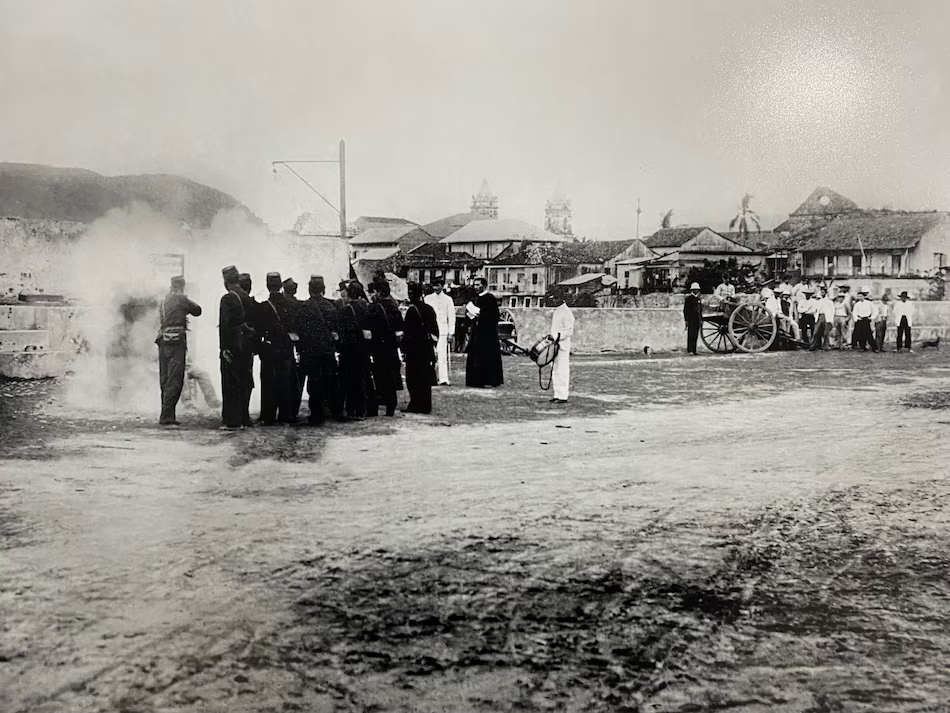
At 5:00 pm on May 15, 1903, Victoriano Lorenzo Troya was executed by firing squad in the Plaza de Armas of Chiriquí (today Plaza de Francia).
At five o’clock in the afternoon of May 15, 1903, in the Plaza de Armas of Chiriquí (today Plaza de Francia), a firing squad shot at a man tied to a chair. The first volley was not enough. The body twitched, leaning to the right. They had to fire again. Three thousand people witnessed the scene. The next day, La Estrella de Panamá reported the event in three paragraphs lost on its front page, as if they had executed just anyone. The man in question was named Victoriano Lorenzo Troya. He was the most feared general of the Thousand Days’ War, the indigenous man from Coclé who had put the Colombian army in check from the mountains of La Negrita, the man whom the Isthmian oligarchy and American interests needed to eliminate before arming the republic that was already underway.
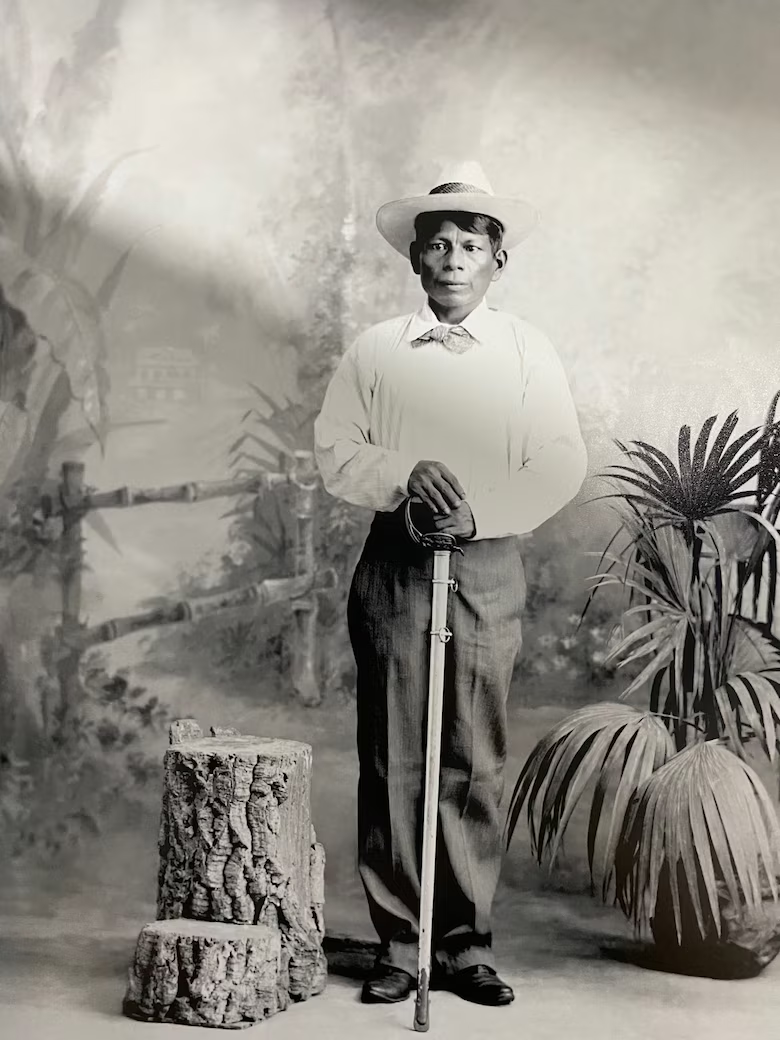
Victoriano Lorenzo was born in 1867 in the rural area of Penonomé. An Indigenous peasant, he had no formal schooling. He learned to read from the Jesuit priest Antonio Jiménez in Capira. At the age of twenty-two, he became the corregidor (local magistrate) of El Cacao.
The Wisconsin Trap
On November 21, 1902, aboard the American battleship Wisconsin anchored in Panamanian waters, conservatives and liberals signed the definitive peace treaty of the Thousand Days’ War. The United States was not a neutral mediator: it was already negotiating with Bogotá for the Canal concession and needed a pacified zone, without rebel leaders. Lorenzo refused to sign. The peace agreement granted amnesty to the officers, but it didn’t resolve anything he had fought for: the Indigenous people would remain landless, and the abuses of the regime would continue unabated. A week later, on November 28, he was captured for announcing he would take up arms again. The peace agreement promised oblivion. What followed was persecution. On Christmas Eve, he attempted to escape. He was recaptured within hours. Releasing him would reignite the war; keeping him alive would keep the fuse burning. The only way out was to eliminate him. But the political assassination had to be disguised as a legal proceeding.
The Man Before the Myth
Victoriano Lorenzo was born in 1867 in the rural area of Penonomé. An Indigenous peasant, he had no formal schooling. He learned to read from the Jesuit priest Antonio Jiménez in Capira. At the age of twenty-two, he became the corregidor (local magistrate) of El Cacao. His first serious confrontation was with Pedro de Hoyos, whose abuses against the Indigenous community of Trinidad had been denounced without consequence. At a party at Gil Cárdenas’s house, Hoyos threatened to kill him. In self-defense, Lorenzo killed him. He was sentenced to nine years in the Bodegas de Chiriquí prison. Prison was his university. He learned how the laws were applied and how to appeal them. Upon his release, he wrote a petition to the vice president denouncing the exploitation of the indigenous people.
When the Thousand Days’ War broke out, he chose a side with the clarity of someone who had already experienced the regime’s prisons. After the Liberal defeat at the Battle of Calidonia Bridge in July 1900, he hid the weapons. Colonel Pedro Sotomayor’s patrol razed and burned the hamlet of El Cacao. That burning was the founding act of the guerrilla movement. The Panamanian writer Rafael Ruiloba, in his essay “The Double Execution of Victoriano Lorenzo,” described him with a precise image: “The valiant Lorenzo defeated his military opponents time and again, because he and the night were one and the same.” He was appointed Major General. He promoted the indigenous uprising under the banner of land and liberty. That is why he was dangerous. Not because of the weapons, which were few. Because of what he represented.
Twenty-Seven Hours
On May 13, 1903, General Pedro Sicard Briceño, military commander of Panama and Bolívar, arrived from Bogotá. He had a specific objective. On May 14, at 2:00 pm, a court-martial was convened. Some of the judges (José Segundo Ruiz among them) were personal and avowed enemies of Lorenzo. The tribunal was not there to judge; it was there to sentence.
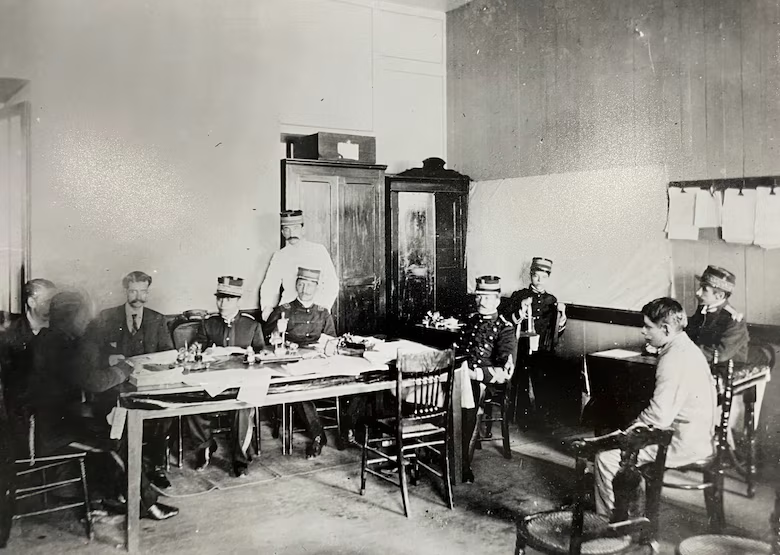
On May 14, at 2:00 pm, a court-martial was convened. Some of the judges (including José Segundo Ruiz) were Lorenzo’s personal and avowed enemies. By 8:30 am on May 15, the death sentence had been handed down. It was carried out at 5:00 pm.
By 8:30 a.m. on May 15, the death sentence had already been handed down. At 5:00 p.m., it was carried out. Twenty-seven hours elapsed between the convening of the court-martial and the execution. In that time, he was charged, tried, and convicted of crimes accumulated over three years of war, without any witnesses for the defense, without a real defense, and without sufficient time to review any evidence. The strategy was to present him as a common criminal, stripping him of his combatant status, his political immunity, and his right to the amnesty signed aboard the Wisconsin. To turn him, by judicial decree, into a common murderer, executed in the public square as a warning. But the people who filled the Plaza de Armas that afternoon weren’t there for the warning. They were there for the wake.
The Friar’s Letter
Two days after the execution, Friar Bernardino García de la Concepción, the priest who accompanied Lorenzo in his final hours, wrote a letter to the editor of La Estrella. The reason was simple: a rumor had circulated that Lorenzo had died drunk. That he had drunk a bottle of brandy to face the firing squad. That this man of iron will had staggered to the gallows, unworthy. It was not enough to kill him. They had to defile his death. The friar entered the prison at 9:30 am. He did not leave Lorenzo’s side all day. He was meticulous about the brandy: it was stiflingly hot, so he ordered “three or four shots of brandy (nothing from a bottle)… along with very cold water.” It was not to get him drunk. It was to sustain him. “I would have been cruel and criminal if I had allowed him to reach such a state, for what I needed was precisely the complete lucidity of his intellect.” At 4:15, he took his pulse. It was beating regularly. When the escort appears at the door, he breaks down for the only time all day. He says aloud, “I want to eat, let them wait.” And then he recovers.
He takes the friar’s hand, distressed: “My Father, have I offended anyone with my words?” Before the Crucifix, he declares that he forgives everyone and asks forgiveness of everyone. He kisses it. He says, “Come, my Father, it is time, do not abandon me.” Leaving the barracks, the friar offers him his arm. Lorenzo replies, “No, my Father, I am at peace, may God’s will be done.” He walks with a firm step. In the chair, tied down, he asks her to place the crucifix on his chest, because he cannot do it himself. The letter concludes emphatically: “I protest what has been attributed to me and I also declare that I was fully aware of everything that was happening and died as a true Christian.” It was the first battle for the memory of Victoriano Lorenzo. The authorities lost. The friar won.
The Bullets that Didn’t Go In
Carlos Guevara, a witness, wrote 58 years later: “When the first volley rang out, a scream of horror, which I still hear echoing in my soul, escaped from every chest… Immediately a second volley was fired, and the body lay lifeless.” Two volleys. The first did not kill him. From this arose the legend that the poet Changmarín would later recount in *El guerrillero transparente* (The Transparent Guerrilla): that the bullets could not penetrate the cholo. Before the first shot, Lorenzo stood up and said: “Gentlemen, hear a public statement. You already know whose words it is. Victoriano Lorenzo dies… I forgive you all… I die as Jesus Christ died.” The authorities later refused to release the body, which they transported in the middle of the night in a cart and buried in an unknown location in the Amador Cemetery.
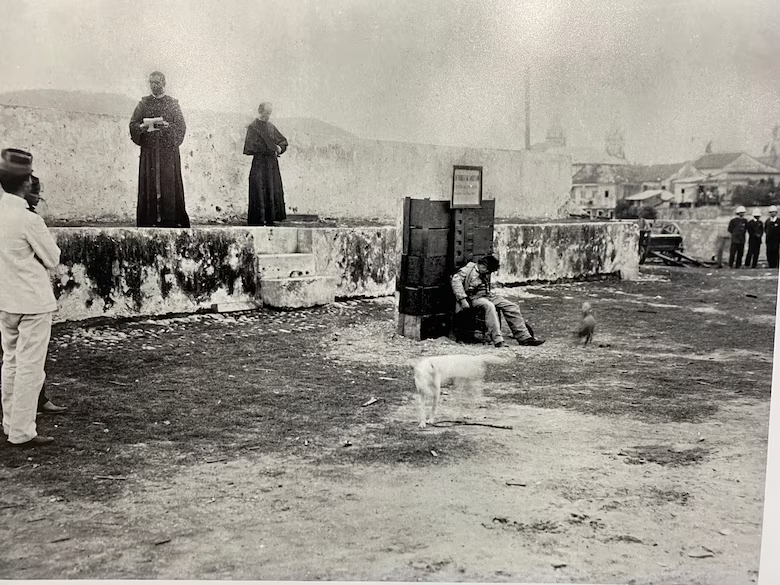
Carlos Guevara, a witness, wrote fifty-eight years later: “When the first volley rang out, a cry of horror, which I can still hear echoing in my soul, escaped from every chest… Immediately a second volley was fired, and the body lay lifeless.” Two volleys. The first didn’t kill him. From this arose the legend that the poet Changmarín would later recount in *The Transparent Guerrilla*: that the bullets couldn’t penetrate the cholo.
The Myth that the Oligarchy Failed to Calculate
They thought that eliminating him would be enough. They underestimated the symbolic power of an unjust execution. The Colombian writer José María Vargas Vila wrote the phrase that best explains what came next: “I announced the separation of Panama when the pointless cruelty of José Manuel Marroquín, by murdering Victoriano Lorenzo, strangled the patience of that people at the top of the gallows.” Six months later, on November 3, 1903, Panama separated from Colombia. The republic that the oligarchy later built denied Lorenzo the recognition he deserved for 63 years. It was not until January 30, 1966, that the National Assembly declared his execution unjust. It took two generations to officially redress what the people never ceased to know.
While the official republic ignored him, the popular imagination preserved him in verses, novels, and plays: Amelia Denis de Icaza, Ramón H. Jurado, Changmarín, Justo Arroyo, Ernesto Endara, Rafael Ruiloba, among others. For decades, Panamanian literature did what politics dared not do: name him a hero. Lorenzo is not just a martyr. He is proof that the Panamanian republic began with a political assassination disguised as a trial, orchestrated by the Panamanian oligarchy, carried out by the Colombian army, and watched from the sea by a U.S. battleship. Popular myth understood this before historiography did. It understood it that very afternoon of May 15th, in the Plaza de Armas, when the cry of horror from three thousand chests accompanied the first volley. One hundred and twenty-two years later, the cry still echoes.
Lorenzo is not just a martyr. He is proof that the Panamanian republic began with a political assassination disguised as a trial, orchestrated by the Isthmian oligarchy, carried out by the Colombian army, and watched from the sea by a US battleship.