Panama Learned to Taste Coffee. Cacao May Be Next.
By Lyn Bishop
Founder of Quetzal Cacao
Finca Las Heliconias, Chiriqui, Panama
For one day this September, I am bringing the farm to Panama City.
On September 12, private chef Tanya Forester de Bocanegra and I will host two intimate editions of The Cacao Table, following cacao from grove to chocolate to kitchen.
The cacao is grown at Finca Las Heliconias in Chiriquí and made into Quetzal Cacao chocolate from the harvest. Tanya will take that chocolate into the kitchen, bringing her own culinary craft, family traditions, and years of learning through food and culture.
There will be only two tables that day.
From Grove to Chocolate to Kitchen
At The Cacao Table, chocolate is not the end of the story. It is the meeting point between grove and kitchen.
My work with flavor begins with the cacao tree and follows the fruit through harvest, fermentation, drying, roasting, and chocolate making. Tanya begins in another place, with ingredients, heat, texture, acidity, balance, and the way food comes together on a plate.
When those two paths meet, chocolate becomes something more than a finished bar.
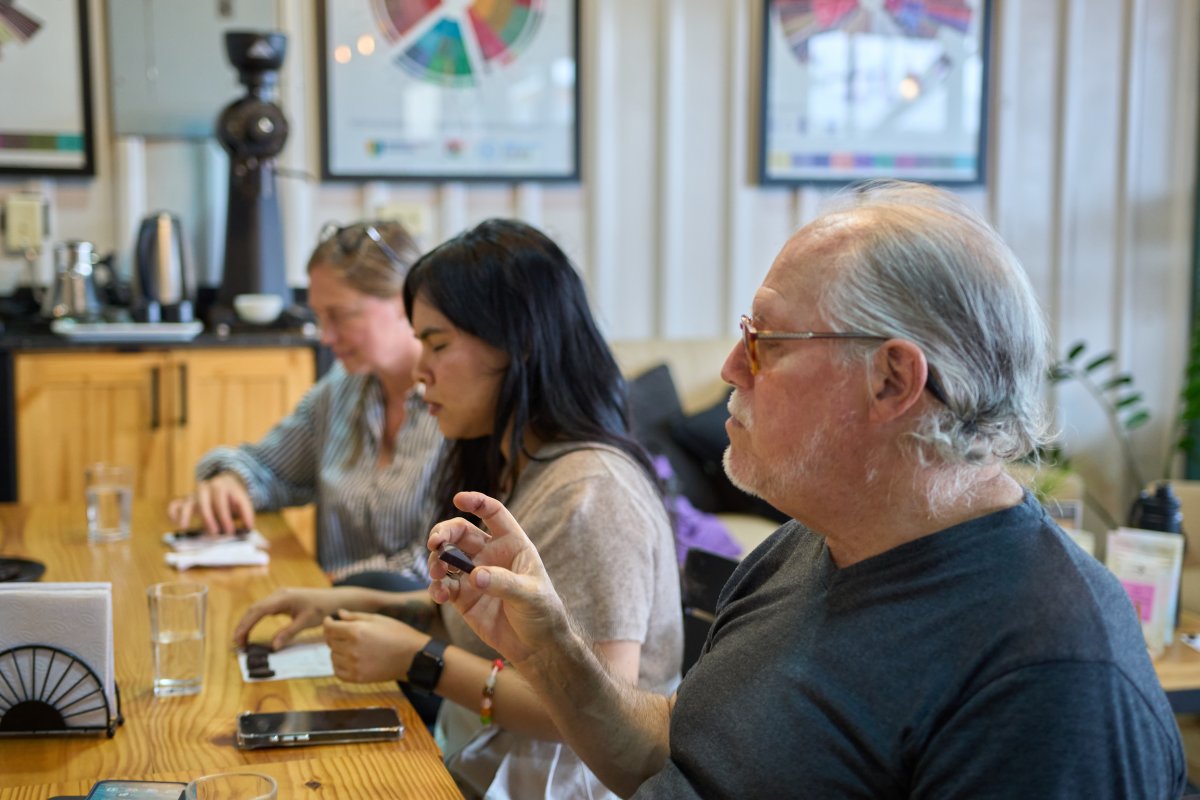
We will taste several chocolates side by side, moving through different cacao percentages and noticing what changes. Tanya’s food will then bring another layer to the experience. A savory dish may make a roasted note more visible. Acidity may lift fruit. Texture may alter the way sweetness is perceived.
The point is not to search for the correct tasting note. It is to notice what happens when the same chocolate is placed in a different context.
This is where a table becomes useful.
Someone may keep returning to a softer chocolate while another person prefers the directness of pure cacao. As people talk, taste again, and compare, the chocolate becomes easier to understand.
That kind of attention matters beyond the table. If Panama is serious about the future of its cacao, we also need to become better at recognizing the differences already present in what we grow and make.
Can We Taste What Makes Cacao Distinctive?
Panama may be approaching an important cacao turning point.
The question is not simply whether we can grow more cacao, but whether we can recognize and protect what makes the cacao already growing here distinctive.
Panama already knows how to have this conversation about coffee. We talk about farms, regions, varieties, fermentation, processing, roast, and altitude. We understand that two coffees grown in the same country can taste very different, and we have learned to value those differences.
Chocolate is rarely given the same attention.
Most people still meet it through a few familiar markers. We look at the percentage on the wrapper, decide whether it is dark or milk, and notice whether fruit, nuts, caramel, or another flavor has been added.
The cacao itself can disappear behind the finished bar.
Yet cacao is an agricultural crop, just as coffee is. Its flavor begins with the tree, the genetics of the fruit, the soil, the weather, the harvest, and the choices made during fermentation and drying.
The percentage on a chocolate wrapper tells us how much cacao is present. It cannot tell us what that cacao tastes like.
What We Learned in Volcán
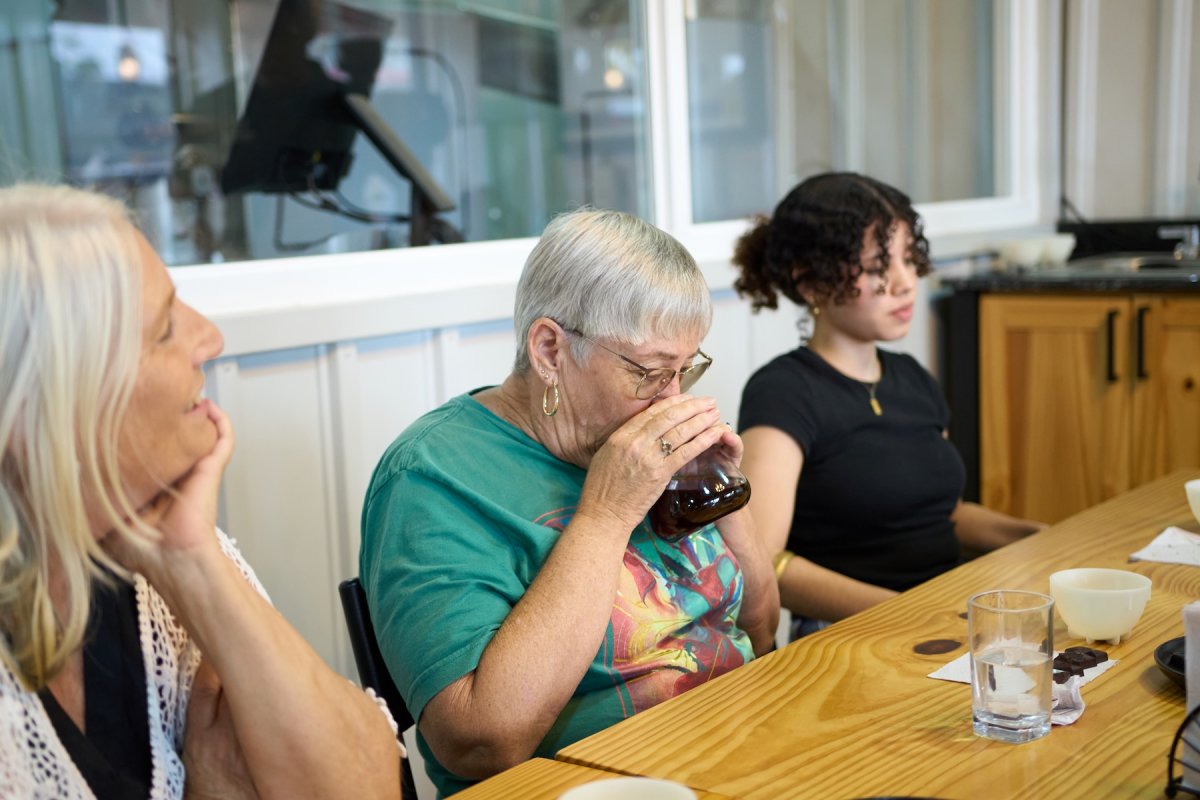
At a recent tasting in Volcán, we placed a washed Gesha beside 100 percent cacao and wondered whether one would overpower the other.
The coffee remained bright and clear, while the chocolate stayed deep, direct, and unsweetened. Tasted together, each became easier to understand.
What interested me was that neither needed the other to become better. Each stood on its own, yet the pairing made their differences easier to see.
We tasted chocolates ranging from 72 percent to 100 percent cacao alongside two local coffees. The washed Gesha was especially compelling with the darker chocolates, including the pure cacao, while a fermented Catuai found a more generous relationship with the softer, sweeter 72 percent chocolate.
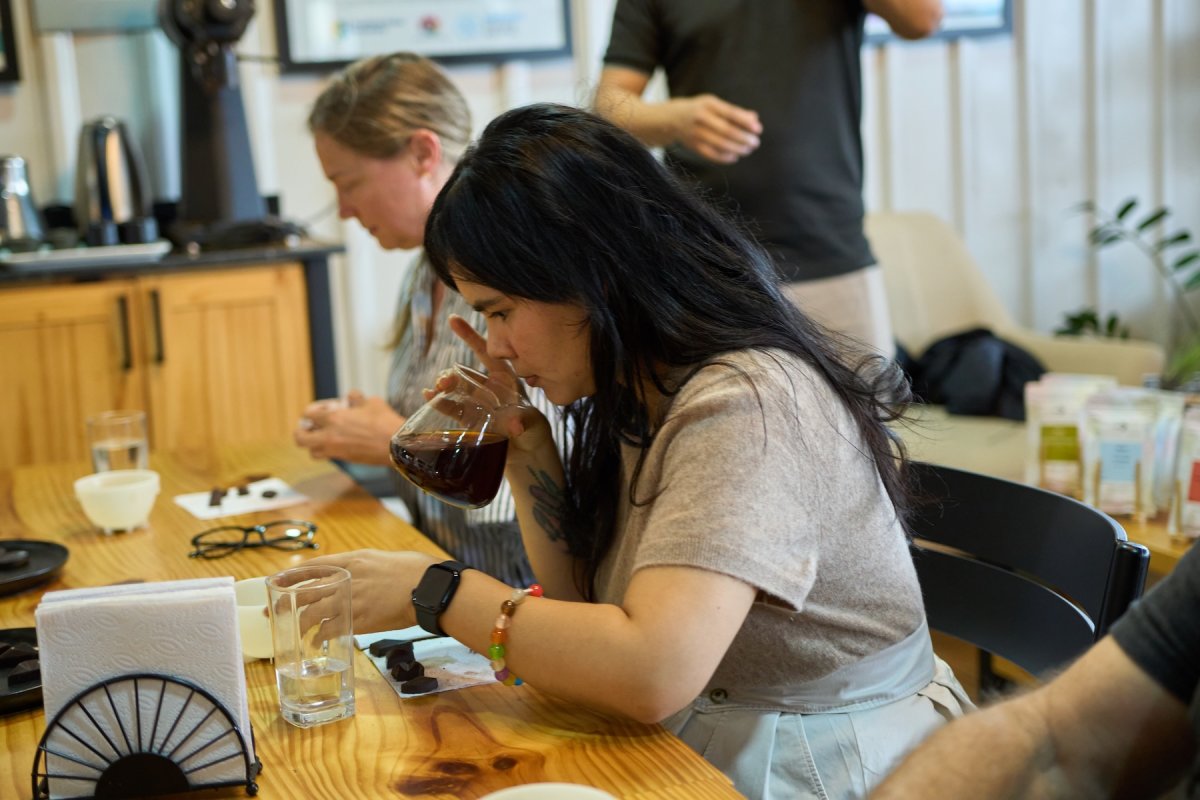
A sip of coffee could make something in the chocolate easier to recognize, while the chocolate could bring forward a quality in the coffee that had seemed less obvious on its own.
That experience helped shape The Cacao Table.
If comparison could reveal so much between coffee and chocolate, what might happen when cacao entered the kitchen?
Two Tables, One Day
That is the question Tanya and I will explore on September 12.
The experience is intentionally small because the table itself matters. A small group leaves room for conversation, for questions, and for going back to something we thought we had already tasted.
For one day, cacao grown on a farm in Chiriquí will travel to Panama City, move through chocolate and food, and arrive at a table where everyone is invited to notice something for themselves.
There will be only two gatherings.
If you are curious about what Panama cacao can become, come explore it with us. Reserve your place at lynbishop.com/the-cacao-table.
Try the Idea at Home
You can begin exploring the same idea with two dark chocolates that are clearly different from one another. They might come from different makers or origins, or they may simply have different cacao percentages.
Let a small piece of the first chocolate melt slowly and notice how the flavor develops. Pay attention to what comes first, what appears later, and what remains after the chocolate is gone. Taste the second chocolate the same way and notice where the experience changes.
Then bring in a drink you already know well. Coffee is an easy place to begin, and wine can be equally interesting. Taste the drink, return to the chocolate, and notice whether either one seems different when they are together.
You may notice more fruit, roast, sweetness, bitterness, or depth than you did before. Someone tasting beside you may notice something completely different.
That is part of the pleasure. The important thing is to pay attention and trust what you taste.
Come Sit at the Table
The Cacao Table is where these questions become something we can taste, discuss, and discover together.
On September 12, Tanya Forester de Bocanegra will open the doors of her private home and professional kitchen in Panama City for two small gatherings around The Cacao Table. I will bring the cacao and chocolate from the farm; Tanya will bring the kitchen, the food, and the hospitality of her own table.
Reserve your place at lynbishop.com/the-cacao-table.
I hope you’ll join us. I would be glad to see you at the table.
Quetzal Cacao’s Chocolate Club opens for new members on September 17. If you would like first access when places become available, join the waitlist at lynbishop.com/chocolate-club-waitlist.
Lyn Bishop grows cacao at Finca Las Heliconias in Chiriquí Province, Panama, where she founded Quetzal Cacao, a tree-to-bar chocolate company. Through The Hearth, she shares what the trees, the wider organic farm, and the foods growing there are teaching her.