A Battle of Giants in the Heart of America: The Panama Canal and Geoeconomics
Various analysts agree that the Canal has ceased to be merely a commercial asset and has become a strategic node of geopolitical dispute.
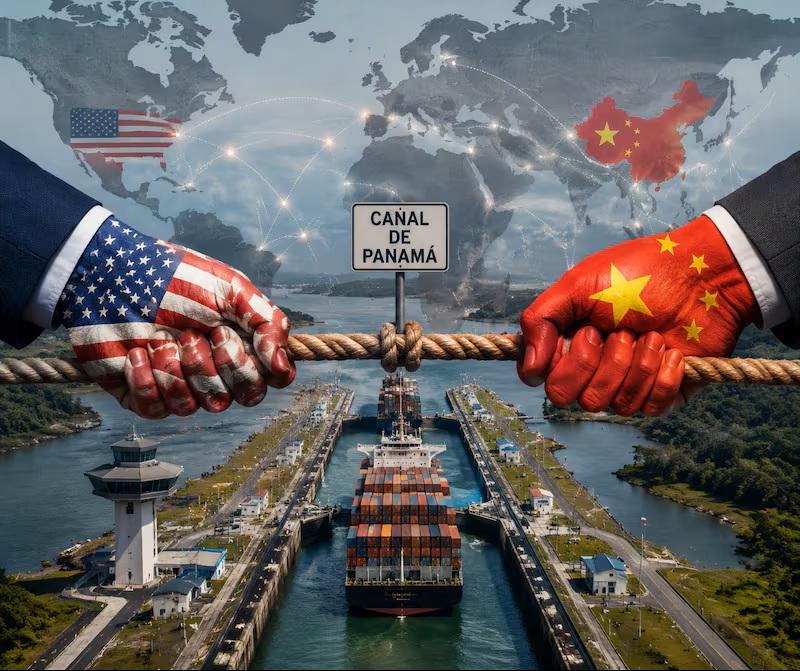
The Panama Canal remains one of the world’s most critical geoeconomic chokepoints. By connecting the Atlantic and Pacific oceans, it slashes maritime transit times and underpins global supply chains. Today, it acts as a strategic chessboard where superpowers vie for commercial dominance, economic leverage, and logistical security. The canal sits at the center of several overlapping economic and political fault lines:
- Shifting Global Supply Chains: For the United States, the canal is an economic lifeline, facilitating the efficient transport of grain from the Gulf Coast and liquefied natural gas (LNG) to Asian markets. However, it also leaves U.S. logistics vulnerable to disruptions, such as the severe draft restrictions caused by regional droughts.
- The Trans-Pacific Superpower Rivalry: Control over port infrastructure in and around the canal has become a major flashpoint. With China’s growing geoeconomic footprint in Latin America—specifically through state-owned enterprises securing logistics concessions—Beijing is establishing immense leverage over Western hemisphere trade routes.
- The Bottleneck Effect: Global reliance on this single waterway means that any geopolitical tension, regional climate crisis, or infrastructure bottleneck instantly ripples through the international economy. It transforms the narrow isthmus into a potent geopolitical weapon.
Key Strategic Vectors
To understand the geoeconomic weight of the Canal today, it helps to examine it across three core priorities:
- Commercial Supremacy: The canal allows cargo to bypass the lengthy, costly Cape Horn circumnavigation. Any disruption forces carriers to take much longer routes, spiking spot freight rates and delaying deliveries of energy and consumer goods worldwide.
- The Panama Canal Expansion: The completion of the Neopanamax locks significantly shifted trade flows. It allowed massive LNG tankers and ultra-large container ships to cross, tying the energy sectors of the Americas directly to Asian manufacturing hubs.
- Geopolitical Leverage: Whichever power holds sway over the logistics and ports flanking the canal holds incredible power to either secure or throttle the trade arteries of its rivals.
The Panama Canal has become a sensitive point in the strategic dispute between the United States and China in the Western Hemisphere, amid a reconfiguration of global logistics routes and the growing interest of major powers in securing critical nodes of international trade. The demand from Panama’s main historical partner came late. The current situation is the result of an accumulation of diplomatic and economic tensions over the last decade and, more recently, the termination of a port concession that had been held by a subsidiary of a Chinese company for 28 years.