A Refuge from the Devastation Caused by the Earthquakes in Venezuela is the Golf Course in La Guaira that was Once a Symbol of Opulence
pictured below is an aerial view showing collapsed buildings in Caraballeda, La Guaira, Venezuela, on June 27, 2026, following earthquakes that struck the area.
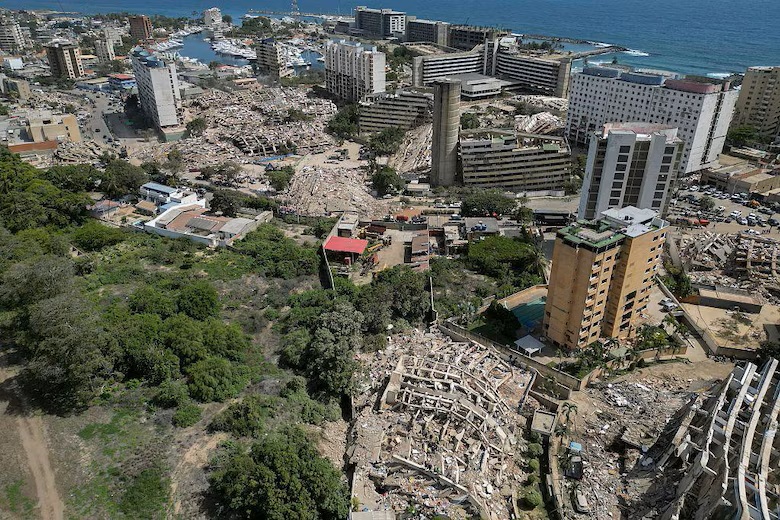
Although the earthquake last Wednesday hit the entire coastal state north of Caracas hard, the panorama changes abruptly, upon entering the Caraballeda parish. The level of destruction in western La Guaira is difficult to comprehend. As one ventures deeper into the area, the devastation becomes denser. The number of buildings that collapsed on themselves after the two earthquakes of magnitude 7.2 and 7.5, which happened within a span of 39 seconds, form entire rows that have been reduced to mountains of concrete and twisted iron.
In some areas of the most affected urbanizations, such as Caribe and Tanaguarena, there are entire sections where debris removal has not yet begun. Caraballeda used to be one of the most prosperous areas in the state in the 1990s, a lively tourist area lined with palm trees, with luxury hotels, restaurants, condominiums with swimming pools, a pier full of yachts and even a golf course. Today it presents a desolate image, closer to that of a war zone than a holiday destination. That golf course, a vestige of the opulence that marked the area before the 1999 tragedy, has become the epicenter of the emergency.
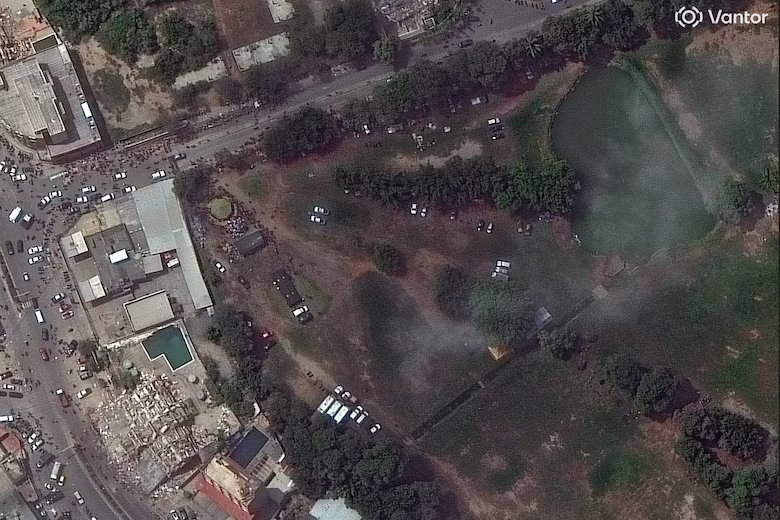
Aerial view of the golf course that has become a focal point for earthquake victims in Caraballeda, La Guaira.
On its green lawn, which used to be perfectly manicured, there is now a makeshift hospital caring for people who have been rescued and are seriously injured, as well as piles of donated clothes and boxes full of humanitarian aid. In one part of the golf course, right next to a small lagoon, a strip of land has been set up as a landing area for helicopters arriving with supplies and personnel from other states in the country and also from abroad. Another has been set up as a shelter for hundreds of families who have lost everything.
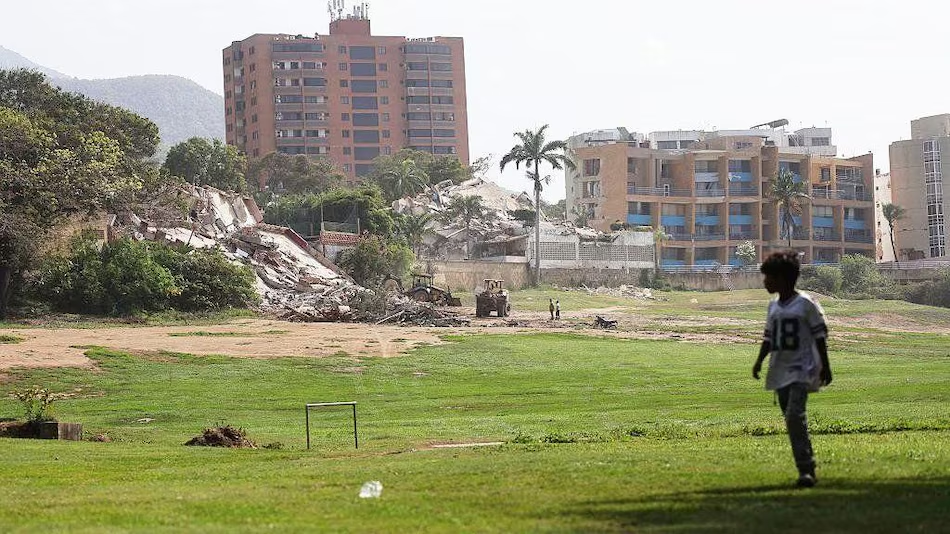
Caraballeda Golf & Yacht Club golf course, La Guaira
Milagros González, a resident of the Caribe housing development, tells BBC Mundo that she lived in a part of the area where most of the buildings collapsed and had to flee as soon as she could. Its tower was “one of the few that did not collapse.” “I got out with my two little girls and my two elderly ladies. Getting out was easy. But thank God we got out alive. The building is uninhabitable. But we are alive, which is what’s important, and we are grateful to God,” she says. “In front there is a building called Hoyo Cinco. There are people trapped inside and they haven’t been able to get them out because, with the way the building fell, it’s scary that what’s left will end up collapsing too.” González confesses that every time she goes to bed she wakes up dizzy and thinks she is trembling.
“It turns out that a psychologist just told me that it’s all part of the same process,” she adds, while her two young daughters play with dolls on a mattress they have placed on the grass. In the area surrounding the Caraballeda Golf & Yacht Club, the streets – cracked and covered in rubble – are marked by dust and silence, interrupted only by heavy machinery and those searching among the remains. The humid heat of this area of the Caribbean, which reaches almost 30 degrees Celsius daily, becomes stifling as the hours pass and intensifies the fatigue of those who have been working non-stop since Wednesday. Added to this is a persistent odor —which some residents describe as “the smell of blood”— mixed with dust, concrete and organic matter, which permeates the environment and forces people to wear masks.
The streets are also full of Venezuelans with lost looks, tense gestures, and a sadness that can be felt even before hearing their stories. Venezuelan Interior Minister Diosdado Cabello said that Caraballeda is one of the places most affected by the earthquakes that, as of Sunday morning, had left at least 1,450 dead and thousands homeless. The magnitude of the tragedy goes far beyond those figures. Thousands of people remain trapped under the rubble in La Guaira and other parts of the country. The UN estimates that there are around 50,000 missing persons, a situation particularly evident in Caraballeda.

An area of the golf course has been set up as a shelter for hundreds of families who have lost everything.
In recent days, international rescue teams from Mexico, Spain, Qatar, the United States, and the United Kingdom have arrived to reinforce the search efforts. However, on the ground, the number of collapsed structures that have not yet been addressed reflects that international aid has not been sufficient. A firefighter working in the area, who asked not to be identified, noted that there are dozens of buildings where not a single stone has been moved. “There aren’t enough hands,” he said. “And it’s very, very likely that there are still people trapped.” Faced with this desperate situation, the response from civil society has been decisive. Neighbors and volunteers, both from La Guaira and other parts of the country, have mobilized to assist those affected. Some distribute food and water; others organize supplies or collaborate in search efforts with available resources, sometimes even with their own hands. In the midst of the emergency, this makeshift support network has become a key lifeline for those still waiting to find their missing relatives.
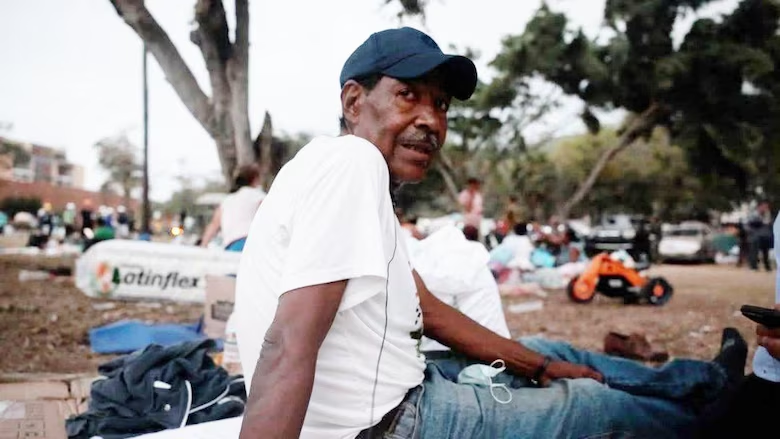
Jesús Andueza says he prefers to stay at the evacuation center set up at the Caraballeda golf course rather than return home. He’s afraid of aftershocks.
Jesús Andueza, a 64-year-old bus driver from Caraballeda, was taking a nap when the first tremor began. “It was horrible. Thank God. The house didn’t fall down, but it shook,” he says, sitting on the grass. Although his family is safe, he says the psychological impact has been severe. “To be honest, it makes you feel so nervous. Any little noise… horrible.” Today, like many others, he will sleep on the Caracabella golf course because he is afraid to return home. “My feet hurt, they’re swollen, and I came to get some diapers for the baby. It’s better for me to stay here.”
In Areas Devastated by the Double Earthquake in Venezuela Rescuers Denounce Bureaucracy and Militarization
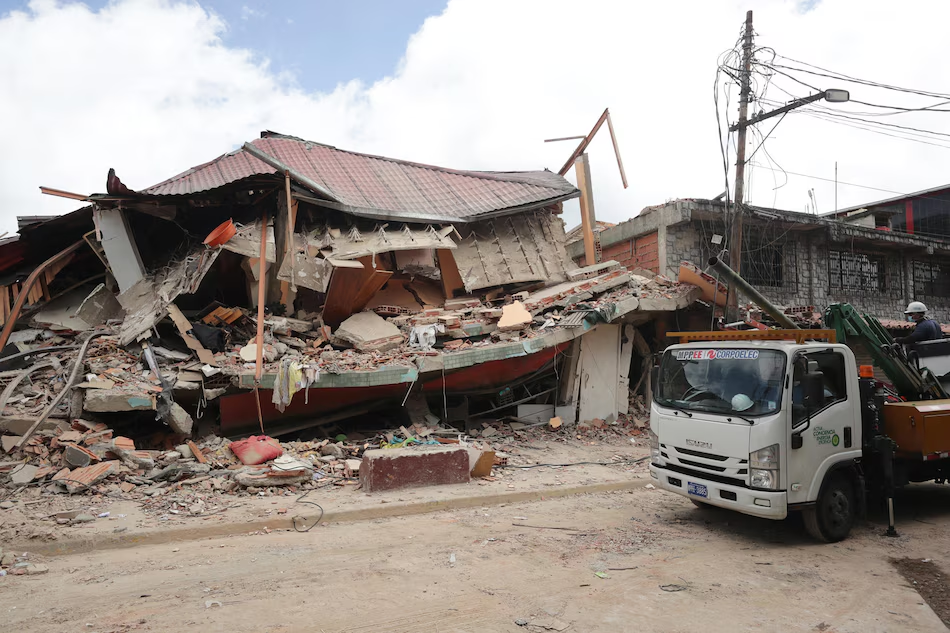
Photograph showing a house collapsed by the earthquakes in El Junquito, Venezuela
The situation is aggravated by the more than 430 aftershocks that have continued to impact the already weakened structures. Venezuela faces a tragedy of historic proportions after the 7.2 and 7.5 magnitude earthquakes that shook the South American country last Wednesday, June 24. More than 100 hours after the disaster, search teams warn that the chances of finding survivors under the rubble are drastically reduced with every passing minute. Despite the urgency, rescuers have denounced that the current government – now led by Delcy Rodríguez – has imposed strict bureaucratic controls and militarized the affected areas.
According to the media outlets El Tiempo and El Colombiano, a mandatory safe-conduct pass has been established for the entry of volunteers and trained personnel, which must be processed at the Poliedro de Caracas, a venue designed and built to host events and shows. This measure, they say, has led to long lines and scenes of frustration, with volunteers complaining that these procedures are delaying critical search efforts at a time when “time is of the essence.” The government justifies the restrictions by citing epidemiological risks and the need to organize aid in an orderly manner.
Incident Report
The crisis management has also been marked by incidents involving international brigades and restrictions on the press. Videos have circulated showing Interior Minister Diosdado Cabello in heated arguments to block the advance of US rescue convoys to the disaster zones. On the other hand, media access has been limited, allowing entry to critical areas only through official buses provided by the government. The state response has been harshly criticized by survivors and experts, who point out that the initial aid was driven by the neighbors themselves and by international involvement.
El Nacional, a media outlet opposed to the Venezuelan government, published the testimony of Francisco Lermanda, leader of the Chilean Topos (a volunteer search, rescue, and humanitarian aid group), who denounced Venezuelan military personnel for obstructing rescue efforts. He stated that international rescue teams are under suspicion of espionage. “A soldier entered the disaster zone, where our people are holed up in tunnels, to ask for their documents,” the Chilean leader said. He also stated that when a military officer was asked why they frequently requested identification, he replied: “Because we have orders to check you periodically because you could be American or Chilean spies.”
Furthermore, in a video published by the German media outlet, DW News, dozens of people working on rescue efforts in the parish of Caraballeda can be seen confronting a group of soldiers who were in the area carrying out surveillance work. In the video, a volunteer is seen confronting members of the Bolivarian National Armed Forces (FANB). “Why did you bring weapons? You should have brought a shovel, a pickaxe.” Currently, 2,624 international rescuers from 24 countries are working with specialized dogs and heavy machinery to try to save the lives that still remain under the ruins.
The death toll has climbed rapidly, with official records placing the figure at 1,719 dead and more than 3,150 injured, while the United Nations estimates that the number of missing persons could reach 50,000. The coastal state of La Guaira has become the epicenter of the devastation, with a landscape reminiscent of the 1999 mudslide. A total of 774 buildings have been affected or collapsed, of which 189 suffered total loss, in addition to damage to 38 hospitals and 44 shopping centers. The situation is aggravated by the more than 430 aftershocks that have continued to impact the already weakened structures.