When a Word Becomes a Promise: What “Organic” Means in Panama
By Lyn Bishop
Founder, Quetzal Cacao
Certified Organic Cacao Estate, Panama
Most of us will never visit the farms that grow our food.
We will never walk the fields, meet the farmer, or see firsthand how a crop was grown. Instead, we rely on trust.
But what happens when we cannot verify the claims being made about our food?
That question led me to a deeper understanding of why the word organic is legally protected in Panama.
There was a time when I did not think organic certification mattered.
My philosophy was simple: know your farmer.
Over the years, people came to know our farm. They walked the trails, saw the cacao trees, tasted the chocolate, and asked questions about how we grow food. If someone wanted to understand our practices, they could come and see them for themselves.
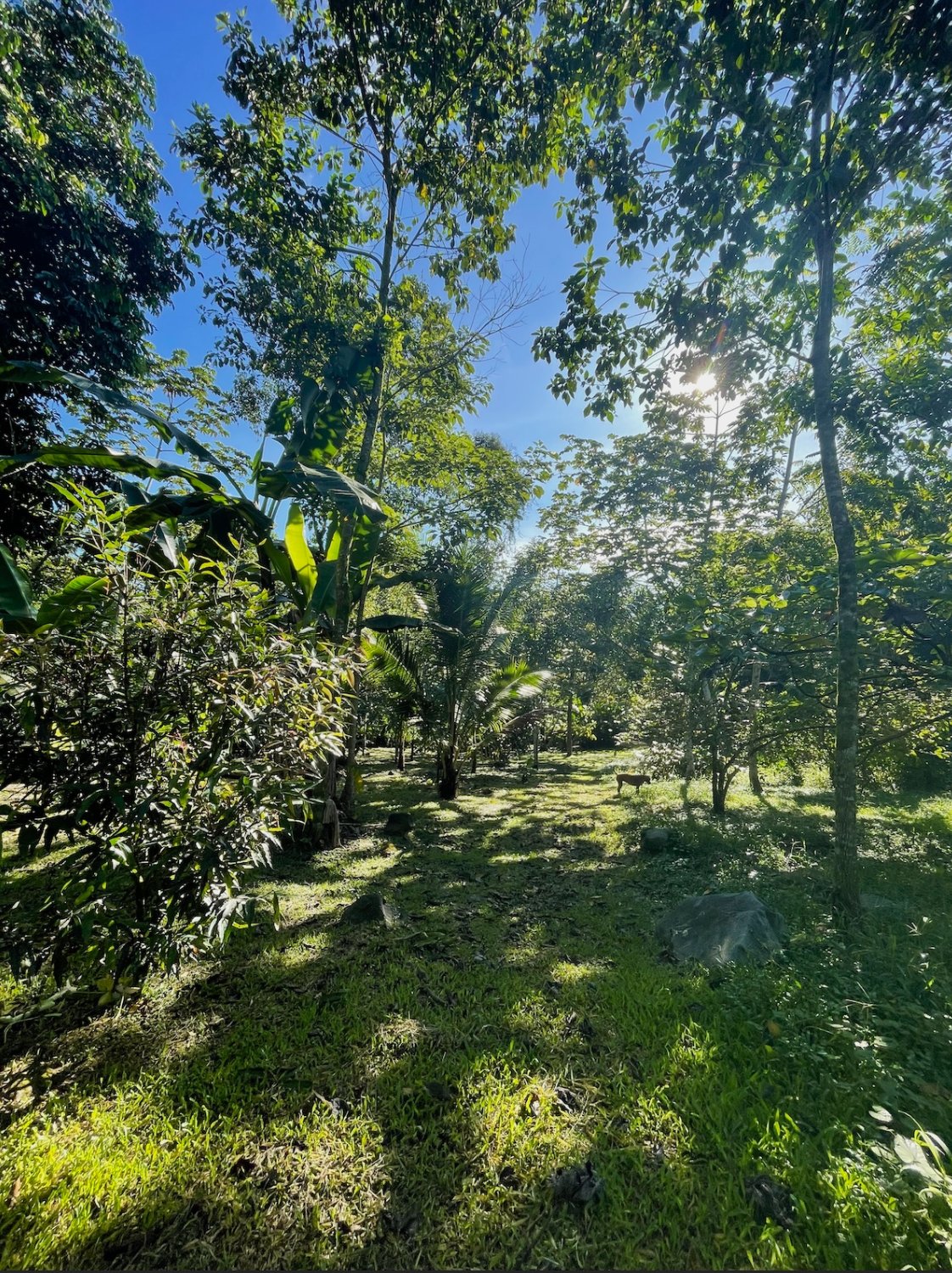
In the early morning, when the air still holds the cool of the night and the cacao leaves catch the first light, the work feels quiet and steady. That is where this way of growing began.
So when the agricultural ministry reached out and invited me to certify some of our products as organic, I hesitated.
We knew we could meet the standards. We had been growing this way for years. I simply believed the work spoke for itself.
The soil, the trees, the way we showed up each day. I did not think a certificate could add much to a relationship built on trust.
Over time, I began to see something I had overlooked.
Most consumers will never have the opportunity to know their farmer. They make decisions from a market shelf, a roadside stand, or a grocery cart, often with very little information about how their food was grown.
When trust cannot be built through direct relationship, it must be built another way.
That is where certification enters the story.
What Organic Means in Panama
Many people assume organic simply means food grown without synthetic pesticides or fertilizers. While that is part of it, in Panama the word carries a specific legal meaning.
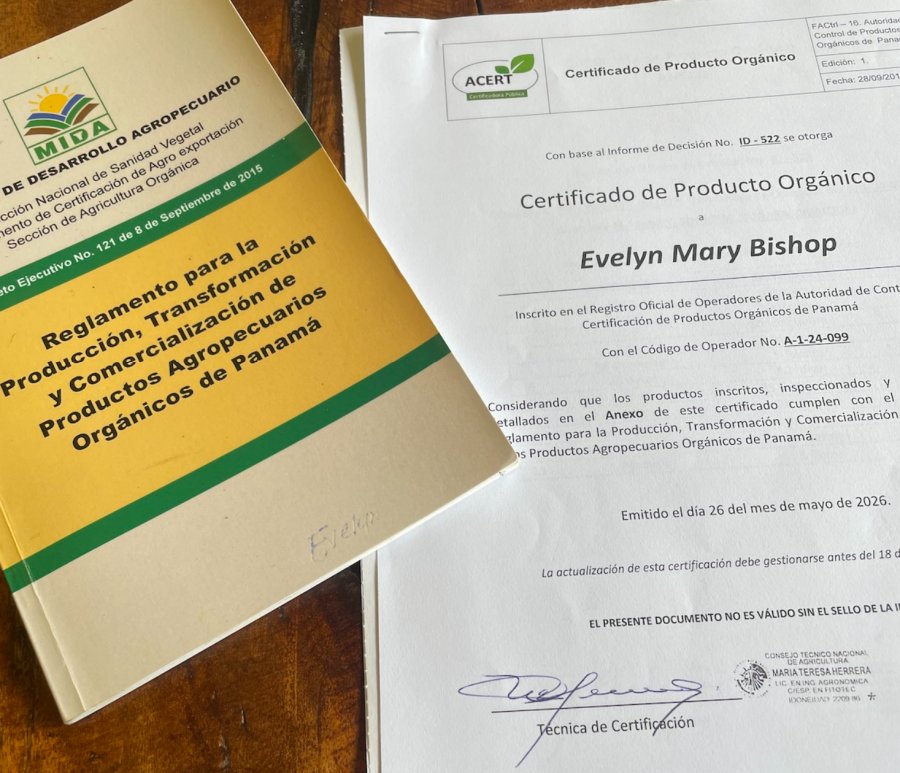
The term organic is regulated by the Ministry of Agricultural Development (MIDA). A producer cannot simply decide to call a product organic because they believe it was grown responsibly. To legally market a product as organic in Panama, it must meet established standards and be certified through an approved process.
One detail that surprised me is that certification is generally applied to products, not necessarily to an entire farm.
Today, twelve products grown and crafted on our farm are certified organic in Panama, including our saril, whose deep crimson calyces are harvested each season and transformed into one of our favorite farm products.
Organic is not simply an intention. It is a claim that must be supported.
When Trust Has No Anchor
A story shared with me recently brought this into focus.
A grandmother in Volcán was buying strawberries labeled organic for her sick grandchild. When she asked the seller if they were truly organic, she was assured that they were.
A short time later, she mentioned the conversation to me. I told her something simple: if the strawberries were certified organic, the producer should be able to show the certification.
She went back and asked to see it and was told the certification could not be shared.
There was no way to verify what she had been told.
She stood there holding the strawberries, unsure what to believe.
She was not willing to take that risk with a child who was already unwell, so she threw the strawberries away.
For a moment, there is nothing else to do but sit with that.
That is not a small decision. That is trust breaking in real time.
Without certification, there is no simple way to verify what is being claimed.
When trust becomes unclear, the consequences show up in kitchens, markets, and family decisions every day.
Extending Trust
This question reaches far beyond Panama.
People everywhere want to know where their food comes from, how it was grown, and whether the claims being made can be trusted.
It was never about replacing the relationship between farmer and consumer. It was about extending it.
Certification allows trust to travel farther than the farm gate. It gives someone standing in a market, who may never meet the grower, a way to verify what is being claimed.
It does not replace integrity or the work on the land, but it creates a shared language that can be recognized even without direct connection.
A Commitment Made Visible
In the end, this is not really about paperwork, even though there is plenty of it.
It is about caring for the land well, being honest with the people who buy our food, and using words with the respect they deserve.
Not all food is grown the same, and not all words are used with the same care.
It is reasonable to ask questions, whether you are speaking with the grower, the seller, or someone in between. It is reasonable to look a little closer, to ask how something was grown, whether it is certified, and even to ask to see the documentation behind the claim.
My philosophy has always been simple: know your farmer. Whenever possible, visit the farm, ask questions, and get to know the people growing your food. When that is not possible, certification offers another way to build trust.
For me, that is what the word organic has come to represent: not an idea, but a promise. A promise worth standing behind.
The kind you can trace back to the soil.
If conversations like this matter to you, I’d love to invite you a little closer.
The Hearth grew from that same idea. It is a place to stay connected to the farm through seasonal letters, harvest updates, workshops, chocolate releases, and the ongoing story unfolding here beneath the cacao trees.
I would be delighted to welcome you into the circle:
———
Lyn Bishop stewards Finca Las Heliconias in Chiriquí Province, Panama, where cacao, fruit, and other certified organic crops are grown. She is the founder of Quetzal Cacao, a tree-to-bar chocolate company.