The Complex Illicit System of the Gulf Clan that Panama Wants to Break Involving Gold in Darien.
Two operations have recently been carried out at the illegal camp in Darien, resulting in the capture of 30 people, including Panamanians and Colombians.
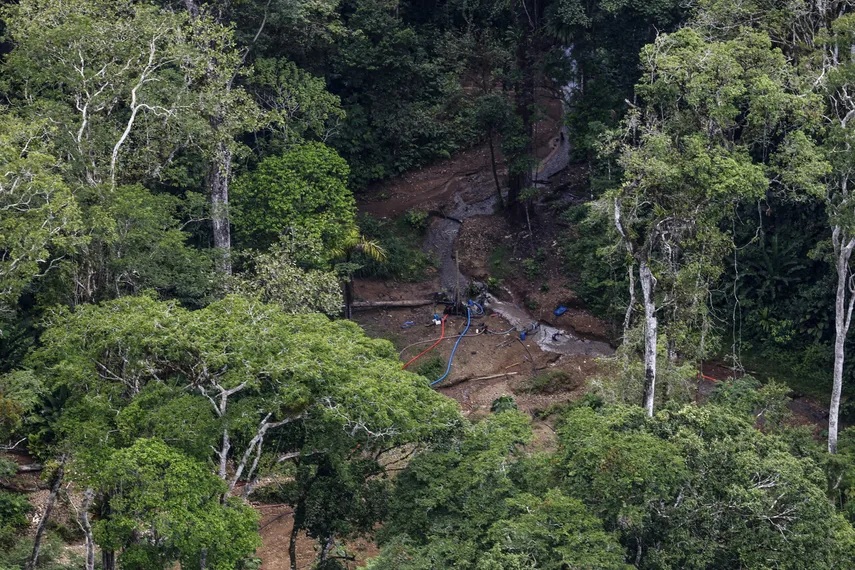
In the thick of the Darien jungle, on the border between Panama and Colombia, water pumps with blue and red pipes located on the Mangle River break the landscape: it is an illegal mining camp, which has devastated and where people flee when they hear the helicopters of the Panamanian forces.
Illegal Gold Mining.
“There is a complex system of illicit economy” based on the illegal extraction of gold, controlled by the Clan del Golfo, the largest criminal organization in Colombia, “and that is what we want to break,” the deputy director general of the National Border Service (Senafront), Commissioner Héctor De Sedas Cedeño, told news media. To reach the Mangle River, a remote point on the Colombian-Panamanian border, news media flew for an hour in a helicopter from the National Aeronaval Service (Senan) of Panama that departed from Nicanor, in Metetí, a place in the province of Darién located 230 kilometers from the capital of the Central American country.
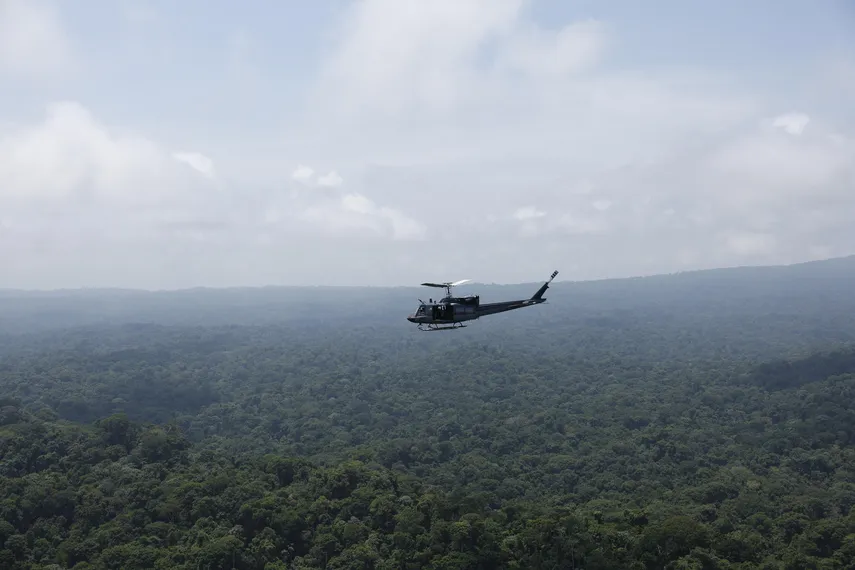
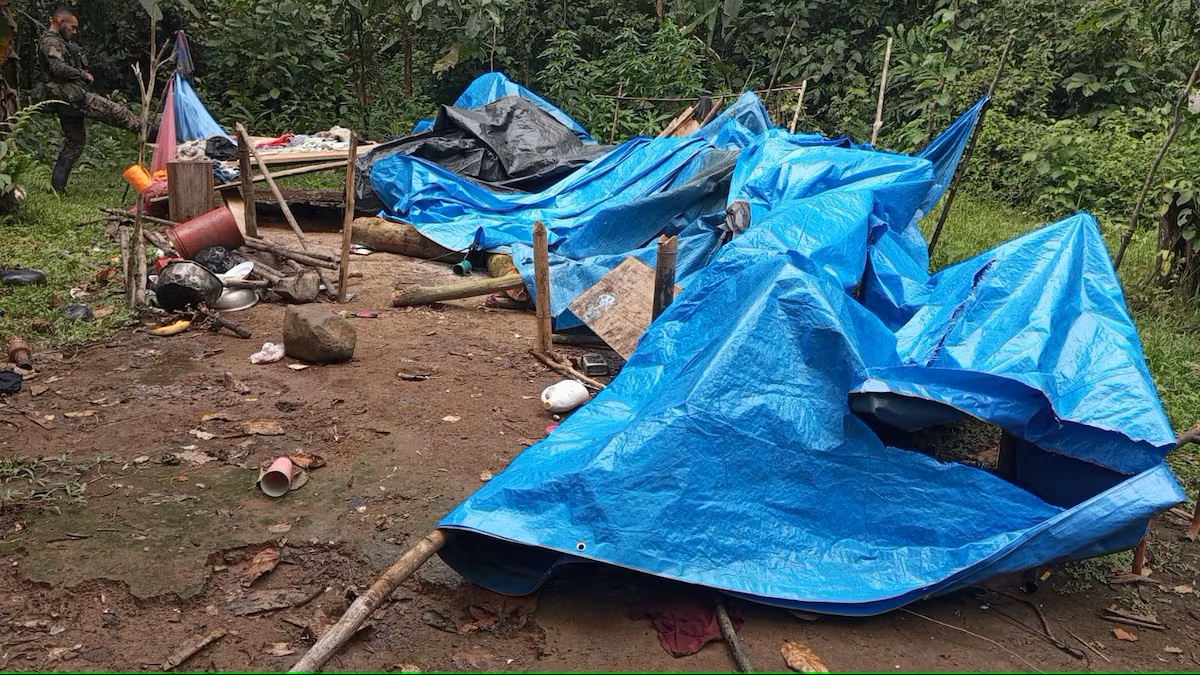
Two operations have recently been carried out at that illegal camp, resulting in the capture of 30 people, including Panamanians and Colombians, but “they still insist on carrying out illegal mining activities, as we were able to see during the aerial survey, that there were still people there,” who fled upon seeing the aircraft, the commissioner commented. “Our units are already heading to that place; it’s a four- to seven-day patrol, depending on weather conditions, through the jungle, with specialized training to, as we have done before, capture” the illegal miners. In the most recent operation on the Mangle River, thirteen people were captured, including “members of the Clan del Golfo,” said De Sedas, who stressed that in the Darién “nobody carries out illicit activities unless the Clan del Golfo has control from Colombian territory.”
Gulf Clan, Migrant Trafficking and Gold.
The Gulf Clan is primarily involved in drug trafficking, but also in migrant smuggling, illegal mining, and extortion. De Sedas recalled that during the migration crisis in Darien, which was crossed by more than a million people between 2019 and 2024, “Senafront had several exchanges of gunfire with these types of structures that trafficked people.” “The Gulf Clan obtains illicit money by charging for entry into Panamanian territory. When that gold (taken from the Panamanian side) enters Colombia, the miners have to pay them a percentage estimated at 20% of the total” of precious metal extracted, and, on top of that, they also buy gold from these illegal miners,” explained the Panamanian commander. “So, there is a complex system of illicit economy and that is what we are trying to break,” De Sedas said.
Binational Security Posts.
News media flew over the illegal mining camp during a tour that included a visit to the Alto Limón Binational Post, one of the three that extend along the 266-kilometer jungle border, and which are home to Panamanian and Colombian forces. These binational bases “allow us to be stronger. Not only in the exchange of information to know where the different drug trafficking routes are moving, but also to act directly and frontally against these people who enter Panamanian territory,” said de Sedas. “It’s about defending the Darién, a huge jungle that is a World Heritage Site, “which we are defending not only from these criminal activities but also by protecting the environment,” he added.
The tour to Alto Limón, which news media attended, was carried out within the framework of the deployment of more than 700 agents of the Senafront special forces at tactical and strategic points, as well as at the Binational Surveillance Posts of Panama and Colombia, to reinforce border security, the Panamanian security agency indicated. Panama abolished the Army in 1990 and its security falls to the Public Force, made up of the specialized police forces Senafront, National Aeronaval Service (Senan), Institutional Protection Service (SPI), National Police and the National Migration Service (SNM).