Panama President Mulino Rules Out Cabinet Changes and Talks About Water and Security Amid Thursdays Weekly Address
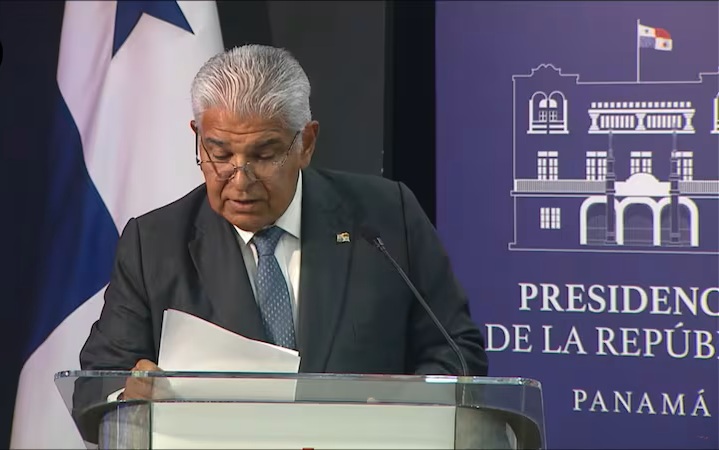
President José Raúl Mulino held his weekly press conference from Caimitillo, where he inaugurated the Panama Norte Hydraulic Ring. He also ruled out cabinet changes. The Ring project adds to the government’s push to improve water service in the capital area and nearby communities. During the address, Mulino also discussed the growth of the state payroll, along with other priorities including security and additional projects aimed at improving access to drinking water. The opening of the hydraulic ring underscores one of the administration’s central public works priorities: strengthening infrastructure tied to potable water.
In a country where water supply remains a recurring public concern, projects of this type are closely watched for their potential to improve service reliability and distribution. By choosing Caimitillo as the site of the weekly conference, the president linked the announcement directly to a local infrastructure milestone in Panama Norte, highlighting the government’s emphasis on public works outside the traditional government district. Mulino also addressed the increase in the state payroll, a topic that often draws attention in Panama because it affects public spending and the long-term management of government finances. Employment in the public sector is frequently part of broader debates over fiscal discipline and administrative efficiency.
Security was another major topic in the briefing. The issue remains a central concern for national authorities, especially as the government continues to pair infrastructure announcements with messages about public order and state capacity. The conference combined a local infrastructure opening with broader national issues, reflecting the government’s effort to present both immediate public works progress and wider policy priorities. For residents in Panama Norte, the hydraulic ring is presented as part of a larger effort to improve essential services. More broadly, the remarks show how the administration is framing its agenda around basic service delivery, public spending, and security — three areas likely to remain central in Panama’s political debate.
Mulino Rules Out Gang Talks as Violence Surges in Panama
President José Raúl Mulino said the Panamanian government will not negotiate with gangs as it confronts a rise in violence. He defended the use of police operations and intelligence work as the state’s response to the security challenge. The statement reinforces a hardline approach at a time when public concern over crime and violent activity remains high in parts of the country. Mulino’s position makes clear that authorities will rely on law enforcement pressure rather than direct talks with criminal groups. By rejecting negotiations, the administration is signaling that it views gangs as a matter for criminal prosecution and security enforcement, not political compromise.
The emphasis on police action and intelligence suggests a strategy centered on arrests, surveillance, and disruption of organized networks. Such an approach is likely to resonate with residents who want a firmer response to violence. It also places pressure on the security forces to show results quickly, especially in neighborhoods and municipalities affected by organized crime and armed activity. Panama has faced recurring concerns over gang violence, particularly in urban areas where criminal groups can influence local safety and public confidence. In that environment, presidential statements on security carry significant weight because they shape expectations about how aggressively the state will respond.
Mulino’s comments align with a broader regional trend in which governments have increasingly leaned on police and intelligence capabilities to confront criminal organizations. In Panama, that approach is closely tied to public order, the credibility of institutions, and the government’s ability to reduce fear among citizens. The president’s rejection of negotiations sets a clear line for the administration’s security policy. It suggests that the government intends to maintain pressure on gangs while presenting violence reduction as a law-and-order issue rather than a dialogue process. For Panama, the key test will be whether police operations and intelligence efforts can curb violence and restore a stronger sense of security in affected communities.