
Lawyers Warn of Capital Flight in Panama as Chapman Justifies Reforms to the ‘Tax Code’

The Economy and Finance Committee of the National Assembly began the first debate on Monday, May 11, on bill 641, which reforms the Tax Code. The President of the Republic, José Raúl Mulino, called the Assembly to extraordinary sessions from May 4 to June 5 to debate this issue.
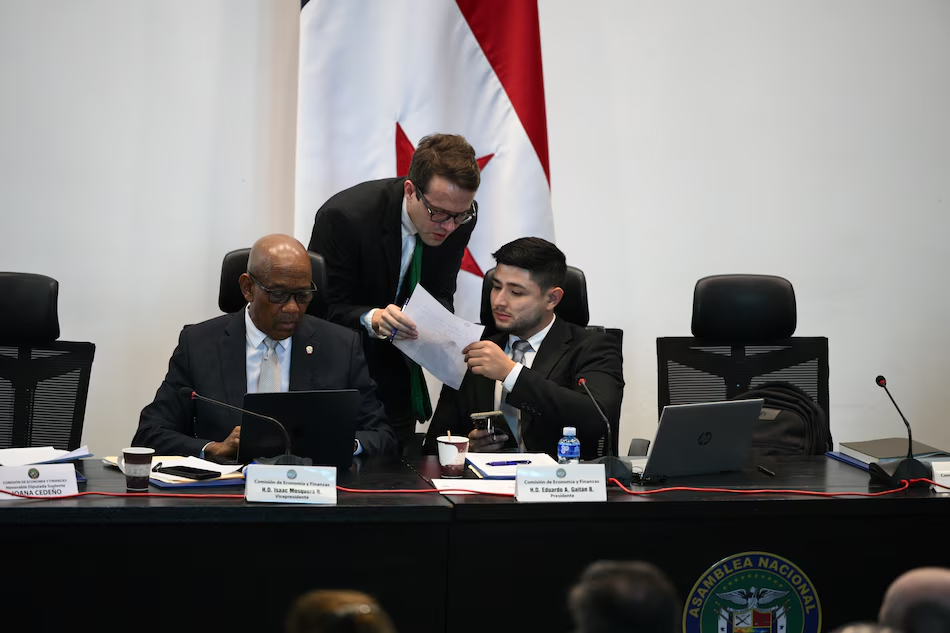
From left to right Deputies Isaac Mosquera and Eduardo Gaitán, president of the National Assembly’s Committee on Economy and Finance
Panama is reforming its tax code in 2026 primarily to align with international transparency standards, remove itself from European Union and FATF (Financial Action Task Force) “grey lists” of non-cooperative jurisdictions, and increase government revenue through tighter controls on multinational corporations. The reforms, spearheaded by President José Raúl Mulino and Minister of Economy and Finance Felipe Chapman, focus on forcing international companies to demonstrate real “economic substance” (actual operations, personnel, and offices) in Panama to maintain favorable tax treatment.
Key Reasons for the Tax Code Reform Include:
- Removing Panama from International “Grey Lists”: The most pressing driver is escaping the EU’s list of non-cooperative jurisdictions for tax purposes, with major evaluation dates for compliance in 2026.
- Implementing “Economic Substance” Requirements: New regulations, such as the proposed “Rules of Economic Substance for Passive Income,” require multinational groups to prove their business presence in Panama is genuine, not merely a legal structure designed to shift profits and avoid taxes.
- Preventing Tax Evasion and Abuse: Reforms focus on preventing the misuse of special tax regimes—like the Multinational Headquarters (SEM) and Panama Pacifico regimes—that allow foreign-source income (dividends, royalties, interest) to go untaxed.
- Introducing a 15% Minimum Tax: A key proposal requires international companies that cannot demonstrate real economic operations in Panama to pay a 15% tax on their income.
- Fiscal Consolidation and Revenue Generation: Panama aims to strengthen its fiscal policy, increase tax revenue, and curb tax evasion, which has been highlighted as a factor reducing resources for public services and social programs.
- Modernizing Tax Administration: The reforms aim to implement online filing, data analytics for fraud detection, and a new Tax Appeals Tribunal to improve efficiency in tax auditing and collection. These reforms reflect a transition in Panama’s financial model, aiming to balance its traditional territorial tax system—where foreign-source income is not taxed—with global pressures for transparency and anti-money laundering (AML) compliance, particularly following past scandals that branded the country a tax haven.

Lawyers Warn of Capital Flight in Panama