Proposed Penalties of up to 10 Years in Prison for Closing Access to Beaches and Rivers: a Bill For the Assembly to Approve
It will be up to the President of the Republic, José Raúl Mulino, to decide as to whether or not to endorse this bill, which arose in response to complaints from some citizens.
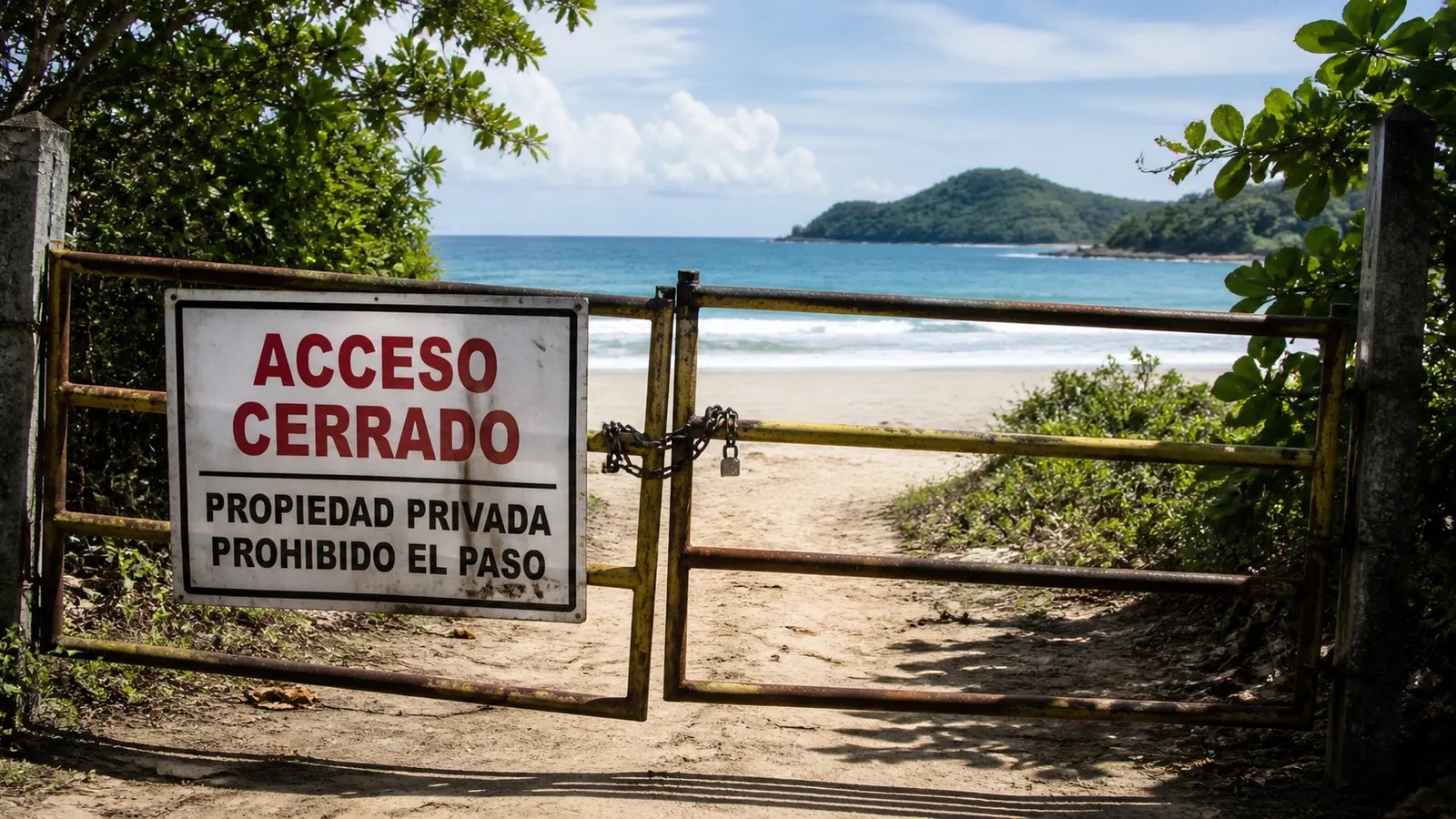
Panama: In several regions of the country, what for years was free access to a beach, a river, or a farm is now closed off, with gates, fences, or even makeshift tolls. This reality, which has generated tensions in communities and affected economic activities, could change with the approval of Bill 392 in its third debate by the National Assembly on its last day of session. The initiative, which modifies the Penal Code with the incorporation of articles 229-A and 229-B, seeks to curb the practice of closing public roads or restricting access to spaces of collective interest.
According to the Panamanian deputy Edwin Vergara, from circuit 13-3 (Chame and San Carlos), and who is the proponent of this initiative only in his circuit, in a small radius of approximately three kilometers (3 km) there are already closed 9 roads that were public access, whose members of the community used to have access to their pastures, farms and recreation areas. He points out that this is happening in different parts of the country and that traditional access routes have been blocked, preventing transit to pastures, recreational areas or tourist destinations, even charging for entry to places that have historically been free to access. The bill establishes prison sentences of between three and seven years for those who arbitrarily obstruct public roads. In more serious cases, such as the illegal appropriation of state land through deception, the penalties can reach up to ten years in prison.
“Whoever, acting without justified cause, with fault or intention to make use, enjoyment, or disposal of roads and spaces for public use, as well as those that lead to rivers, beaches, lagoons, national parks, archaeological zones, natural monuments, water sources and reserves, protected areas that are in themselves inalienable assets of the State, by obstruction, closure or restriction using fences, gates, ditches, structures or other material means, will be punished with a prison sentence of three to seven years,” the proposal reads.
While it indicates that “It will be considered an aggravating factor when, through falsehood or deception, in the process of awarding property titles before the competent authority, the total or partial titling of any parcel of land belonging to national parks, archaeological zones, natural monuments, water reserves, protected areas that are inalienable assets of the State is obtained, it will be punished with imprisonment of five to ten years.” It will now be up to the President of the Republic, José Raúl Mulino, to decide whether or not to endorse this bill, which arises in response to complaints from some citizens.