The Assembly Weakens the Protection of Marine Ecosystems with the Backing of the Ministry of Environment
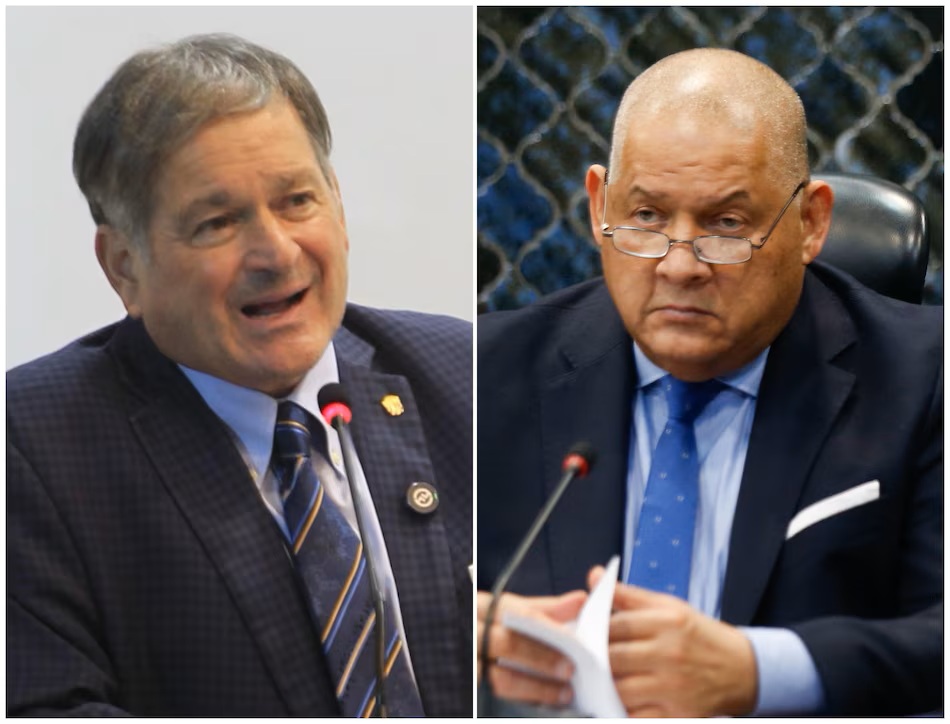
Pictured below Environment Minister Juan Carlos Navarro and Congressman Benicio Robinson. Biologists warn that the reform promoted by Benicio Robinson weakens key safeguards of marine ecosystems and opens the door to interventions in sensitive habitats.
Marine life in Panama is undergoing a controversial transformation due to a combination of unprecedented climate-driven oceanographic failures and the ecological impacts of infrastructure development. In 2025, for the first time in over 40 years, the vital seasonal upwelling in the Gulf of Panama failed to occur, while the 2016 expansion of the Panama Canal has created a new, controversial ecological corridor.
Key reasons for this Transformation Include:
- The Collapse of the Pacific Upwelling (2025)
- Failed Natural Cycle: Typically, from December to April, strong trade winds drive nutrient-rich, cold water to the surface, supporting fisheries and cooling coral reefs. In 2025, these winds weakened significantly, and the upwelling failed, leaving coastal waters warmer and less productive.
- Ecological Impact: This failure has caused a “near-total shutdown” of marine productivity (chlorophyll levels), jeopardizing fish populations and the $200 million annual fisheries sector.
- Coral Stress: Without the cold water, coral reefs are experiencing higher heat stress, increasing the risk of mass bleaching.
2. The Panama Canal Expansion and Biotic Reconfiguration
- Invasive Species Migration: The 2016 expansion allowed for larger ships, necessitating deeper and wider locks. This has allowed saltwater species (like snooks and snapper) to move into Lake Gatún, the freshwater center of the canal.
- Displacement of Native Species: These invading marine predators are displacing native freshwater fish, disrupting the ecosystem and hurting local artisanal fishermen.
- Interoceanic Exchange: Researchers fear that the canal is becoming an active conduit for species to pass between the Pacific and Atlantic, creating potential, unknown consequences for marine biodiversity on both sides.
- Climate Change and Anthropogenic Factors
- Weakened Trade Winds: Scientists attribute the failure of the upwelling to a major drop in wind strength, likely driven by climate change and El Niño conditions.
- Habitat Destruction: Rising sea levels, paired with the destruction of mangroves and sand extraction, are accelerating coastal erosion and destroying essential habitats.
Why it is “Controversial”
The situation is controversial because it highlights a conflict between economic development (the canal expansion) and environmental protection.
- Ignoring Scientific Warnings: Researchers from the Smithsonian Tropical Research Institute (STRI) warned about the risks of saltwater intrusion and species invasion during the planning stages of the expansion, yet these concerns were not adequately addressed.
- Local Livelihoods at Risk: Local fishermen are reporting drastically smaller catches, and there is increasing concern about the long-term sustainability of the area’s food supply and biodiversity.
- Uncertainty of Solutions: Proposed fixes, such as bubble curtains or electric barriers, are expensive and their effectiveness in stopping fish migration without hindering shipping is unproven.
The legal framework protecting marine life is undergoing a controversial transformation that has progressed largely unchecked. Behind the initiative is the controversial congressman from the Democratic Revolutionary Party (PRD), Benicio Robinson, a figure with considerable political influence in the country. The proposal was also endorsed by the Ministry of the Environment, headed by Juan Carlos Navarro. The conflict lies in the fact that, after four years of Law 304 of 2022 being in effect—considered a milestone for establishing the comprehensive protection of coral reef systems and their associated species—the legislative landscape was shaken up with the arrival of Bill 571, which was approved by the plenary of the National Assembly in its second debate this Monday, April 27, and everything indicates that it will continue to advance without objections.