Panama President Mulino is Requested by the Chamber of Commerce to Veto the New Law that Expands Discounts for Retirees and Pensioners.
The union warns that project 226 would place new burdens on small and medium-sized enterprises.
The Chamber of Commerce, Industries and Agriculture of Panama (CCIAP) requested President José Raúl Mulino to veto in its entirety Bill 226, recently approved by the National Assembly, considering that the expansion of discounts and benefits for retirees, pensioners and senior citizens would increase the economic pressure on micro, small and medium-sized enterprises (MSMEs). The initiative, approved in the third and final debate with 47 votes, modifies Law 6 of June 16, 1987 and expands existing benefits in sectors such as health, public services, telecommunications, education, professional services, housing and personal use products, in addition to incorporating new discounts. Among the approved provisions is the application of an additional 15% discount on the promotional price of products or services, a measure known as “discount on discount”.
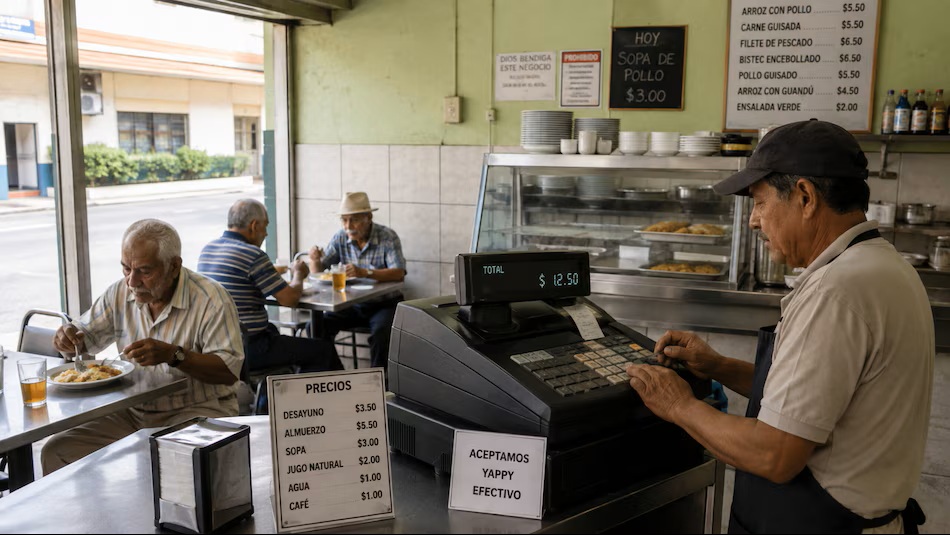
The project also increases existing benefits, such as the discount on the electricity bill, which would go from 25% to 30%, and establishes new discounts on adult diapers, private home health services, support devices, telecommunications and other services. However, for the CCIAP, the discussion should not focus on the need to protect older adults, but on the sustainability of the mechanism through which those benefits are financed. “Protecting retirees, pensioners, and senior citizens is a responsibility we share. What we need to discuss is how to do it in a sustainable and viable way,” the business association stated. The organization, chaired by Aurelio Barría, warned that for a micro, small, or medium-sized enterprise (MSME), a mandatory discount represents a direct reduction in its income, while other operating costs, such as payroll, rent, energy, supplies, financing, and taxes, remain the same or increase.
Consequences.
According to the Chamber, small businesses do not have an unlimited capacity to absorb new obligations. Among the alternatives they could face are reduced profit margins, increased prices, postponed investments, limited hiring, or even the closure of operations. “None of those options benefits Panamanians as a whole,” the CCIAP warned. The union also questioned whether the incorporation of a 100% tax credit to recognize discounts granted by companies solves the underlying problem. In the organization’s opinion, before establishing such a mechanism, its viability, the cost it would represent for public finances, and the State’s actual capacity to make it effective must be analyzed.
The CCIAP (Chamber of Commerce, Industries and Agriculture of Panama) noted that for years various sectors have accepted legally mandated discounts without receiving equivalent tax credits, and therefore considers it necessary to resolve this situation. However, it maintains that even if the tax credit works, the debate would remain open regarding the sustainability of continuing to expand social policies through obligations imposed directly on businesses. “A social policy needs sustainability,” the union stated. The business position adds to the warnings expressed during the legislative discussion by sectors such as the hotel, pharmaceutical and commercial industries, whose representatives questioned the economic impact and the viability of increasing mandatory discounts.
Sanctions.
Bill 226 also toughens penalties against businesses that fail to comply with the established benefits. Fines could range from $500 to $10,000, compared to current penalties of $50 to $1,000, and would double for repeat offenses. While proponents of the initiative argue that the new provisions aim to guarantee real benefits for retirees and prevent practices such as raising prices before applying discounts, business associations insist that the cost of this policy cannot increasingly fall on companies. According to the CCIAP, before imposing new obligations, a comprehensive review of the current system should be carried out and its impact on prices, inflation, employment, investment and, particularly, on SMEs should be evaluated.
The union also considers it necessary to define what role the State should play in financing these benefits and to strengthen compliance with existing rights. “The project must be vetoed in its entirety,” the Chamber reiterated, asking the Executive to open a technical, fiscal and economic discussion on how to guarantee greater protection for the elderly without placing new pressures on the productive sector. The bill is now in the hands of President José Raúl Mulino, who must decide whether to approve the initiative or return it to the National Assembly through a veto.