Who Can Be Held Responsible After a Serious Truck Crash?
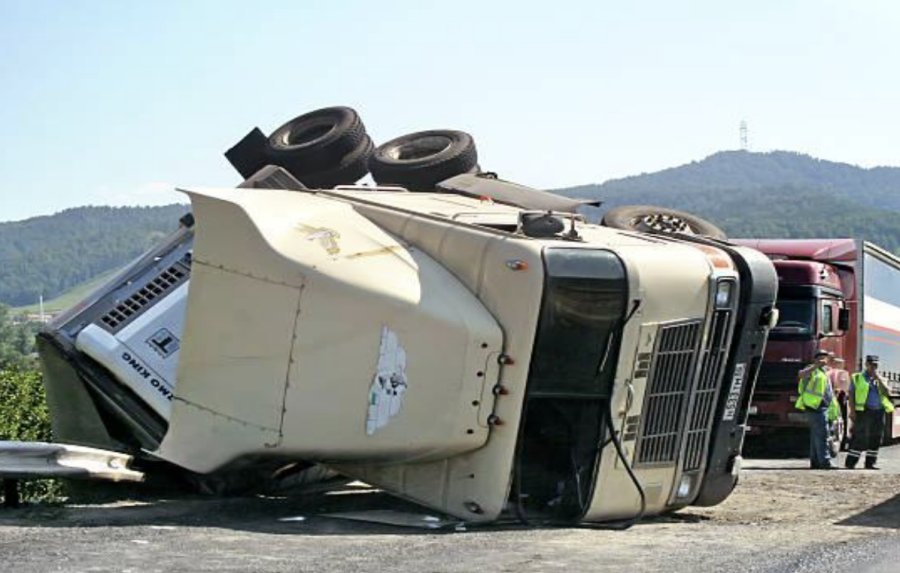
A serious truck crash rarely begins and ends with the person behind the wheel.
When an 18-wheeler, tractor-trailer, or commercial vehicle collides with a passenger car, the immediate focus is usually on the driver. Investigators look at speed, distraction, fatigue, lane position, and compliance with traffic laws. But commercial trucking is an interconnected business, and the decisions that contribute to a crash may have been made hours, days, or even weeks before the vehicles reached the same stretch of road.
The driver may be responsible. So may the trucking company, a maintenance contractor, a cargo-loading company, a vehicle manufacturer, or another business involved in putting the truck on the road.
For injured people and their families, identifying every potentially responsible party can become one of the most important parts of understanding what happened and pursuing compensation for the resulting losses.
Responsibility Often Extends Beyond the Truck Driver
Truck drivers have a duty to operate large commercial vehicles safely. A driver may therefore bear responsibility when evidence shows that negligent conduct contributed to a collision.
That conduct can include speeding, distracted driving, unsafe lane changes, following too closely, driving while impaired, or failing to respond appropriately to road and traffic conditions.
Fatigue can also become an important issue. Commercial drivers operate under rules intended to limit excessive driving time and require periods of rest. When a serious accident occurs, investigators may examine electronic logging information, trip records, delivery schedules, fuel receipts, communications, and other evidence that can help establish how long a driver had been working.
But focusing exclusively on the person driving the truck can provide only part of the picture.
The Trucking Company May Also Be Liable
Commercial carriers exercise significant control over how their operations are managed. They may hire drivers, establish delivery expectations, maintain vehicles, supervise employees, and create safety procedures.
If failures within those systems contribute to a crash, the trucking company itself may face liability.
Potential issues can include:
- Hiring a driver with an unsafe driving history
- Failing to properly train or supervise drivers
- Ignoring repeated safety violations
- Encouraging unrealistic or unsafe delivery schedules
- Failing to inspect or maintain commercial vehicles
- Allowing a driver who is unqualified or unsafe to remain on the road
Attorneys investigating a truck crash may therefore look beyond the driver’s actions and examine the company’s broader safety practices.
Experienced trial attorneys Arthur S. Ried and Juan R. Pecina of Ried Pecina Trial Lawyers emphasize the importance of identifying the complete chain of responsibility after a major commercial-vehicle collision. Working with a truck accident attorney can help injured individuals preserve evidence, investigate the businesses involved, and determine which parties may ultimately bear legal responsibility.
Maintenance Companies Can Become Part of the Investigation
A commercial truck contains numerous mechanical systems that must function correctly under demanding conditions.
Brakes, tires, steering components, lighting systems, coupling devices, and other equipment require inspection and maintenance. When one of these systems fails, investigators may examine who was responsible for keeping the vehicle roadworthy.
Some trucking companies perform maintenance internally. Others outsource inspections and repairs to third-party companies.
If a contractor performed inadequate repairs, overlooked a dangerous defect, or improperly returned a vehicle to service, that company could potentially share responsibility for an ensuing collision.
Maintenance records can therefore become critical evidence.
They may reveal repeated mechanical problems, overdue inspections, previous repair recommendations, or warning signs that were not properly addressed.
Cargo Loaders May Be Responsible for Unsafe Freight
A fully loaded tractor-trailer behaves very differently from a passenger vehicle.
Cargo must be distributed and secured properly. When freight shifts unexpectedly, the truck can become difficult to control. Improper loading may contribute to rollovers, jackknife accidents, lost cargo, or sudden changes in vehicle stability.
In some trucking operations, the driver or carrier loads the cargo. In others, a warehouse, shipper, freight company, or other third party performs that work.
If an independent company improperly loads or secures cargo and that failure contributes to a crash, investigators may need to examine the loading company’s conduct as well.
Evidence such as bills of lading, loading records, photographs, weight documentation, and shipping contracts can help determine who was responsible.
Manufacturers Can Be Examined When Equipment Fails
Not every truck crash is caused by poor driving or maintenance.
Sometimes a vehicle or component may contain a design or manufacturing defect.
A defective tire could fail at highway speed. A braking component might malfunction. Steering equipment or other safety-critical systems could perform differently than intended.
When evidence points toward defective equipment, responsibility may extend to the manufacturer, distributor, or another company involved in the supply chain.
These cases can require significant technical analysis. Engineers, accident reconstruction professionals, and other specialists may inspect the vehicle and its components to determine whether a mechanical defect played a role.
Other Drivers and Contractors May Share Responsibility
Commercial transportation frequently involves several businesses working together.
A trucking company may contract with brokers, shippers, leasing companies, maintenance providers, and independent drivers. Determining the legal relationships among those businesses can be essential after a major crash.
There may also be circumstances in which another motorist contributes to the collision.
For example, a passenger vehicle could make an unsafe maneuver that forces a truck into another lane. Multiple vehicles may be involved in a chain-reaction crash. Road construction or traffic-control issues can add another layer of complexity.
Serious truck accidents therefore require an investigation based on evidence rather than assumptions.
Why Evidence Must Be Preserved Quickly
Many important sources of evidence exist after a commercial truck accident, but they may not remain available indefinitely.
Depending on the circumstances, investigators may seek:
- Electronic logging device data
- Vehicle inspection reports
- Driver qualification records
- Maintenance histories
- Dispatch communications
- GPS and telematics information
- Onboard camera footage
- Cargo documents
- Employment and training records
- Drug and alcohol testing records
- Photographs and video from the scene
- Data recorded by the truck’s electronic systems
Physical evidence from the vehicle itself can also become important.
Preserving this information early can help attorneys and investigators reconstruct the events leading to the crash and evaluate whether the collision resulted from an individual mistake, a mechanical failure, a corporate safety problem, or a combination of factors.
Truck Crash Cases Can Involve Multiple Layers of Accountability
A commercial truck collision may appear straightforward in its first few minutes. A truck hit another vehicle. Police arrive. The driver is identified.
The legal investigation can be considerably more complicated.
The question is not simply who was driving. It is who made the decisions that placed the truck, driver, cargo, and equipment on the road in the condition they were in at the moment of impact.
Sometimes the answer is one person.
In other cases, several companies and individuals may share responsibility.
For people seriously injured in a truck crash, uncovering that complete story can be essential. Attorneys Arthur S. Ried and Juan R. Pecina represent individuals facing the consequences of serious accidents and investigate the evidence necessary to determine where responsibility may ultimately lie.
When commercial vehicles are involved, accountability can extend far beyond the cab of the truck.