Men’s Wedding Bands Have Quietly Changed — Here’s What Grooms Are Choosing Now
For most of the last century, a man’s wedding band was a decision made by default. Plain, yellow, a few millimeters wide, chosen to match whatever the jeweler happened to stock. The ring was a formality, not a preference.
That has shifted, and faster than most people realize. Grooms now approach the band the way they’d approach any other object they’ll live with for decades — with actual taste involved. If you’re shopping now, it helps to understand the styles shaping the category, because the field is far wider than the tray of identical gold circles your father chose from.
Texture is doing the work color used to do
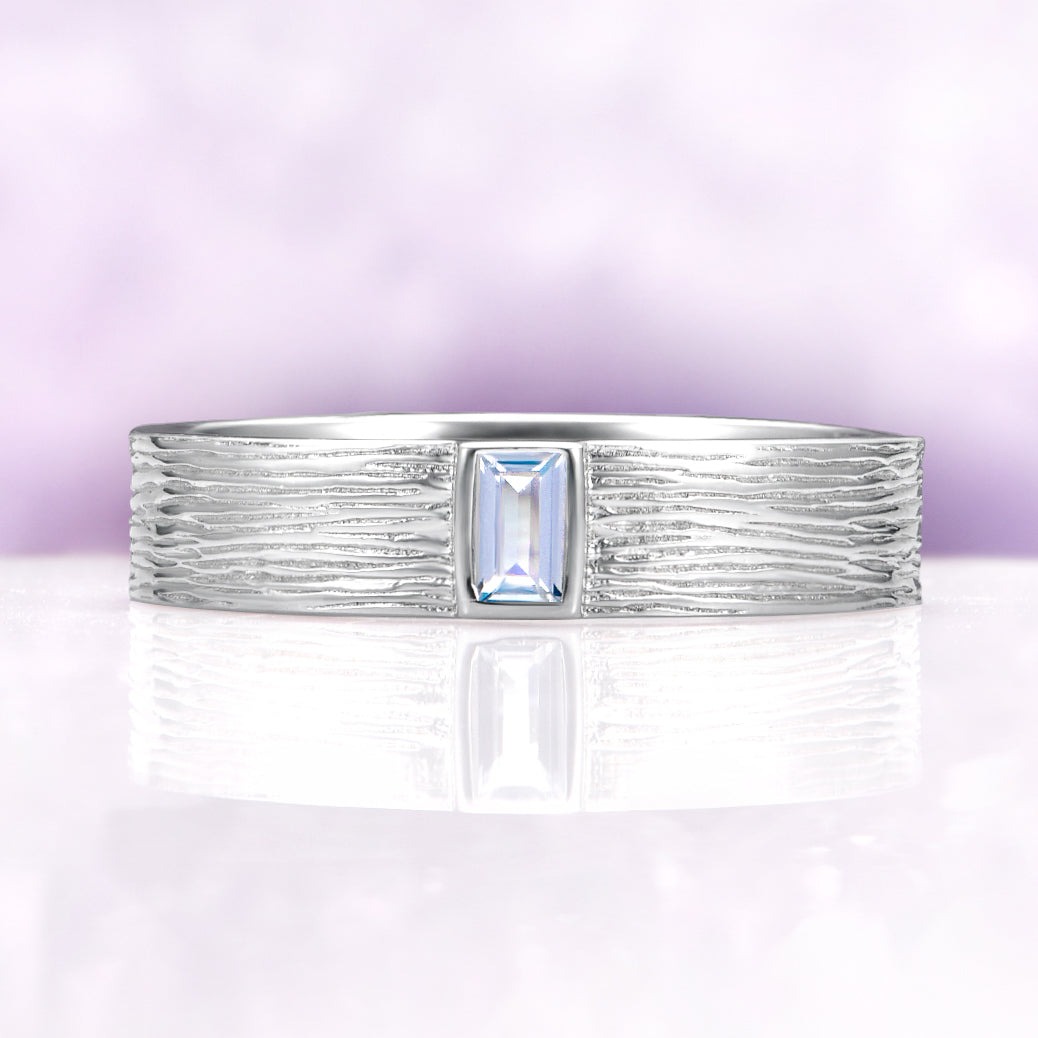
The single biggest shift is toward surface. Where a band once relied on metal color alone to make an impression, the interesting designs now use texture — hammered faces that scatter light unevenly, brushed and matte finishes that read quieter than polish, and worked surfaces that look forged rather than machined.
The appeal is practical as much as aesthetic. A textured surface hides the small scratches of daily wear far better than a mirror polish, which shows every mark. For a ring that has to survive a lifetime of desks, steering wheels, and gym equipment, that’s not a small consideration. It’s part of why fantasy and nature-led designers like Aquamarise have leaned so heavily into worked surfaces over flat ones.
Nature has moved into men’s jewelry
A bark-texture band with an organic, forged surface — the nature-inspired look driving much of the current interest in men’s rings.
Botanical and organic motifs — long a staple of women’s rings — have crossed over. Leaf patterns, bark textures, ripple and wave forms, faceted surfaces that echo cut stone or rock: these designs have found a real audience among men who want the ring to say something without resorting to a signet or a crest.
This is the corner of the market where independent workshops have pulled well ahead of the chains. Sculptural, nature-inspired work requires design risk and shorter production runs, which is exactly what a smaller maker can offer and a national retailer usually can’t. Ranges of distinctive men’s wedding rings from independent designers are where the genuinely original pieces live — the ones that look like they were designed by a person rather than assembled from a parts catalog.
Stones are no longer only for her ring
Set stones in men’s bands have moved from unusual to unremarkable. Sometimes it’s a single small stone flush-set so it never catches; sometimes it’s a channel of stones running along one edge; sometimes it’s a stone chosen for meaning — a shared gem carried across both partners’ rings as a quiet link between them.
The restraint is the point. A men’s band with a stone works when the stone reads as a detail rather than a centerpiece, discovered on a second look rather than announced on the first.
The matched set has loosened up
Couples increasingly reject the idea that both rings must be identical. The more current approach is a shared thread rather than a matched pair: the same texture on two different profiles, a common inner engraving, the same accent stone set differently in each. Her ring gets to sit against an engagement ring; his gets to be its own object; and the two still clearly belong to the same story.
This solves a problem the identical-pair tradition never could — it lets two people with different taste both end up with a ring they actually like, without either one compromising to match the other.
Proportion is the quiet decider
Underneath all the style choices sits the one variable that determines whether any of them land: proportion. A design that looks striking in a product photo can overwhelm a slender hand or vanish on a broad one. The width and profile have to suit the specific hand wearing the ring, and the safest guide is what the man already wears comfortably — his watch, his existing rings if any, the general weight of his everyday accessories.
Get the proportion right and almost any style works. Get it wrong and even the best design fights the hand it sits on.
Where this leaves you
The old default — plain, yellow, narrow, chosen in a hurry — is now just one option among many rather than the only one on offer. Texture, botanical form, discreet stones, and loosely coordinated sets have given men a real vocabulary to choose from.
The practical takeaway is simply to slow down enough to use it. Look past the first tray, consider what he actually likes in the objects he already owns, and treat the band as something chosen rather than settled for. It’s on his hand for the rest of his life — it’s worth an evening’s thought.