

In Panama ION Introduces New Treatment for Patients with Advanced Cancer.
The ION incorporates technology to treat certain types of advanced cancer through chemotherapy applied directly to the abdomen.
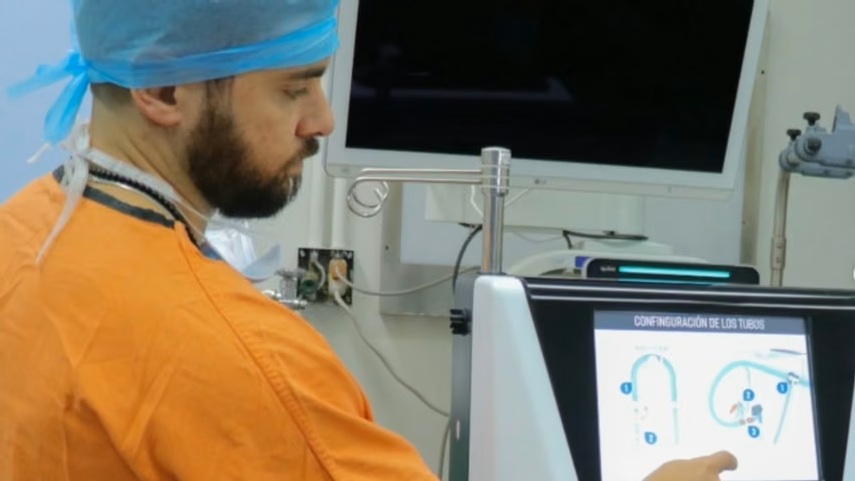
The National Cancer Institute (ION) has incorporated equipment to perform the hyperthermic intraperitoneal chemotherapy (HIPEC) procedure, a therapeutic alternative aimed at patients with certain types of advanced cancer that have spread to the peritoneum, the membrane that lines the abdominal cavity and its organs. The general director of the ION, Julio Santamaría, explained that this treatment combines cytoreductive surgery, in which specialists remove visible tumors from the abdomen, followed by the administration of chemotherapy heated to temperatures of approximately 42 to 43 degrees Celsius, directly into the abdominal cavity.
What Types of Cancer can be Treated with this New Technology?
According to Santamaría, the procedure may be considered for patients with certain tumors and some cases of:
- Ovarian cancer
- Colon cancer
- Stomach cancer
- Other tumors that affect the peritoneum, according to medical evaluation
The specialist clarified that the treatment is not indicated for all patients with these diagnoses, since its application will depend on the location of the disease and compliance with strict medical criteria. Santamaría highlighted that the incorporation of this technology represents an advance for Panama, allowing the procedure to be performed for the first time in the country, both in the public and private systems, preventing selected patients from having to travel abroad to access this intervention.
How Long does the Hyperthermic Intraperitoneal Chemotherapy Procedure Last?
Dr. José Pérez González, head of Surgical Wards and the Anesthesiology Service at the ION, explained that these procedures can last between six and eight hours, due to their complexity. The procedure requires specialized anesthetic and hemodynamic management, as well as the support of intensive care units and the blood bank to ensure patient safety during and after surgery.