

An Airborne Laboratory Aboard a NASA Aircraft Arrives in Panama on a Scientific Mission
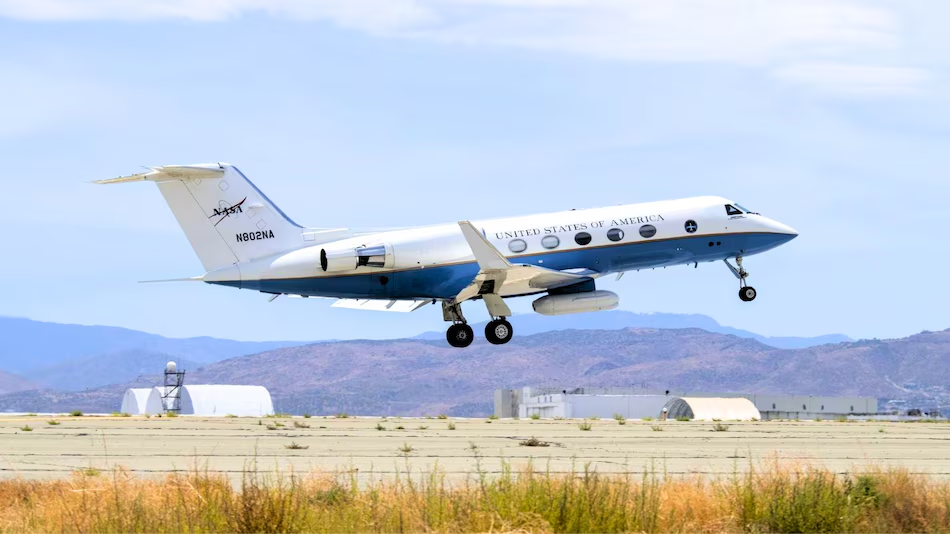
NASA’s Gulfstream C-20A aircraft pictured below, a flying laboratory arrives in Panama. Scientists promote STEM education and cooperation with local institutions to study tropical biodiversity in the country.
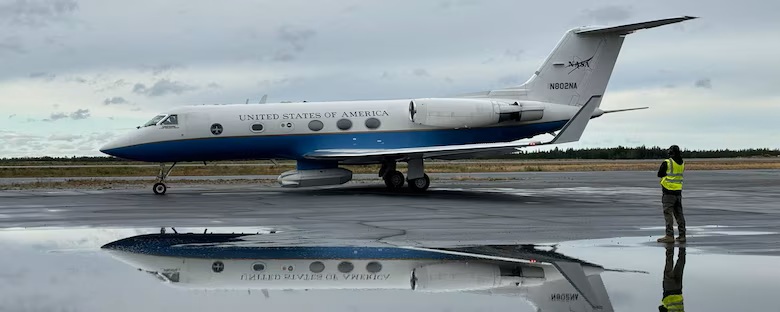
A NASA research aircraft arrived in Panama on Monday, May 4, along with a team of scientists who will carry out a mission focused on studying tropical biodiversity and strengthening scientific cooperation until May 9, the U.S. Embassy in Panama reported on Monday. This is the Gulfstream C-20A aircraft, used as a flying laboratory in the AVUELO campaign (Unified Airborne Validation Experiment: Land to Ocean), an initiative carried out in collaboration with the Smithsonian Tropical Research Institute.

The United States Ambassador to Panama, Kevin Marino Cabrera pictured above, emphasized that the visit is part of efforts to promote innovation and education in science and technology, while strengthening the bilateral relationship between the two countries. According to the report, the mission combines state-of-the-art airborne radar technology with field measurements in terrestrial and coastal ecosystems, allowing for the collection of unprecedented data on environments ranging from forest canopies to wetlands.

“NASA represents the best of American ingenuity and excellence. By bringing this world-class mission to Panama, we are proudly showcasing American technology and inspiring the next generation in both countries to dream big, pursue STEM careers, and contribute to discoveries that will shape our future,” Cabrera stated. During their stay, Panamanian students, teachers, and researchers will have the opportunity to interact with NASA scientists through tours of the aircraft, academic conferences, and technical exchange sessions.
These activities aim to encourage vocations in STEM areas (science, technology, engineering and mathematics) and open new opportunities for training and research. The initiative is also part of the Freedom 250 program, promoted by the US embassy to commemorate the 250th anniversary of the country’s independence, highlighting its leadership in innovation and international cooperation. The aircraft’s radar allows for the observation of details that conventional satellites cannot capture, facilitating the creation of new methods for environmental monitoring. These studies seek to improve the scientific understanding of biodiversity in tropical regions such as Panama, the report highlights.