Dozens of New Marine Species are Discovered by International Scientists Including Panamanian Taxonomists as they Discover ‘Life in a Glass Castle’
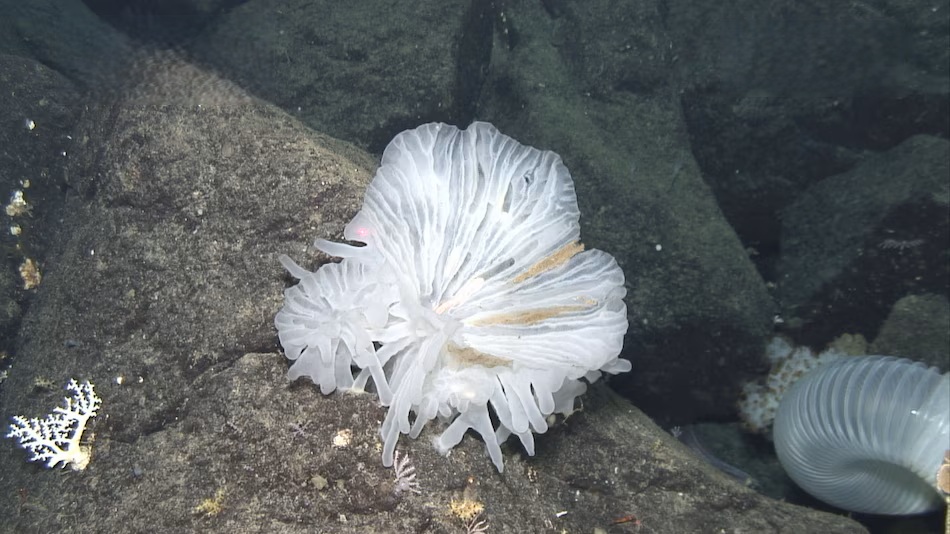
An international effort to document life in the deep ocean off Japan has confirmed the discovery of 38 new species, following an expedition by the Nippon-Nekton Ocean Census Foundation and the Japan Agency for Marine-Earth Science and Technology (JAMSTEC). The June 2025 mission conducted aboard the research vessel Yokosuka and the manned submersible Shinkai 6500 collected more than 528 specimens. In October 2025, taxonomists from around the world gathered at JAMSTEC headquarters for a species discovery workshop to verify these findings and coordinate their scientific publication. Among these discoveries, two groundbreaking studies stand out.
A comprehensive investigation published in the journal Ecosphere led by Dr. Chong Chen, who is a researcher at JAMSTEC. He revealed a fivefold increase in known biodiversity in the cold seeps of the Nankai Trough; and a study published in The Zoological Journal of the Linnean Society, led by Dr. Naoto Jimi, which demonstrates the remarkable evolutionary history of symbiotic worms that inhabit sponges, which have evolved to live in a protected environment. In the Shichiyo Seamount Chain a series of deep-water volcanic peaks located between 500 and 700 km southeast of Tokyo, researchers discovered an intricate biological relationship within glass sponges.
These sponges build silica skeletons, creating a rigid, translucent habitat. Two new species of polychaete worms—Dalhousiella yabukii and Leocratides watanabeae—were found living in symbiosis within these structures. Dives at the previously virtually unexplored Shichiyo Seamount also revealed: Five new species of dwarf lobsters, including the genus Munidopsis; new species of marine life, such as octocorals, nemerteans, amphipods and kinorhynchs; and the expansion of the distribution range of several species previously thought to be rare or absent from Japanese waters.