Banana Workers Regain Jobs after Union Crisis in Panama: “We had a rough time”
“We had a really hard time, there was nowhere to stand,” José Artola, known to his acquaintances as ‘Loncho’, tells news reporters while working on farm 15 in some banana plants that were abandoned last year, amid a union crisis that ended this industry, the main source of jobs in the province of Bocas del Toro, western Panama. Artola is one of the 2,300 workers who have returned to their jobs since the end of 2025, when the transnational Chiquita resumed the business it had abandoned in the middle of that same year after reporting $75 million in losses and laying off 5,500 employees amid a union strike for reasons unrelated to the company, social security reforms already in effect.
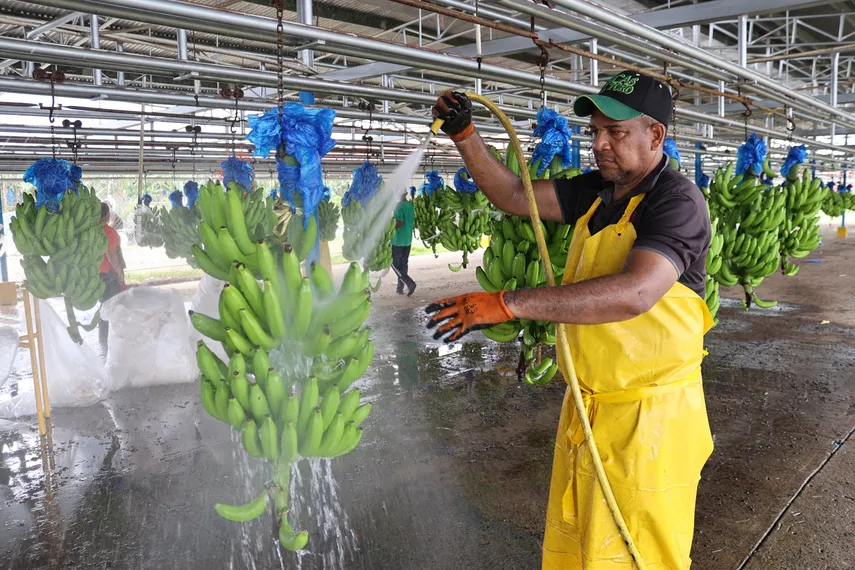
‘Loncho’ pictured above, had worked for more than 30 years on farm 15 until its shutdown ordered by the sector’s union under the direction of Francisco Smith, who is facing criminal proceedings. “We had a really hard time, there was nowhere to stand, until we started working and we are moving the farm forward and the farm seems to have gained strength and I am happy about that, because we are already starting to work,” says this man of thin but strong build, with skin tanned by the sun. Bocas del Toro is a province of lush natural beauty, covering 4,654 square kilometers and with a population of approximately 160,000, mostly indigenous people living in poverty. The banana industry, dominated by Chiquita for over 100 years, sustains more than 80% of the region’s economy.
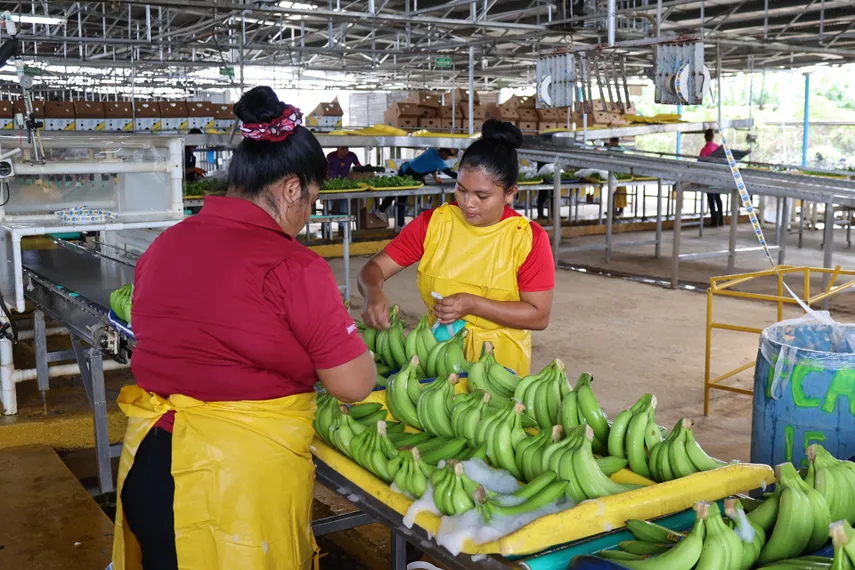
The union crisis “affected more than 5,500 workers, who were left without income,” recalls this woman, who wears her black hair tied back with a cap and a yellow rubber protector that covers almost her entire body, as she explains that the reactivation of the industry is progressing gradually. “First came the work on the farm, which began with the cleaning of the banana growing areas, so that the packing areas could then begin their work,” Batista explains. Not everyone faced the crisis in the same way. Alvin Garay, another worker with more than a decade of experience at farm 15, managed to survive thanks to small savings, although he says that many of his colleagues were not so lucky. “Some of my colleagues have had a really bad time,” he said.
A Gradual Reactivation
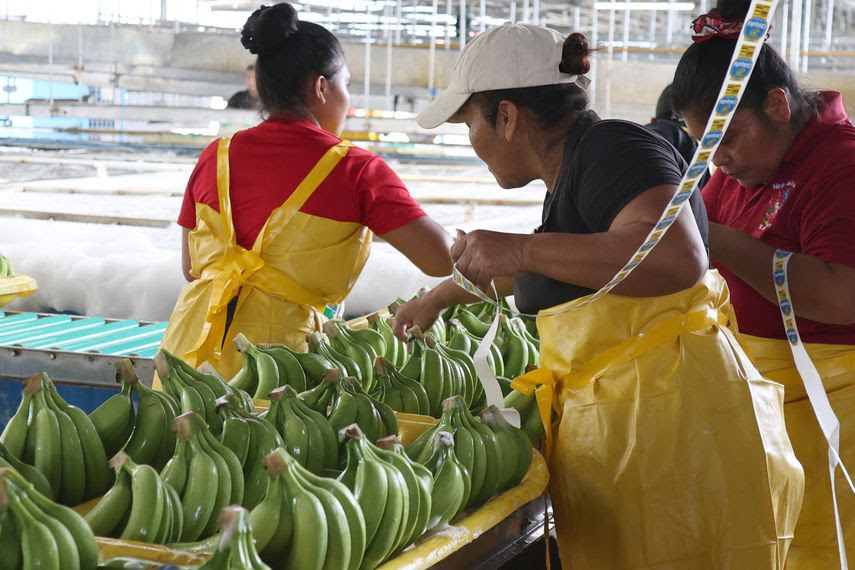
“Now, even if it’s only three or four days a week, there’s work, we take something home,” Anaica Batista, a worker at the packing plant on farm 15, tells media while labeling bunches of bananas. The reactivation of Chiquita in Bocas del Toro is being developed under a partnership model, explained Alexander Gabarrete, the company’s representative in Panama, to news media, in which several companies manage the labor force while the company maintains technical assistance, supervision and marketing. “As hiring increases, the economic activity will become more visible,” Gabarrete noted.
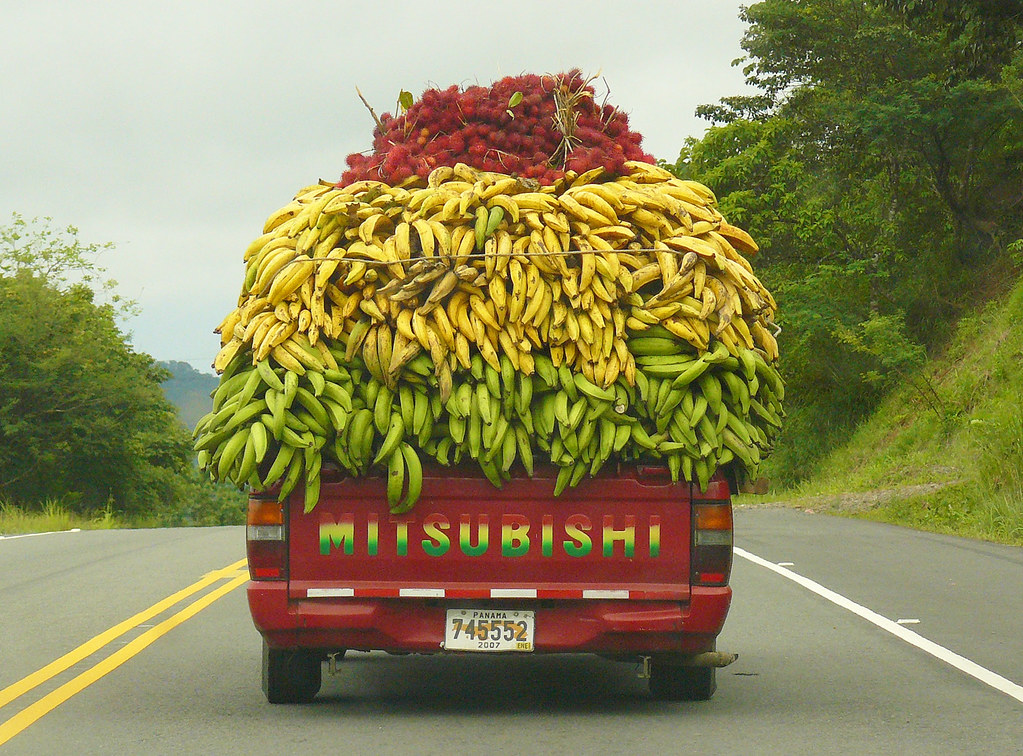
The multinational is now producing small quantities of bananas in order to test the behavior of the fruit and its packing plants. This stage of the reactivation “helps us observe the performance of the packing plants that have been remodeled, but also that of the fruit that is being harvested. All this production is destined for the local market and allows us to make estimates for a prompt export,” he explained to reporters. The transnational company plans to reactivate some 5,000 hectares of bananas out of a total of approximately 5,200 hectares dedicated to this crop. As part of the commitments made to the Government of Panama, Chiquita established a plan to invest about 30 million dollars to revive banana activity in Bocas del Toro.