Measures Announced for Water Crisis in Azuero: Authorities Inspect Plant in Chitré
Citizens have taken to the streets in recent weeks to demand solutions, complaining that the supply does not regularly reach their homes. Government officials visited Chitré to announce measures to address the drinking water crisis that has plagued the Azuero region for months, where residents have protested the lack of supply.
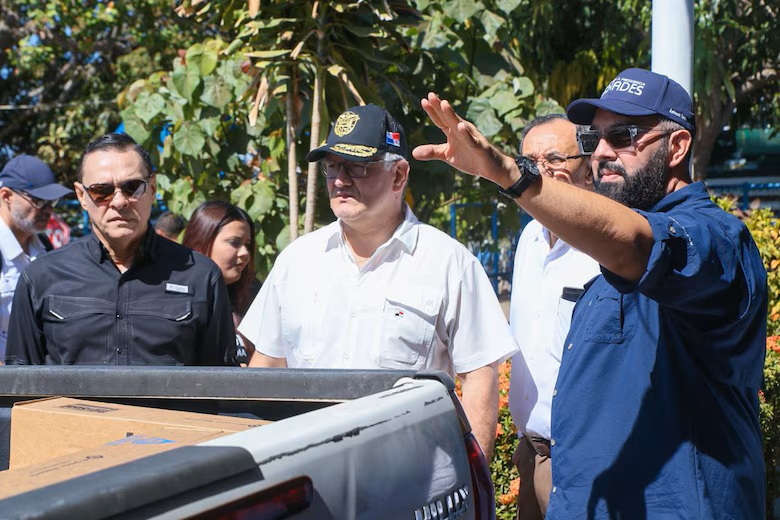
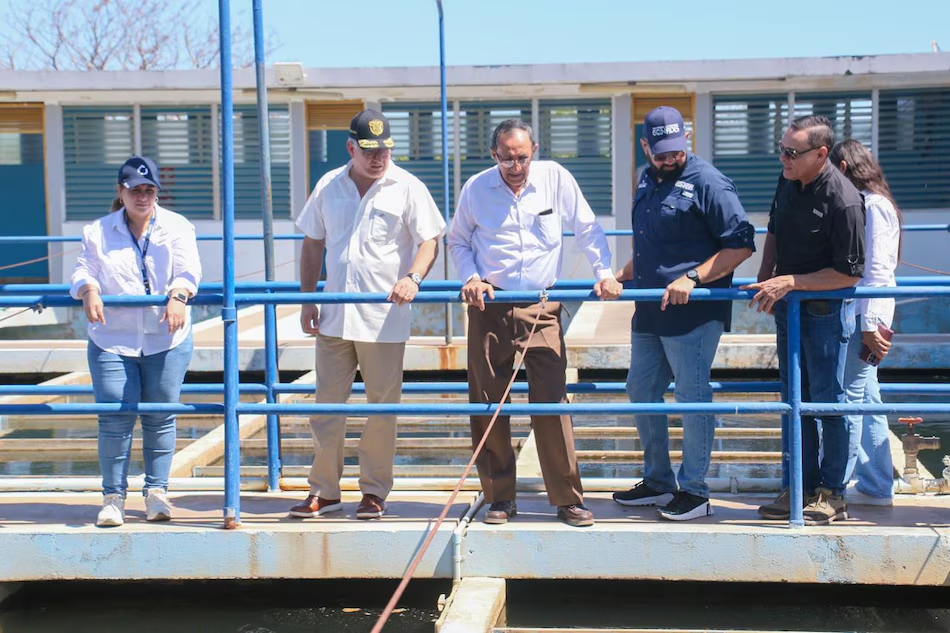
After several months of crisis due to the lack of drinking water in the Azuero region and the recent resignation of Rutilio Villarreal as director of the National Institute of Aqueducts and Sewers (Idaan), Executive authorities visited Chitré, in the province of Herrera, to announce actions aimed at improving the supply of the resource. In Chitré, residents have faced problems obtaining drinking water for months due to the pollution of the La Villa and Estibaná rivers. In recent weeks, residents have taken to the streets to protest and demand solutions, denouncing the irregular water supply to their homes. The inspection included a tour of the Roberto Reyna water treatment plant.
During the visit, Minister of the Presidency Juan Carlos Orillac explained that he was appointed by President José Raúl Mulino to coordinate actions to address the water crisis not only in Azuero, but in different regions of the country. “I want to be very honest and clear. The water problem is a national issue. We are extremely concerned, and we know that in Azuero we have been experiencing supply difficulties for several months now,” the minister stated. Orillac indicated that in recent weeks meetings have been held with the IDAAN technical team in the capital to evaluate immediate measures to improve water distribution, while larger projects, such as the construction and rehabilitation of water treatment plants, are underway.
He explained that many of these projects have already been awarded, but their execution will take time because it is a structural problem that has accumulated over years. “This cannot be resolved overnight. These are issues that, in some cases, take several years to resolve,” he emphasized. For his part, the executive secretary of the National Council for Sustainable Development (Conades), Antonio Tercero González, reported that actions are being carried out to strengthen the supply system through the drilling and rehabilitation of wells.
The official explained that in the province of Los Santos, work is underway to enable 29 wells, while in Herrera, four new wells are being drilled, with the aim of injecting more water into the distribution network and improving the flow to communities that are currently facing shortages. These drilling operations are taking place in areas such as the Chitré ring road, the road to Pesé, and the La Arena area, among other strategic points. Authorities indicated that, although water tanker operations are ongoing, this measure is considered temporary and not the primary solution to the problem. They stated that the priority is to increase the flow in the network by activating new wells.
Government officials visited Chitré to announce measures to address the drinking water crisis that has plagued the Azuero region for months, where residents have protested the lack of supply. Patience is asked for by the Minister of the Presidency
While all these processes are underway, the Minister of the Presidency asked the public for patience while the measures are implemented. “I know it’s difficult, but we’re going to try to resolve this problem as soon as possible. Our goal isn’t just any water, but potable water,” he stated. Orillac announced that next week he will hold meetings with the technical team and with the Ministry of Economy and Finance of Panama (MEF) to define the necessary financing and establish a roadmap for the works that seek to solve the water crisis in the region.
“Today we are launching the plan and we will be monitoring the problem week after week here in Azuero and at the national level,” he concluded. Just last March 4th, Villarreal left his position as head of IDAAN amidst the drinking water crisis in Azuero, a region where most residents have been unable to access potable water since May 2025. The agency was then taken over by Luis Santanach as interim director of IDAAN. According to IDAAN, a disinfection process for the water network is currently underway, along with tenders for new water treatment plants. However, authorities have not set a date for when this long-standing problem will be resolved.