
The Panama Canal Route is Driven by Middle East Tensions
The administrator of the Panama Canal, Ricaurte Vásquez Morales, warned that tensions in the Middle East could increase the price of liquefied natural gas and reconfigure energy routes, opening up opportunities to increase LNG shipments through the interoceanic waterway.

Geopolitical tensions in strategic maritime trade regions, such as the Middle East and specifically the Strait of Hormuz, through which 20% of the world’s oil passes, can also influence the dynamics of transit through the Panama Canal, mainly for gas and other energy products. The administrator of the Panama Canal Authority, Ricaurte Vásquez Morales, stated this week in an interview with Fox Business that the interoceanic waterway could become a key alternative route for the transport of energy and goods if disruptions occur in critical maritime corridors, such as the Strait of Hormuz, through which a significant portion of the world’s oil and gas trade passes.
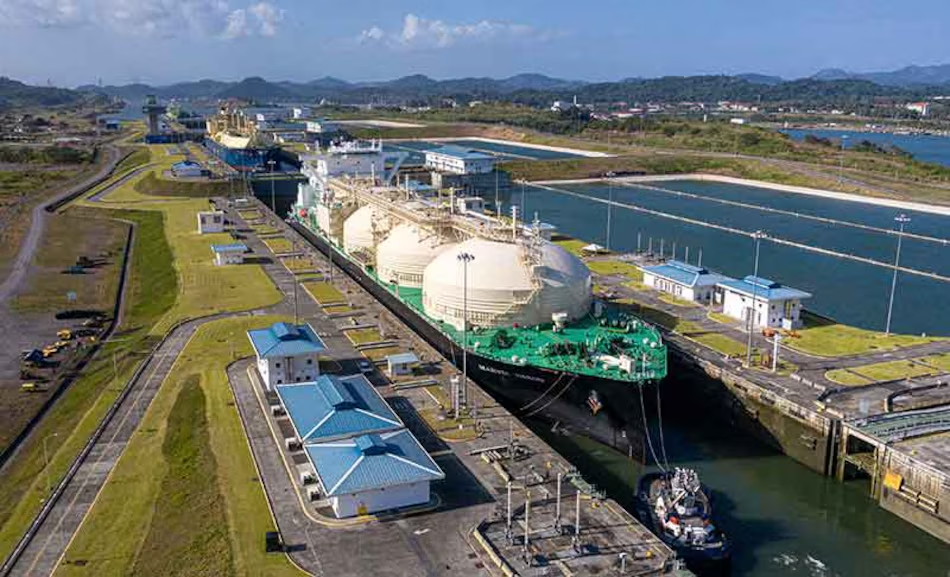
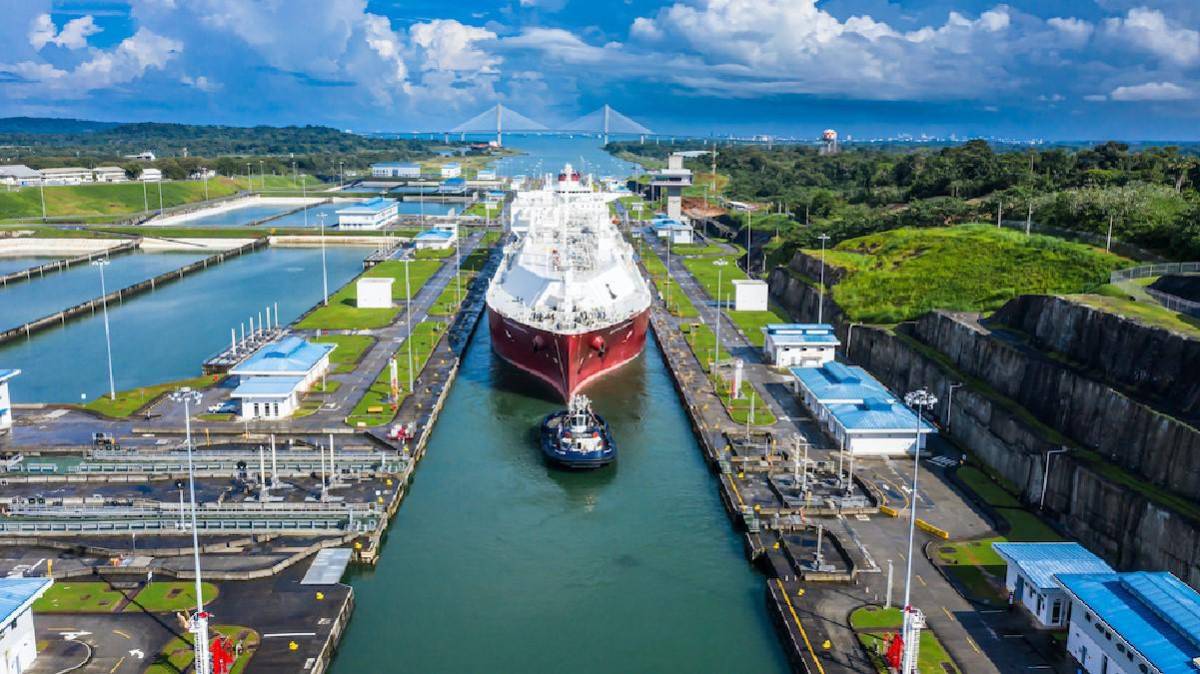
Pictured above is transit of a vessel carrying liquefied natural gas through the Canal.
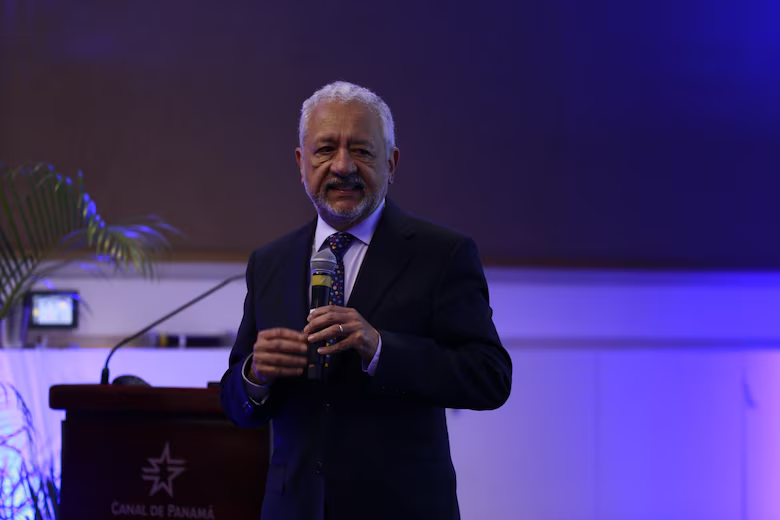
According to Vásquez pictured below, the expansion of the Canal has strengthened its capacity to move larger ships and energy cargoes such as liquefied natural gas, reinforcing its strategic role within the global logistics network. “What we see is that LNG prices are likely to rise, which means that the cost of transportation, inventory, and fuel will also increase.” Vásquez explained that the Canal currently has the capacity for between 10 and 11 daily transits of liquefied natural gas (LNG) ships, a figure that could be increased to 12 transits per day depending on market demand and fleet availability.
He noted that this additional capacity would allow them to handle a potential increase in LNG shipments, especially on routes between the United States and Asia, where the Panama Canal has established itself as one of the main transit routes for this type of energy cargo. “For years we have been the main channel for transporting LNG from the United States to Asia.” Vásquez pointed out that when fuel prices rise and transportation costs also increase, the canal route, being the shortest, is the most reliable option for some markets.
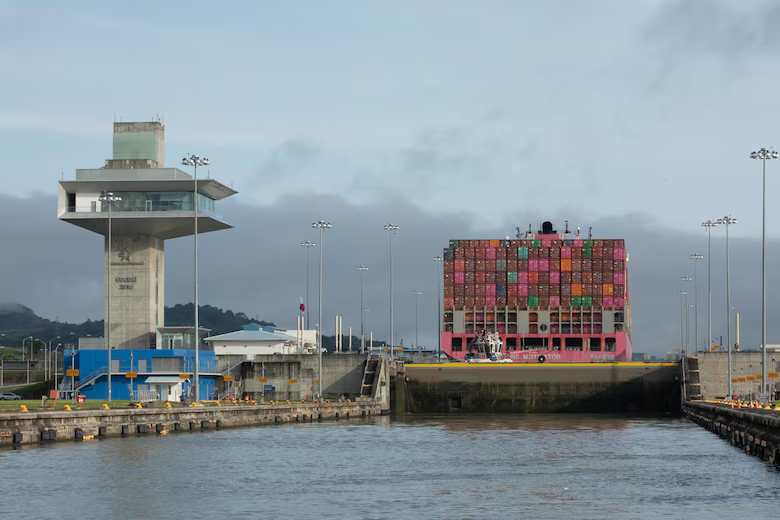
“When crude oil and fuel prices rise, shipping costs are higher, and if the Panama route is shorter, it becomes a more attractive option,” he said in an interview with the news website noticiasdepanama.com The Canal’s deputy administrator, Ilya Espino de Marotta, added in an interview with CNN that they have registered “a slight” increase in the number of transits. “Let’s remember that now, with the increase in fuel prices, the Panama Canal definitely becomes a more attractive route because it is shorter.”
Events in the Middle East may have repercussions in the medium term, not immediately. The Canal’s Hydrology Manager, Ayax Murillo, told news media that the average number of crossings is currently 40 per day, the highest capacity, due to the good conditions in the levels of the Canal’s lakes, which allow for better performance of the route. The conflict in the Middle East comes at a time when the Canal is operating normally and continuously, without any restrictions, which may represent an opportunity to alleviate some of the global trade affected in the Persian Gulf.