The Panama Canal Reservoirs are at Historic High Levels
The Gatun and Alajuela reservoirs have reached their highest levels for the month of March in the history of the Panama Canal, following an unusually rainy February. However, the interoceanic waterway is preparing for the possibility of extreme drought.
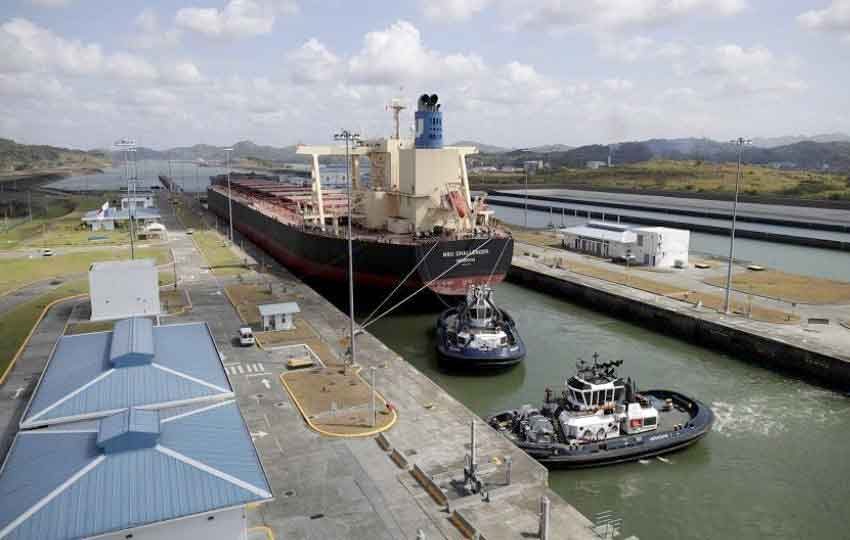
The Panama Canal, through which between 5% and 6% of world maritime trade passes, depends on fresh water to operate and ensure the continuity of the passage of vessels. The beginning of 2026 has been positive from a water perspective, with high water levels in Lakes Gatun and Alajuela that feed the interoceanic waterway, said Ayax Murillo, hydrology manager of the Panama Canal Authority in an interview. “For the first time in history, the levels of the Gatun and Alajuela reservoirs for the month of March are at the highest in the recorded water history of the Panama Canal. Our water reserves are robust enough to face what remains of this relatively dry 2026 season.”

In terms of capacity, the Alajuela reservoir is close to 99% of its capacity, while Gatun is over 90%, allowing the Canal to operate without restrictions and maintain the maximum draft allowed for ships. Monday, March 9, Lake Gatun had a water level of 88.32 feet, equivalent to 26.92 meters, when the maximum operating level is 88.93 feet (27.10 meters) and Lake Alajuela was at 251.52 feet (equivalent to 76.66 meters) and the maximum operating level is 252 feet (76.81 meters). In response to rising lake levels in recent months, the Canal has carried out several controlled water releases at the Gatun and Madden dams in November and also in February.

He indicated that currently, traffic through the Panama Canal ranges between 38 and 40 daily crossings of vessels through the locks. “February 2026 was the wettest month in the Panama Canal’s more than 132-year history,” Murillo added, “due to the unusual rainfall.” He explained that the Canal’s water system depends on enormous volumes of fresh water to maintain its operation. Each Panamax vessel that crosses the interoceanic waterway consumes approximately 200 million liters of water, released from the reservoirs during the locking process. On average, with about 40 transits per day, the Canal uses around 10 billion liters of water each day to allow the passage of vessels between the Atlantic and Pacific Oceans.

In addition to this operational consumption, other pressures on water resources are also present. Evaporation from lakes can represent losses of between 1.5 and 2 cubic hectometers per day, which is equivalent to approximately 2 billion liters of water per day, especially during the dry season when solar radiation and winds increase. In addition to navigation, the Canal’s Hydrology Manager notes that the reservoir water also supplies a large portion of the country’s population. Currently, eight to nine water treatment plants are operating, drawing raw water from Lakes Gatun and Alajuela. Plans for new facilities will increase the demand for water for human consumption, making the development of a new water reservoir with the Río Indio reservoir project urgent.
Starting in May a New Threat
Despite the current high levels, the Canal maintains conservation measures and is attentive to phenomena that may affect the lake levels. Murillo indicated that since December 2025, a strategy has been implemented to save more than one billion liters of water daily in the locks, as preparation for the possible development of the El Niño phenomenon in the second half of 2026, which could bring drier conditions to the basin. However, authorities warn that the real challenge could be felt during the dry season of 2027, when the effects of El Niño events that can cause a lack of rain in the Canal watershed are usually felt more strongly. The true indicator of how water availability in the Panama Canal will evolve will come in May, when the rainy season normally begins.
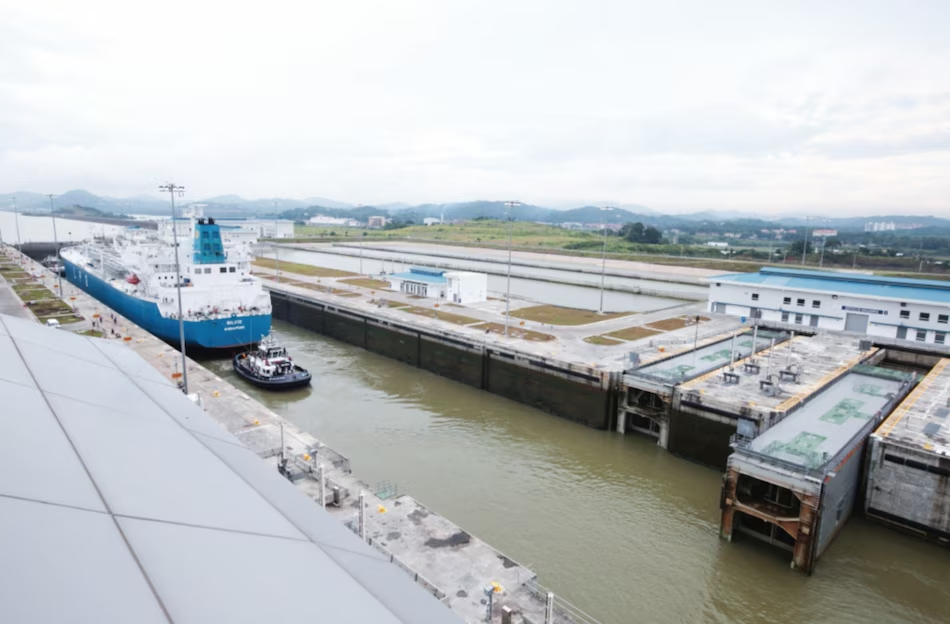
Although forecasts indicate that rainfall could begin that month, it is not expected to be heavy, Murillo explained, citing hydro-meteorological reports. Therefore, Canal authorities are constantly monitoring the weather and warn that the behavior of these rains will be key in deciding whether to increase water conservation measures at the locks, especially given the possible formation of El Niño in the second half of 2026. Monitoring the potential El Niño phenomenon also relies on observing the temperature of the Pacific Ocean. According to Murillo, scientists are analyzing the warming of the waters off the coasts of Ecuador and Peru, considered one of the first signs of this climatic phenomenon.
These temperature anomalies can alter rainfall patterns in the region and affect water availability in the Panama Canal watershed. Currently, analyses point to a possible weak to moderate El Niño event, with greater concern regarding what will happen in 2027. Murillo warned that, although water levels are currently high, the main concern lies in the medium term. He explained that the 2027 dry season could be the real challenge, especially if the El Niño phenomenon intensifies in 2026. “What worries us is the 2027 dry season, given that we still do not have the Indio River reservoir operational.” By that time, the new Indio River reservoir will not yet be operational, as the project is projected to come online between 2031 and 2032, which would limit the additional water storage capacity available to cope with periods of drought. The current strategy is to conserve water and maximize the use of the existing locks.