Defence Sector Structured Investment Opportunity

18% Per Annum Income Note Linked to RTX, Northrop Grumman & AeroVironment
Empire Wealth Management | March 2026 | Research & Investment Note
The Opportunity in Brief
Empire Wealth Management is pleased to present a compelling structured income product linked to three of America’s premier defence contractors: RTX Corporation (NYSE: RTX), Northrop Grumman Corporation (NYSE: NOC), and AeroVironment Inc. (NASDAQ: AVAV).
Product: 18-Month USD Autocall Phoenix Memory Note
Underlying stocks (Worst of): Northrop Grumman | RTX Corp | AeroVironment
Coupon: 18.00% per annum (1.50% paid monthly)
Coupon Barrier: 50% with Memory effect
Autocall Trigger: 100% of initial level
Capital Protection: 50% European barrier
Minimum Investment: $30,000
Term: 18 months
This is not a growth product. This product is designed to generate income. You do not need these stocks to rise. You simply need them not to fall by more than 50% from today’s levels over the next 18 months.
The core question for investors is straightforward: Will RTX, Northrop Grumman, and AeroVironment — three of the most strategically critical defence companies in the world, supplying the US military at a time of heightened global conflict — fall by more than 50% within 18 months?
If your answer is “highly unlikely,” this investment may offer exceptional value.
Why Now? The Investment Thesis
The Geopolitical Backdrop
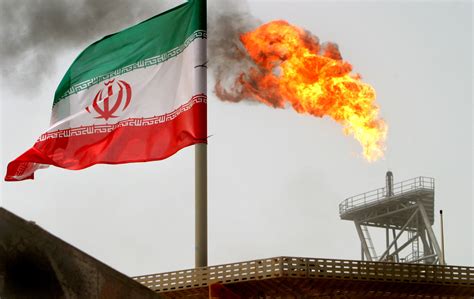
The world entered a new era of military spending in 2022 with the Ukraine conflict, and geopolitical risk has only accelerated since. In early 2026, US-Iran tensions have escalated to direct military engagement. The US military is actively depleting precision munitions, drones, and missile defence systems at a rate not seen in decades. Now we have a major war starting the middle east that will have huge repercussions.
The three companies in this product are not peripheral defence suppliers — they are at the absolute core of American military capability:
RTX (Raytheon) manufactures Patriot missile systems, Tomahawk cruise missiles, AIM-120 AMRAAM air-to-air missiles, and radar systems. These are the weapons being fired and replenished.
Northrop Grumman is the prime contractor for the B-21 Raider stealth bomber, ICBM modernisation (Sentinel programme), and provides critical electronic warfare systems.
AeroVironment is the world’s leading manufacturer of tactical unmanned aerial systems (UAS/drones), including the Switchblade loitering munitions, JUMP 20 systems, and the Puma and Raven series. Drones are being consumed at extraordinary rates in modern warfare.
The Spending Tailwind
The United States defence budget for fiscal year 2026 stands at approximately $895 billion, a record high. NATO allies — pushed by the Trump administration — are racing to meet the 2% GDP defence spending target, with many committed to 3%+. European rearmament alone represents a multi-year procurement boom worth trillions of euros.
Key catalysts driving demand for the three underlying companies:
Active US military operations requiring missile and drone replenishment
Ukraine conflict ongoing — AeroVironment drones and RTX systems in active use
NATO European rearmament programme accelerating
US ICBM modernisation (Northrop Sentinel programme: $100B+ programme of record)
Increased Pacific theatre spending (Taiwan contingency planning)
Bipartisan political support for defence spending in the US
The Investment Window
Protected Income Strategies like this one typically offer elevated coupons when the implied volatility of the underlying stocks is elevated. Current geopolitical uncertainty has pushed defence stock volatility higher, which is precisely what creates the 18% income opportunity. The uncertainty that makes some investors nervous is the very mechanism that makes this yield possible. Nervousness creates fear, fear creates volatility and volatility generates higher yields. But it doesn’t last for long so to get the best yields you must act fast.
Company Analysis: RTX Corporation (NYSE: RTX)
Overview
RTX Corporation (formerly Raytheon Technologies) is a $270+ billion market capitalisation aerospace and defence giant formed from the merger of United Technologies and Raytheon in 2020. It operates through three segments: Collins Aerospace, Pratt & Whitney, and Raytheon (missiles and defence).
Current Price & Performance
Current Price (March 4, 2026): ~$204.74
52-week range: ~$120 – $210
Market Capitalisation: ~$270 billion
Year-to-date performance: Strongly positive, reflecting defence spending tailwinds
Analyst Consensus & Price Targets
Consensus Rating: BUY (13 analysts covering)
Average 12-month price target: $190.69
Highest analyst target: $238 (Citigroup — Strong Buy)
Key analyst calls:
Citigroup: Strong Buy, target $238 (John Godyn, Feb 2026)
JP Morgan: Buy, target $215 (Seth Seifman, Jan 2026)
RBC Capital: Buy, target $230 (Ken Herbert, Jan 2026)
UBS: Hold, target $208 (Gavin Parsons, Jan 2026)
Financial Forecasts
Revenue FY2026 (est.): $94.4 billion (+6.5% YoY)
Revenue FY2027 (est.): $100.7 billion (+6.7% YoY)
EPS FY2026 (est.): $6.87 (+38.5% YoY)
EPS FY2027 (est.): $7.57 (+10.2% YoY)
Forward P/E (2026): ~29.8x
Strengths
World’s largest defence electronics and missile manufacturer
Enormous $200B+ backlog providing exceptional revenue visibility
Patriot missile systems in critical demand globally (US, Ukraine, Saudi Arabia, Taiwan)
Pratt & Whitney engine business provides commercial aerospace diversification
Strong free cash flow generation supporting dividends and buybacks
Direct beneficiary of US and NATO missile replenishment programmes
Long-term US government contracts reduce earnings volatility
Weaknesses / Risks
Pratt & Whitney GTF engine powder metal contamination issue (costly but manageable)
Large debt load from United Technologies merger (~$25B net debt)
Supply chain constraints limiting production ramp speed
Some commercial aerospace exposure creates non-defence cyclicality
Stock has run significantly — some near-term premium in the price
Probability of 50%+ Decline
For RTX to breach the 50% capital protection barrier, the stock would need to fall from ~$204 to approximately $102. This would represent a return to 2020 lows when the entire aerospace sector faced complete commercial aviation shutdown from COVID. There is no credible scenario in which a company with a $200B+ defence backlog, active US military contracts, and bipartisan political support would suffer a 50% collapse under current geopolitical conditions.
Estimated probability of >50% decline over 18 months: Less than 2%.
Company Analysis: Northrop Grumman Corporation (NYSE: NOC)
Overview
Northrop Grumman is a $110+ billion market capitalisation pure-play defence prime contractor. It is among the most strategically important defence companies in the United States, holding the prime contract for the B-21 Raider stealth bomber (the most advanced aircraft ever built) and the Ground Based Strategic Deterrent (Sentinel) ICBM programme.
Current Price & Performance
Current Price (March 4, 2026): ~$737.75
52-week range: ~$430 – $790
Market Capitalisation: ~$110 billion
Performance: Significant appreciation driven by B-21 programme milestones and ICBM awards
Analyst Consensus & Price Targets
Consensus Rating: BUY (17 analysts covering)
Average 12-month price target: $675.29
Highest analyst target: $815 (BTIG — Strong Buy)
Key analyst calls:
BTIG: Strong Buy, target $815 (Andre Madrid, Jan 2026)
UBS: Strong Buy, target $778 (Gavin Parsons, Jan 2026)
Citigroup: Strong Buy, target $781 (John Godyn, Jan 2026)
RBC Capital: Buy, target $750 (Ken Herbert, Jan 2026)
Financial Forecasts
Revenue FY2026 (est.): $44.3 billion (+5.6% YoY)
Revenue FY2027 (est.): $47.0 billion (+6.0% YoY)
EPS FY2026 (est.): $28.27
EPS FY2027 (est.): $30.24 (+7.0% YoY)
Forward P/E (2026): ~26.1x
Strengths
Prime contractor for B-21 Raider — a generational programme with no competition
Sole provider of Sentinel ICBM programme (replacing Minuteman III — $100B+ programme)
Mission-critical position: cannot be replaced or cancelled without catastrophic strategic impact
Space systems division with satellite and intelligence programmes
Highly predictable revenue from long-duration US government cost-plus contracts
Strong dividend growth history
Pure-play defence — no commercial aviation exposure
Weaknesses / Risks
B-21 programme under cost pressure at early production stage
High degree of revenue concentration in US government (limited international diversification vs peers)
EPS growth slightly constrained near-term by programme investment phase
Stock trades at a premium — some institutional concern about near-term value
Large programme delays could temporarily impact earnings
Probability of 50%+ Decline
For NOC to breach the 50% barrier, the stock would need to fall from ~$738 to approximately $369. Northrop last traded below $369 in 2019, before the B-21 programme had been awarded. Given its current backlog, the strategic irreplaceability of its programmes, and the elevated US defence budget environment, a 50%+ decline is essentially inconceivable barring a complete collapse of US defence spending — which has bipartisan support and is constitutionally mandated.
Estimated probability of >50% decline over 18 months: Less than 2%.
—
Company Analysis: AeroVironment Inc. (NASDAQ: AVAV)
Overview
AeroVironment is the world’s leading manufacturer of tactical unmanned aerial systems (UAS), commonly known as drones. With a market capitalisation of approximately $3 billion, it is the smallest of the three underlying companies — but arguably the one with the highest near-term demand growth. Its Switchblade loitering munitions have been widely used in the Ukraine conflict and its systems are core to US Army small-unit operations.
Current Price & Performance
Current Price (March 4, 2026): ~$225.90
52-week range: ~$140 – $260
Market Capitalisation: ~$3 billion
Recent performance: Volatile — stock pulled back from highs amid broader market uncertainty
Analyst Consensus & Price Targets
Consensus Rating: STRONG BUY (16 analysts covering)
Average 12-month price target: $354.50 (+55.3% upside from current levels)
Lowest analyst target: $259 (+14.7% upside)
Highest analyst target: $450 (+99.2% upside)
Key analyst calls:
Jefferies: Strong Buy, target $390 (Greg Konrad, Mar 2026)
RBC Capital: Buy, target $325 (Ken Herbert, Mar 2026)
Piper Sandler: Buy, target $290 (Clarke Jeffries, Mar 2026)
Baird: Buy, target $260 (Peter Arment, Mar 2026)
Financial Forecasts
Revenue FY2026 (est.): $2.03 billion (+147% YoY — includes BlueHalo acquisition)
Revenue FY2027 (est.): $2.38 billion (+17.2% YoY)
EPS FY2026 (est.): $3.48 (+124% YoY)
EPS FY2027 (est.): $4.64 (+33.5% YoY)
Forward P/E (2026): ~64.9x (growth premium justified by defence drone supercycle)
Strengths
Global leader in tactical drone systems — the “weapon of choice” in modern warfare
Switchblade loitering munitions have proven combat effectiveness (Ukraine, Middle East)
US Army SUAS (small UAS) programmes provide multi-year contract visibility
Drone warfare is accelerating rapidly — Iran conflict is further accelerating demand
BlueHalo acquisition significantly expanded electronic warfare and directed energy capabilities
55%+ upside to average analyst target implies significant undervaluation vs peers
Strong Buy consensus from 15 of 16 analysts
Weaknesses / Risks
Smaller company — greater volatility than RTX or NOC
Forward P/E of ~65x is elevated, making the stock sensitive to earnings disappointments
BlueHalo integration risk — large acquisition for a smaller company
One analyst downgraded to Sell in March 2026 (Raymond James) citing near-term concerns
Revenue growth forecast of 147% is partly acquisition-driven, not purely organic
Stock has corrected ~13% from recent highs, creating some uncertainty
Probability of 50%+ Decline
For AVAV to breach the barrier, the stock would need to fall from ~$226 to approximately $113. The stock last traded at $113 in mid-2023, before the major defence UAS buildout accelerated. Given active US military operations, the proven combat role of AeroVironment systems, and near-unanimous analyst bullishness, such a decline would require a fundamental collapse of US defence drone programmes. AVAV is the highest-volatility stock of the three, but even so, a 50% decline from current levels represents an extreme tail-risk scenario.
Estimated probability of >50% decline over 18 months: Approximately 5-8% (higher than the large-caps due to smaller size and higher valuation multiple, but still a low-probability outcome). This is by far the riskiest of the three assets given its size so this should really be the main focus of the risk and probability outcomes.
The Worst-Case Scenario Analysis
What Would Need to Happen for Capital to Be at Risk?
This product uses a “Worst of” structure — meaning capital is only at risk if the worst-performing of the three stocks falls by more than 50% from its initial level by the maturity date (18 months).
For capital to be impaired, one of the following extraordinary events would need to occur:
RTX below ~$102: Would require a complete collapse of US missile demand, catastrophic corporate fraud, or a defence spending cut of 60%+ — none of which have any credible probability.
NOC below ~$369: Would require cancellation of B-21 and Sentinel programmes — both of which are congressionally mandated and have no alternative. Even deep budget cuts historically spare strategic nuclear deterrence.
AVAV below ~$113: This is the most plausible scenario of the three, but would require a loss of contracts or a wholesale abandonment of US drone warfare doctrine and a simultaneous collapse of allied demand — at precisely the moment global drone warfare is accelerating.
Historical Context: Maximum Drawdowns
RTX: Maximum drawdown in COVID (2020) was approximately 50% — from $92 to $46 — but recovered fully within 18 months. The stock is now at $204. A 50% decline would require a shock larger than COVID.
NOC: Maximum drawdown in COVID was approximately 25%. The company’s pure-play defence nature meant it was relatively insulated even during the worst market shock in decades.
AVAV: The stock has experienced higher volatility historically, with a maximum drawdown of approximately 50%+ during the 2022 growth selloff. However, that was from a much higher valuation multiple and before its current strategic significance.
Probability Assessment for the Worst-of Barrier Breach
Given the above analysis and current geopolitical environment:
Probability RTX falls >50%: ~2%
Probability NOC falls >50%: ~2%
Probability AVAV falls >50%: ~6-8%
Combined probability that the WORST-OF stock falls >50%: Approximately 8-10%
This means there is approximately a 90-92% probability that all three stocks remain above their 50% barriers, and capital is fully protected.
How the Product Works: A Clear Explanation
Structure: Autocall Phoenix Memory Note
This is a structured capital product — sometimes called a “structured note” or “autocallable.” It is issued by a financial institution and linked to the performance of the three underlying stocks.
Step 1 — You Invest Capital
You place funds (minimum $30,000) into the note at inception. Your investment is linked to the starting prices of RTX, NOC, and AVAV on the strike date.
Step 2 — Monthly Income Payments
Every month, you receive a cash payment equivalent to 1.5% of your invested capital (18% per annum). This payment is made regardless of whether the stocks have risen or fallen — as long as none of the three stocks has fallen by more than 50% from its initial level. The “Memory” feature means that if a coupon is ever missed (because the barrier was temporarily breached), those missed coupons are paid retroactively once the barrier condition is no longer being breached.
Step 3 — Early Redemption (Autocall)
On each monthly observation date, if ALL THREE stocks are trading at or above their initial strike price (i.e., the autocall trigger of 100% is met), the note automatically redeems early — returning 100% of your capital plus that month’s coupon. This is the optimal outcome: early return of capital plus income earned to date.
Step 4 — Maturity (18 Months)
If the note has not autocalled early, at maturity (18 months from inception), the outcome depends on the worst-performing stock:
If the worst-performing stock is above 50% of its initial level: You receive 100% of your capital back plus the final coupon payment. Full capital preservation.
If the worst-performing stock has fallen below 50% of its initial level: Your capital is reduced proportionally to the performance of the worst-performing stock. For example, if the worst stock has fallen 60%, you receive 40% of your original capital back.
The Three Ways to Win
1. Autocall before maturity: All three stocks recover to initial levels on any monthly observation — you get 100% capital back plus all coupons paid. Annualised return exceeds 18%.
2. Hold to maturity with barrier intact: All three stocks remain above 50% of initial levels at the 18-month end date — you receive 100% capital plus 27% total income earned.
3. Stocks fall but recover above barrier by maturity: Even if stocks dip below 50% mid-term, as long as the worst performer is above 50% on the final observation date, capital is fully returned.
—
Risks: A Transparent Assessment
This product is not risk-free. Investors must understand and accept the following risks:
1. Barrier Breach Risk (Market Risk)
If the worst-performing underlying stock is trading below 50% of its initial level on the maturity date, you will receive back less than your invested capital. In extreme scenarios (e.g., a stock falls 80%), you could lose a substantial portion of your principal.
2. Issuer Credit Risk
This product is issued by a financial institution. If the issuer were to become insolvent or default during the life of the note, your capital could be at risk regardless of the underlying stock performance. Investors should review the creditworthiness of the issuing institution before committing capital.
3. Liquidity Risk
Structured notes are not typically traded on public exchanges. If you need to access your capital before maturity, you may need to sell at a discount to fair value, or in some cases liquidity may be limited. This product is intended for investors who can commit capital for the full 18-month term.
4. Opportunity Cost Risk
If all three stocks rise substantially above their initial levels, the autocall mechanism returns your capital — but you do not participate in the upside beyond your coupon income. This product is designed for income, not equity upside participation.
5. Currency Risk
This product is denominated in USD. Non-USD investors face potential currency losses if the USD weakens against their home currency.
—
Who Is This Product Suitable For?
This product is appropriate for investors who:
Seek enhanced income above what is available from bonds or cash deposits (18% per annum significantly exceeds prevailing deposit rates)
Hold a constructive view on US defence stocks — or at minimum do not believe they will fall by more than 50% given the current geopolitical environment
Can commit capital for up to 18 months without requiring liquidity during the term
Are sophisticated investors comfortable with structured products and the concept of capital-at-risk below a defined barrier
Seek partial downside protection — the 50% European barrier provides a substantial buffer compared to direct equity investment
Want monthly cash flow — retirees, family offices, and income-focused portfolios seeking regular distributions
Hold a USD base currency or are comfortable with USD currency exposure
This product is NOT suitable for investors who:
Require full capital guarantee
May need to access their investment before the 18-month term
Are not comfortable with structured product complexity
Believe that one or more of RTX, NOC, or AVAV could fall by 50% or more from current levels
Are inexperienced retail investors without prior structured product exposure
—
The Final Question
The investment thesis is simple. We are asking one question:
Will Raytheon (RTX) — whose Patriot missiles and Tomahawks are the backbone of US air defence — OR Northrop Grumman — whose B-21 bomber and Sentinel ICBM programme are the future of US strategic deterrence — OR AeroVironment — whose Switchblade drones are the defining weapon system of modern conflict — fall by more than 50% in the next 18 months?
At a time when:
The US is engaged in active military operations
The global defence budget is at historic highs
NATO is rearming at record pace
The US Congress has bipartisan consensus to maintain defence spending
All three companies have record backlogs and strong analyst support
If your answer is “highly unlikely,” then this product — paying 18% per annum in monthly cash while you wait — represents a compelling risk-reward opportunity.
Sometimes the best investments are not about predicting the future. They are about identifying when the market is pricing risk correctly — and locking in the income while the conditions remain favourable.
—
Analyst consensus on these three stocks: 2 x Buy, 1 x Strong Buy. Average upside to analyst targets across the basket: AVAV alone carries +55% upside to consensus. Barriers would only be breached under market conditions that would be historically unprecedented for these companies.
—
This document has been prepared by Empire Wealth Management for informational and marketing purposes only. It does not constitute financial advice. Structured products involve risk, including the potential loss of capital. Past performance is not indicative of future results. Investors should seek independent financial advice before making any investment decision. This document is intended for sophisticated and professional investors only and is not suitable for distribution to retail investors without appropriate disclosure.
Empire Wealth Management | www.empirewm.com | charles@empirewm.com