

In Panama Six New Frog Species are Identified that are Endangered or Near Threatened.
The authors indicated that geographic isolation drove the differentiation of the call, the signal that frogs use to recognize and reproduce with each other.
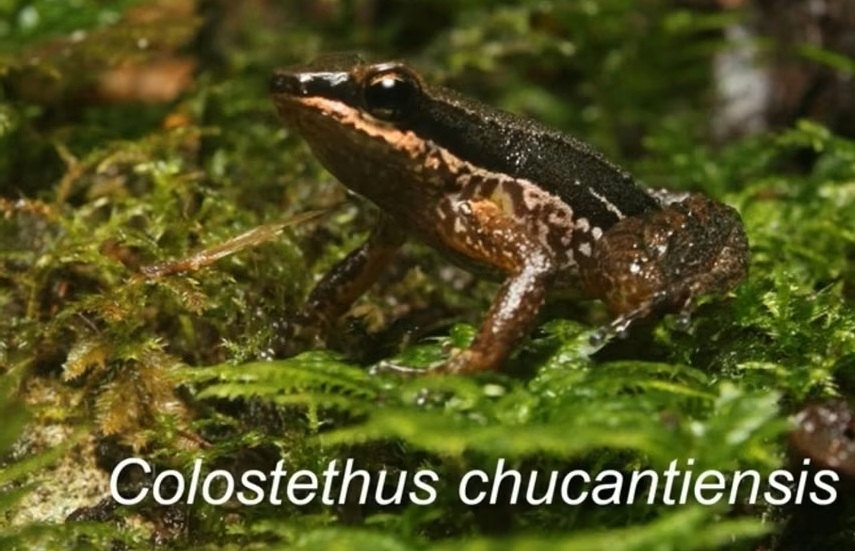
Six new frog species were identified in different mountain ranges of Panama and are described in a study published in the journal Vertebrate Zoology, whose authors propose that four be classified as ‘endangered’, one as ‘vulnerable’ and one as ‘near threatened’.
New Frog Species in the Country.
Panama’s National Secretariat of Science, Technology and Innovation (Senacyt) reported this Wednesday that the study, whose main researcher is Panamanian biologist Abel Batista, was based on fieldwork carried out between 2006 and 2025 and on analysis of DNA, songs, morphology and geographic distribution. Five species are named after the place where they live: Colostethus bocatoro; C. donosensis; C. portobelensis; C. sanblasensis; C. chucantiensis; and one after a physical trait, the C. kuara, golden-bellied rocket frog.
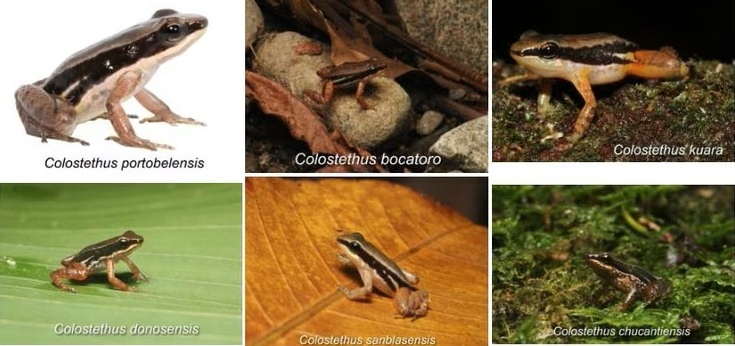
Each species occupies an area associated with a single mountain range and, based on the criteria of the International Union for Conservation of Nature (IUCN), the authors preliminarily propose that four species be classified as ‘endangered’, one as ‘vulnerable’ and one as ‘near threatened’. This proposal does not equate to an official IUCN assessment, which requires more data on its populations, the official information indicated. According to researchers, chytridiomycosis, a disease caused by a fungus, caused declines in populations of C. donosensis and C. portobelensis, while in the Majé mountain range, habitat of C. chucantiensis, 48% of the forest cover outside of protected areas was lost between 1992 and 2016, mainly due to livestock farming.
Protection and Conservation.
“You can’t protect what you don’t know. While we believed it was just one widely distributed frog, no one saw the risk. Correctly identifying them is the first step in assessing their conservation status and understanding the true biological richness of Panama,” said biologist Batista. The six new species measure around two centimeters, have a brown back, and a dark stripe along their sides. They are distinguished by the yellow or reddish color of their groin and by the webbing between their toes, and are therefore classified as cryptic species: distinct species with an almost identical appearance, according to official information.
According to the study’s estimates, the ancestors of these frogs arrived from South America about 4.4 million years ago, during the formation of the Isthmus, and with the uplift of the mountains, the populations became isolated in different mountain ranges, separated by lowlands, and differentiated into species. The authors indicated that geographic isolation drove the differentiation of the call, the signal that frogs use to recognize and reproduce with each other. “For years we found these frogs in streams in Darién, Colón and Bocas del Toro, and they all seemed to be the same species.
But their calls told us otherwise. It took many expeditions and the combination of genetics, bioacoustics and morphology to demonstrate that behind a single name there were six species,” Batista explained. The study describing the six new frog species brought together ten authors from eight institutions, and is part of the doctoral research of Tadeáš Venkrbec, the first author, at Palacký University in the Czech Republic. Researchers from the University of Panama, the Smithsonian Tropical Research Institute (STRI), the Los Naturalistas Foundation, and the universities of Antioquia and Los Andes in Colombia also participated.