
Illegal Migration In Panama, What is Happening Now?
Back in July of 2024, Panama and the United States signed a memorandum against illegal immigration, (Memorandum of Understanding on Assistance and Cooperation in Migration Matters). How is that working out?
President José Raúl Mulino was committed to resolve the Darién crisis and ending the illegal business of human trafficking. He instituted a major policy U-turn aimed at “closing” the Darién Gap, installing border fencing, blocking specific unauthorized paths, and stepping up deportations with support from U.S. agreements.
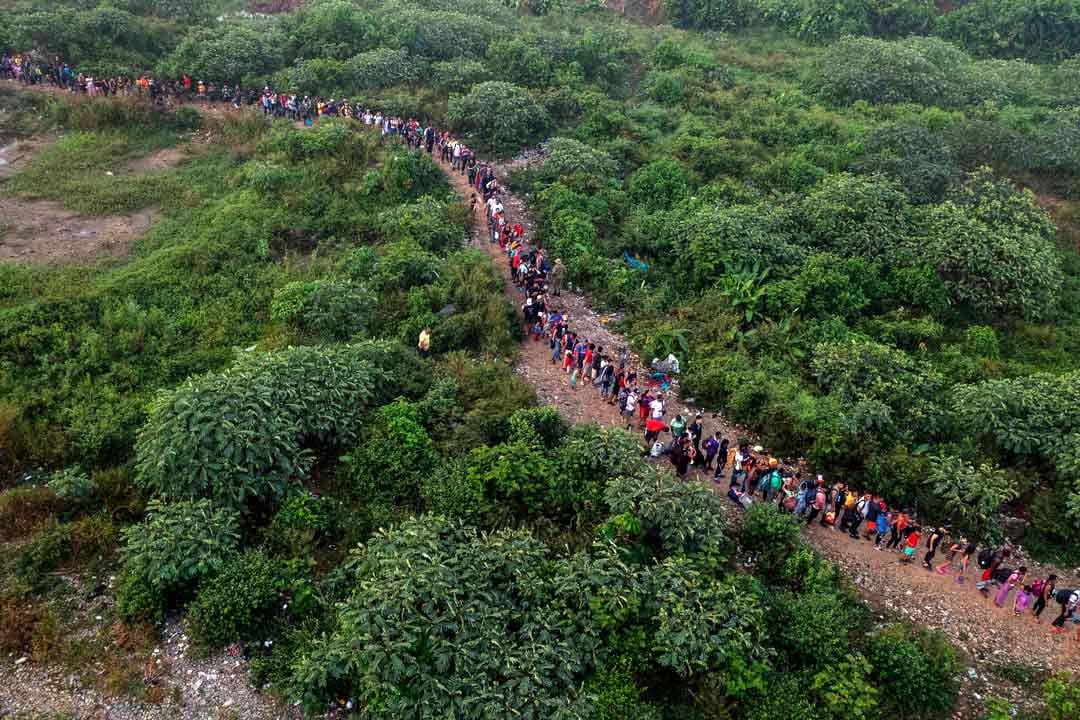
From 2021 to 2023 crossings escalated dramatically from roughly 130,000 to over 500,000 migrants. By mid-2024, an estimated 1.5 million people from over 170 countries traversed the gap.
In 2026 from January to September, Panama saw a drop of more than 81percent in crossings by migrants, with only 539 irregular entries recorded. The top three countries were Venezuela, Colombia and Ecuador with smaller numbers from some African and Asian nations.
The steep drop is attributed because of the joint security agreements between Panama (under President José Raúl Mulino) and the United States, including United States funded deportation, repatriation flights initiated in mid-2024 and border control measures. Stricter enforcement and deportations under U.S. immigration policies have heavily reduced expectations of reaching North America via this trail.
The illegal migrant trade thru the Darien Gap operated as multi-million dollar business for criminal syndicates who would charge transit and crossing fees per person. Millions were made on the exploitation of undocumented migration. Indigenous communities, local residents, and small-scale boat operators participated in regional guiding and supplying travelers before they entered the deep jungle. This once local booming economy due to the illegal migrants, has been drastically reduced because of fewer people making the 60 to 70 mile trek through the jungle.
Much stricter enforcement, heavily restricted transit, and accelerated deportations have changed the landscape of illegal migration. It has also caused an unforeseen dilemma known as “reverse migration”. Hundreds of migrants (predominantly Venezuelans) are attempting to travel south back through Panama toward Colombia and Venezuela. This has somewhat complicated Panamanian policy because Panama lacks formal diplomatic relations with Venezuela.