The Panama Earthquake Emergency Creates100 Million Dollars and the Relaxation of Deficit Limits.
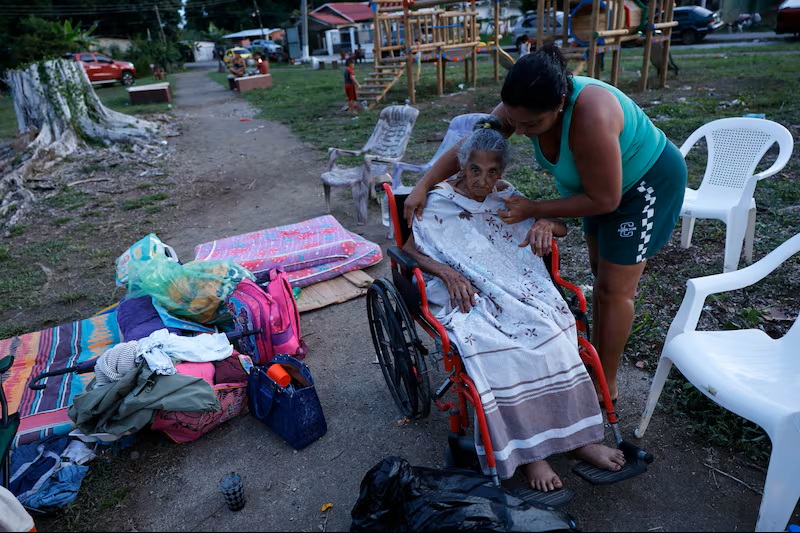
Librada Saavedra (45 years old) helps her grandmother Elodia Oliva (94 years old) this Saturday, October 10, in a park in downtown Tonosí. Contracts may be made until December 31, 2026, although the Cabinet Council may increase or decrease both the amount and the term through a new resolution.
One day after the approximately 7.5 magnitude earthquake that shook the southwest of the country, the Cabinet Council published this Saturday, October 10, in the Official Gazette No. 30631, Cabinet Resolution No. 108, which declares the National State of Emergency throughout the Republic. The text contains two points that highlight the scope of this emergency: in addition to having a budget of up to $100 million, the Government will ask the Assembly to temporarily suspend the financial limits of the Fiscal Social Responsibility Law, a measure that would give it room to spend above the fiscal cap, provided that the legislative body approves it.
The 100 Million Dollars.
Article 3 of the resolution established the sum of up to $100 million for ministries and public entities to carry out works and acquire goods and services through the special procurement procedure, that is, without resorting to a public bidding process. According to Cabinet Resolution No. 108, published in the Digital Official Gazette No. 30631, purchases must be made “at duly justified market prices”, in order to address emergency situations resulting from the earthquake. Contracts may be made until December 31, 2026, although the Cabinet Council may increase or decrease both the amount and the term through a new resolution. The Ministry of Economy and Finance (MEF) will manage the resources and the transfer of funds in accordance with the General State Budget Law. The funds will be deposited into a trust at the National Bank of Panama, subject to budgetary availability for fiscal years 2026 and 2027, and payments will be made after approval by the Comptroller General of the Republic. Any remaining balance at the end of the period must be returned to the National Treasury.
The Deficit Waiver.

The funds could come from reallocations within the budget or from new debt. Hence, Article 6 authorizes the MEF to request “immediately” from the National Assembly the dispensation to temporarily suspend the financial limits established by Article 11 of Law 34 of 2008, the fiscal social responsibility standard. Panama’s Fiscal Social Responsibility Law (LRSF) establishes, for the year 2026, a maximum limit of 3.5% of the gross domestic product (GDP) for the deficit of the non-financial public sector. The fiscal deficit is the difference between what the government spends and what it collects in revenue in a year. The law sets a limit on this gap to prevent the debt from growing uncontrollably. If the Assembly approves the temporary suspension of those limits, the Government could spend above that ceiling to address the emergency.
Statements by the Minister of Economy.
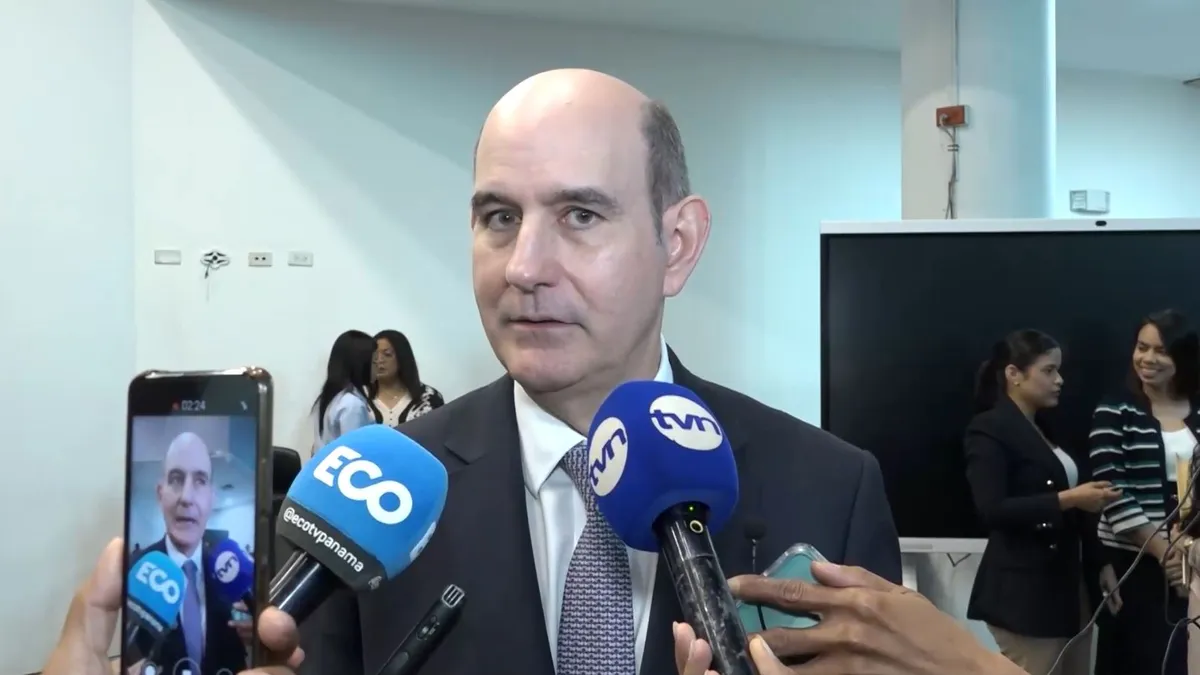
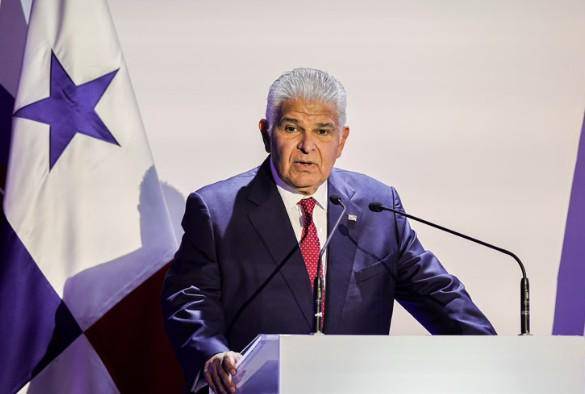
Economy Minister Felipe Chapman pictured above clarified that “the Panamanian economy will not come to a standstill.” The minister assured that Panama “has the necessary resources to address the damage and the most pressing needs.” Chapman said that if loans are ultimately required, they will be soft loans. This type of loan typically has low interest rates, long repayment terms, and a grace period before principal repayment begins. It is usually provided by multilateral organizations in emergency and reconstruction contexts. Chapman, in fact, thanked multilateral organizations such as the Inter-American Development Bank (IDB), the CAF-Development Bank of Latin America and the Caribbean, the International Monetary Fund (IMF) and the Central American Bank for Economic Integration (CABEI), as well as the United States, for offering non-reimbursable resources. Below is a report on X with pictures of assistance from the Panama Government. It is in Spanish only.