Medicines Sent by Drone to Indigenous Areas of Panama from the UN and the Barça Foundation.
This UN pilot project is, according to the foundation’s director, the first in Latin America in which “a drone is used in the service of health.”
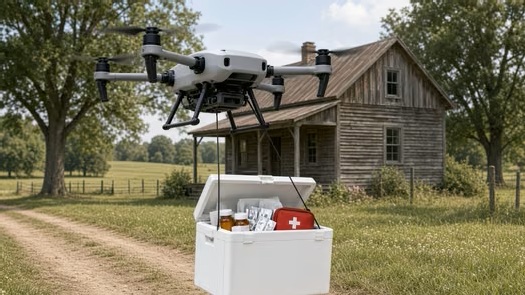
The UN Pan American Health Organization (PAHO) together with the Barça Foundation have sent medical supplies and medicines to the Ngöbe Buglé region, a hard-to-reach indigenous area of Panama, to improve access to health by reducing distribution times from hours to minutes.
Alliances in Support of Panama.
“Drones are used in war for bombing in many parts of the world, or for agricultural purposes, but this time it was to save lives and apply technology to health,” the general director of the FC Barcelona Foundation, Marta Segú, told news media this Thursday in Panama City during the presentation of the projects. The drones transported medications for chronic illnesses (diabetes, hypertension, and HIV) and others such as tuberculosis and syphilis, as well as antivenom for scorpion and snake bites, and rapid diagnostic kits. In the future, they plan to also transport vaccines and laboratory samples.
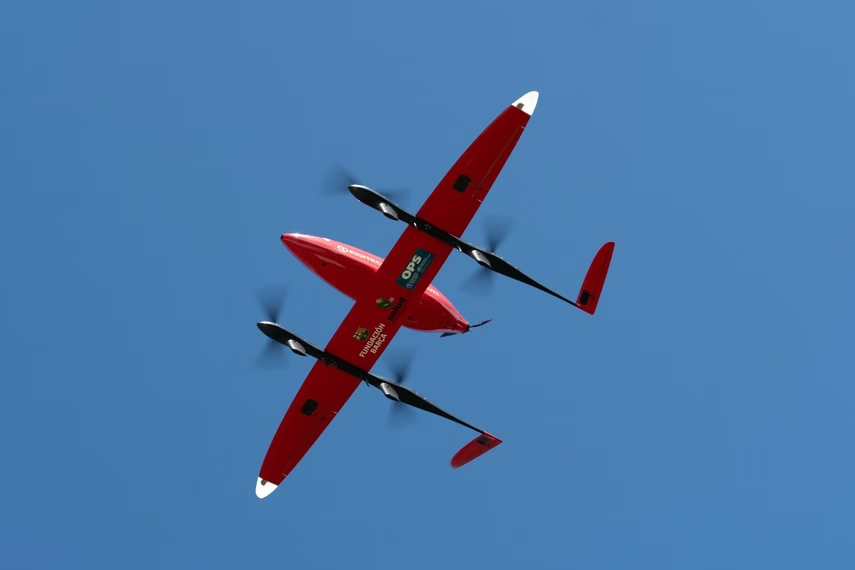
There are more than 6,000 people in 37 communities in that region, which is plagued by extreme poverty and a lack of infrastructure, according to information from PAHO and the foundation. This reduces distribution times from “more than twelve hours of travel by waterways and land routes that are difficult to access to just 30 or 40 minutes, allowing a faster and more effective response to the needs of the population,” according to the statement. According to the foundation’s director, this pilot project is the first in Latin America in which “a drone is used in the service of health and can carry medicines that can save lives,” and it is expected to be replicated in other hard-to-reach areas of Panama, such as the Darien jungle, bordering Colombia.
Access to Health Services.
“The main objective of the project is to improve access to health services for the population of these communities who have difficulty accessing them because they live far away and transportation is a challenge,” said Lilian Ninett Reneau, interim representative in Panama of the PAHO/World Health Organization (WHO). In addition to that health project, the Barça Foundation, together with UN Women, implements sports programs with social impact in the province of Colón, another area hit by high rates of crime and poverty with a majority Afro-descendant population.
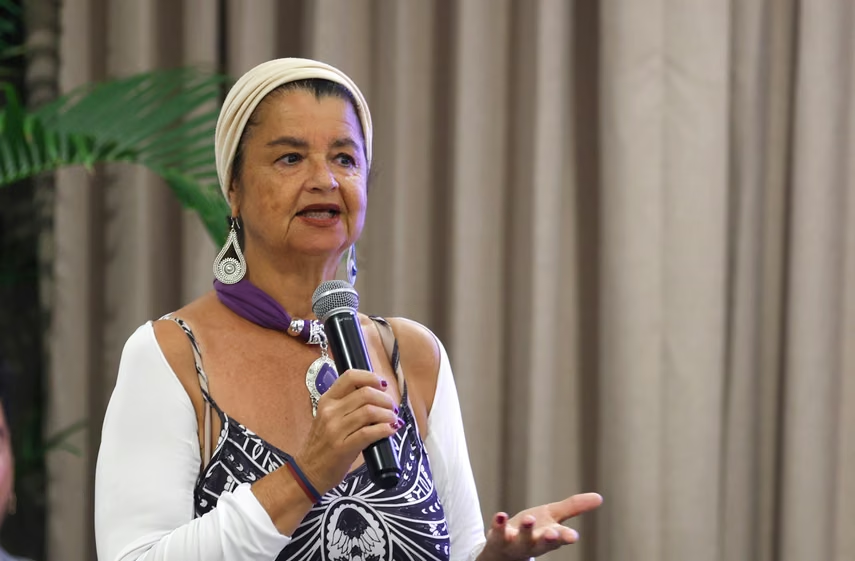
There, they create safe spaces for minors in sports through the ‘SportNet’ methodology of the Barça Foundation, recognized for using exercise as a socio-educational tool to promote values such as respect, teamwork, peaceful coexistence, empathy, youth leadership and gender equality. “Sport is used as a tool for children and adolescents to work on creating communities of peace and reducing conflict and violence in their homes, as well as with mothers, fathers and educators in educational centers,” Dayanara Salazar pictured above, UN Women’s program coordinator in Panama, explained to news media.