The First Lady of Panama Supporting Patients at the National Cancer Institute In Conjunction with MINSA and the Private Sector.
During the day, representatives from the Office of the First Lady, the Ministry of Health (MINSA), and volunteers delivered the supplies.
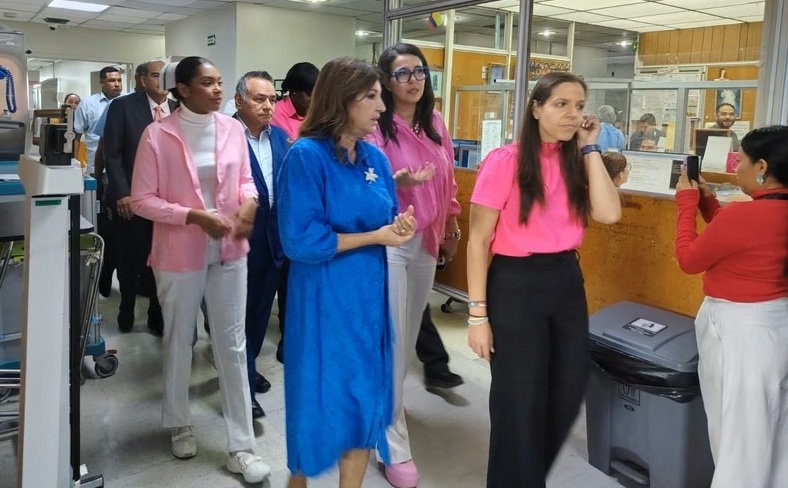
The Office of the First Lady, the Ministry of Health (MINSA) and Super Xtra volunteers participated in the delivery of 950 boxes with sandwiches, water and fruit to patients in the different wards of the National Cancer Institute (ION). Patients from different wards of the ION received the boxes during a support day that included the participation of the First Lady of the Republic, Maricel Cohen de Mulino; the Minister of Health, Dr. Fernando Boyd Galindo; the advisor to the Office, Dr. Alex González; the director of the ION, Dr. Julio Santamaría; and volunteers from Super Xtra. The activity aimed to provide direct support to people receiving care at the country’s main specialized oncology center and to contribute, through the participation of different sectors, to the support of patients during their care process.
Conference at the ION Reinforces Cancer Pprevention Message.
During the day, representatives from the Office of the First Lady, the Ministry of Health (MINSA), and volunteers delivered supplies to the different wards of the hospital, bringing this support to patients who remain under medical care. In addition to its charitable component, the activity reinforced a message of prevention and health care. Health authorities remind the public of the importance of maintaining medical checkups and undergoing the recommended screening tests according to age, medical history, and risk factors.
Early detection can help identify some types of cancer before symptoms appear or when the disease is in stages where more treatment options are available. Therefore, seeking medical attention at the first sign of trouble and not postponing preventive checkups are essential components of responsible healthcare. The Ministry of Health continues to urge the public to stay informed, consult with healthcare professionals, and participate in available prevention and early detection efforts. Meanwhile, inter-institutional and private sector collaborative initiatives are contributing to the support of patients and their families.