The Panama Canal’s Security Fund Shields the Money Trail in Secrecy.
The funds will come from the Canal’s operating expenses, will go through the Single Treasury Account, and will finance security equipment and operations such as patrol boats and drones.
Resolution 230 of 2026, which created the Special Fund for Security and Protection of Specific Areas of the Panama Canal, details in its eighth article everything that can be purchased with these funds. The list includes X-ray scanners, cryptographic radios, maritime patrol boats, cranes, solar panels, and underwater drones alongside kitchen utensils, dining equipment, and dog food. The same document embodies a major contradiction. It declares as reserved and confidential “all information, documentation, operational plans and accounting records linked to the financial execution” of that fund.
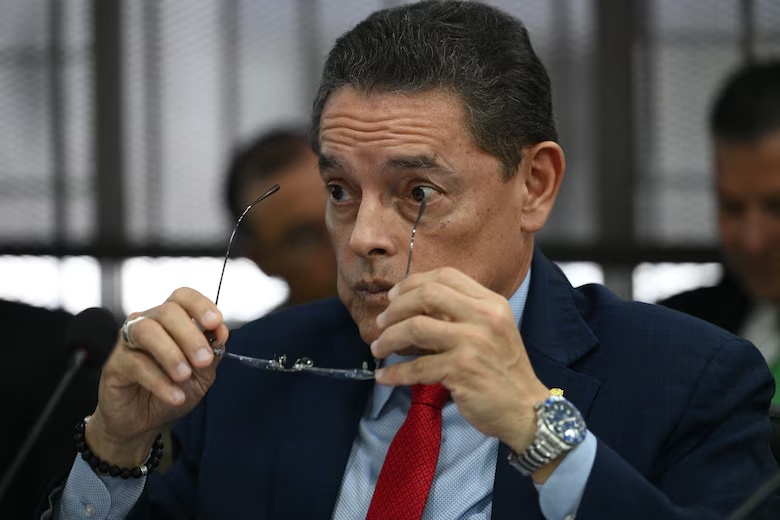
Frank Ábrego, Minister of Public Security
In other words, citizens will know that the State will buy drones and dog food with this money, but they will not be able to know how much it cost, who was paid, and how those resources were spent. That contrast is the first major crack that reveals the underlying issues, and this has been pointed out time and again in different circles of society.
Critical Voices.
In the National Assembly, for example, the issue has been the subject of numerous speeches. Betserai Richard, Grace Hernández, and Ernesto Cedeño, from the Seguimos bloc, as well as Jhonathan Vega and Luis Duke, from Vamos, are some of those who have publicly questioned it. Duke states, for example, that national security may justify the confidentiality of certain matters, but he cautioned that secrecy should not extend to information about the handling of money.
“How much is being spent, how it is being spent, who is being paid. That is information that I believe everyone can know and needs to know,” he argued. Resolution No. 230, signed by the Minister of Public Security, Frank Ábrego, on August 31 and published on September 14 in Official Gazette 30611-A, creates the fund under the umbrella of the Ministry of Public Security (Minseg), but assigns its administration to the National Aeronaval Service (Senan).
That’s How It Was Born.
In the Budget Committee of the National Assembly, Ábrego recounted how this financial mechanism was created. He recalled that after the signing of the Torrijos-Carter Treaties in 1977, the Panamanian Defense Forces eventually assumed security for the area’s military sites and bases, in some cases alongside the United States Armed Forces. Following the 1989 invasion, the United States resumed security for the Canal and its facilities. Later, the so-called Canal police zone was created, and that is why, Ábrego said, “it is not the first time that the Panama Canal has given funds” to a security force that is not part of its internal organizational structure.
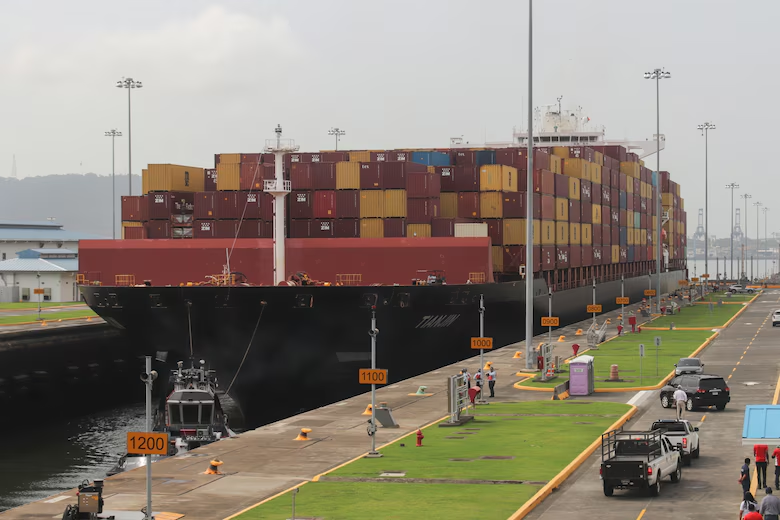
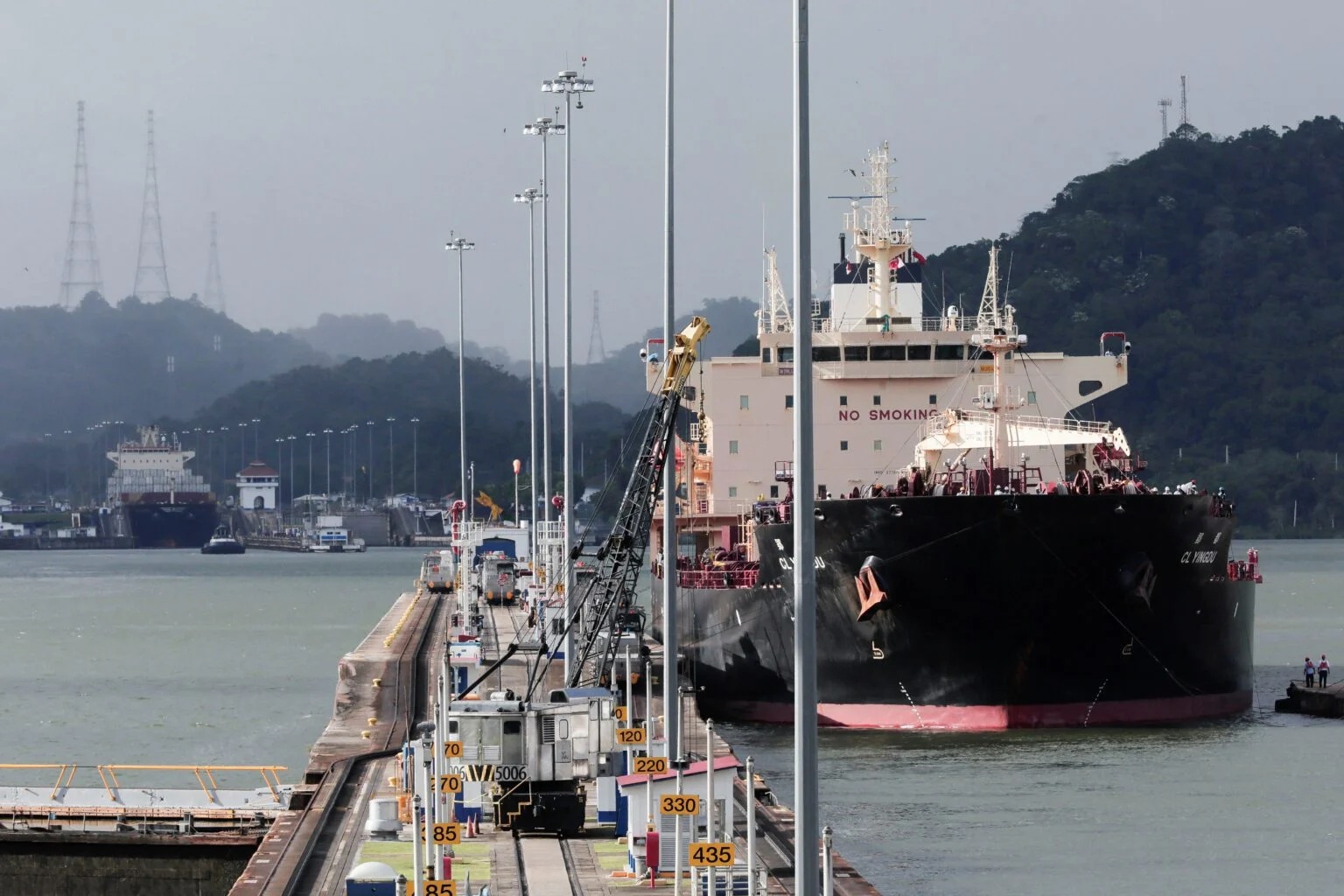
Photograph showing a container ship passing through the Cocolí locks.
He said that the Panama Canal Authority (ACP) gave between $2 million and $3 million each year to the National Police to equip the officers who operated in that area. That system ceased to function, according to the minister himself, after an agreement by the Ministry of Economy and Finance (MEF) transferred the Canal’s surplus funds to a single state account. This effectively closed the direct channel between the Panama Canal Authority (ACP) and the Police. The new fund thus revives a mechanism that had ceased to operate after the State concentrated the Canal’s contributions into a single account.
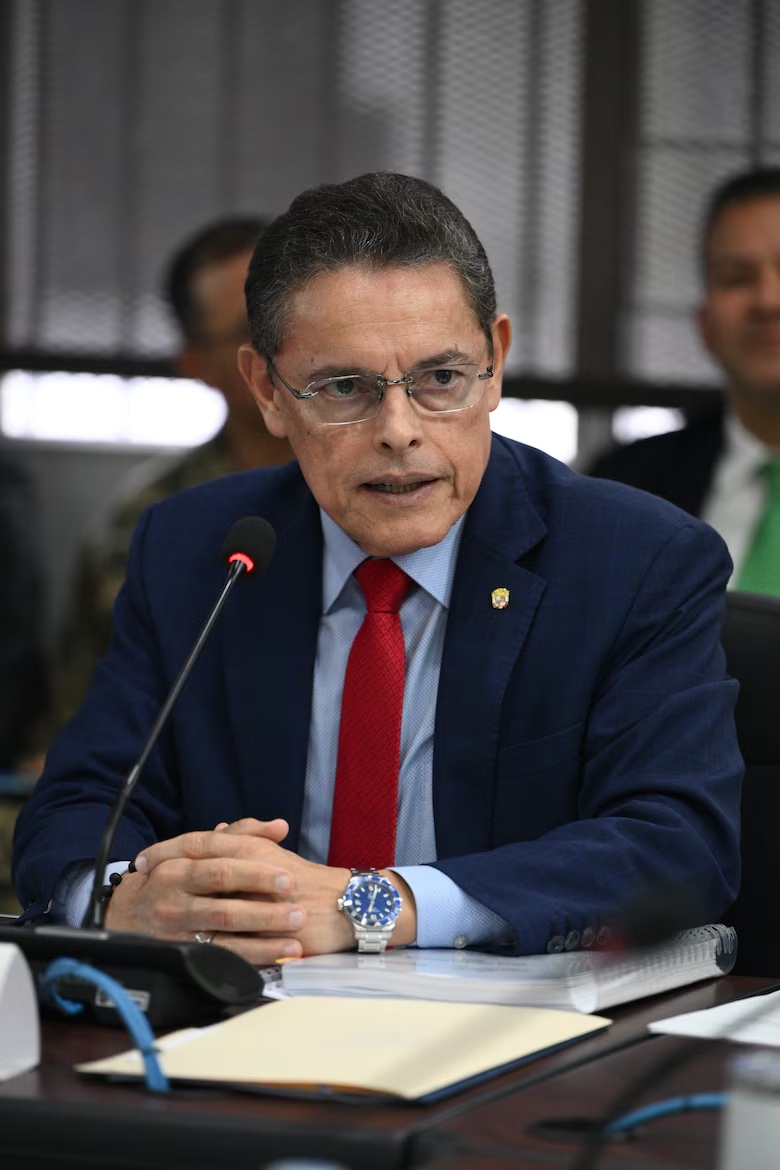
Since 2023.
But this new story, according to Ábrego, began in 2023 – during the government of Laurentino Cortizo (2019-2024) – when the authorities of the ACP and the Ministry of Security sat down to discuss mechanisms to strengthen the security of the interoceanic waterway, motivated, according to him, by world events: the wars in the Middle East, Russia’s invasion of Ukraine and the progressive geopolitical tensions that, according to the minister, could represent new risks to the security of the Canal. At the time, it was estimated that the fund needed $200 million. Ábrego considered that amount to be “exaggerated.”
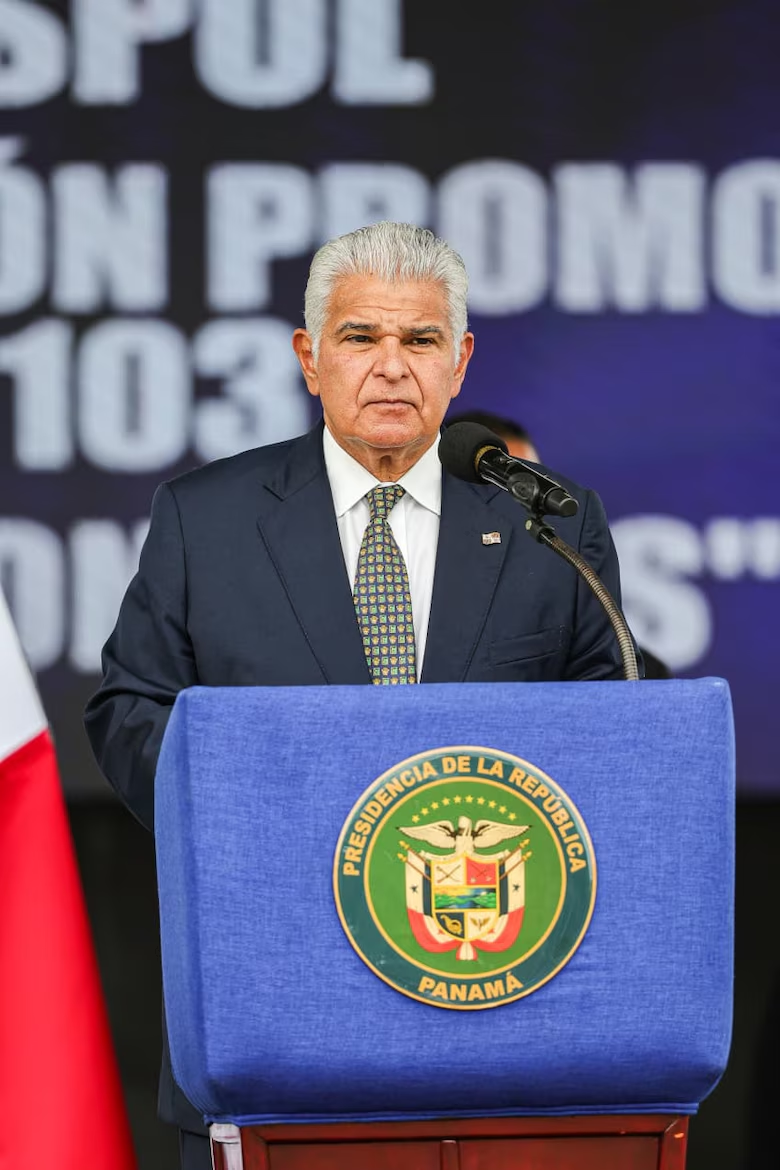
When José Raúl Mulino assumed the presidency of the Republic in July 2024, he asked that the talks with the Canal administrators continue. Starting in January 2025, an issue arose that no one saw coming: the interest of the President of the United States (US), Donald Trump, in the Panama Canal. Trump insisted on regaining control of the waterway that his country returned to Panama in 1999, arguing that China controlled its operation, something that Panamanian authorities and the Panama Canal Authority (ACP) itself have consistently denied. “The Canal is and will remain Panama’s,” President Mulino stated at the time in various forums.
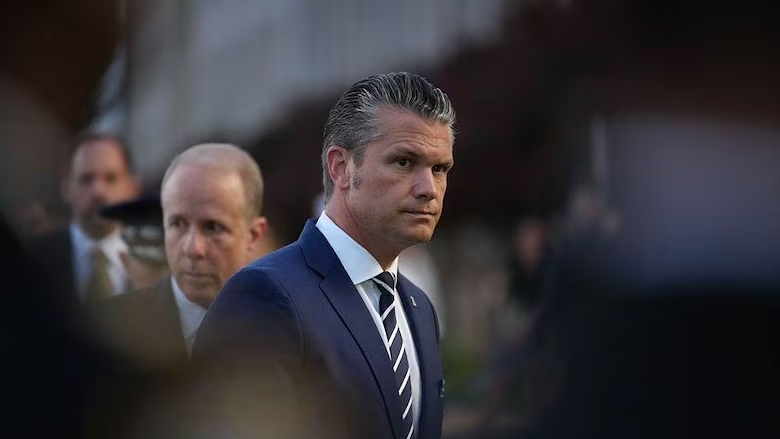
In April 2025, during his first visit to Panama, U.S. Secretary of War Pete Hegseth signed a joint declaration with the Panama Canal Authority (ACP). Hegseth stated that the agreement guaranteed U.S. military and auxiliary vessels “first-rule access” to transit the waterway. The Minister for Canal Affairs, José Ramón Icaza, clarified that it was not exactly a “free” passage, but a compensation system for services, inspired by similar agreements with the Ministry of Security. Ábrego did not mention that deal during his conversation with the deputies. The truth is that, after negotiations, meetings and geopolitical tensions, the ACP and the Ministry of Security agreed to finance a security program for the Canal for an annual amount of $12,992,000, for three years, as the minister explained.
The Unanswered Question.
That’s when a question arose that sowed doubts and generated noise. Deputy Vega questioned what law authorizes a ministry to take operating funds from an autonomous entity, with its own assets and constitutional status, and put them under the administration of a security force.
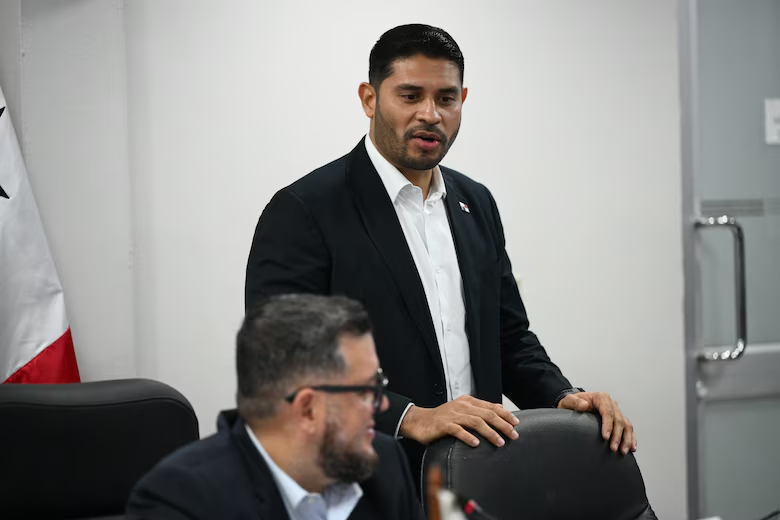
Jhonathan Vega, deputy for Vamos.
Ábrego asked Deputy Minister Luis Felipe Icaza to explain this aspect, but the response focused on how the money would be handled once transferred. The official explained that the funds would go into a single Treasury account (CUT), under the supervision of the Comptroller General of the Republic and the MEF, while the ACP would audit and oversee them. But the mechanism is already in place. According to Vice Minister Icaza, there are currently $5.2 million deposited in the CUT (Central Unitaria de Trabajadores – Unified Treasury Account). He said that this money could not yet be used because a manual for its use first had to be prepared and approved by the Comptroller General’s Office. A careful reading of Resolution 230 reveals a list of six laws on which the Ministry of Security bases its decision. One of these laws, dating back to 1997, assigns the Canal the responsibility for protecting its infrastructure. Another law created the Ministry of Security in 2010, while two others regulate government procurement. Law 6 of 2002, or the Transparency Law, is also invoked, which grants any citizen the right to request public information. However, in this instance, it is being used to justify why the funds must be kept confidential. However, none of those laws says, in any line, that the Canal can transfer funds to a ministry.
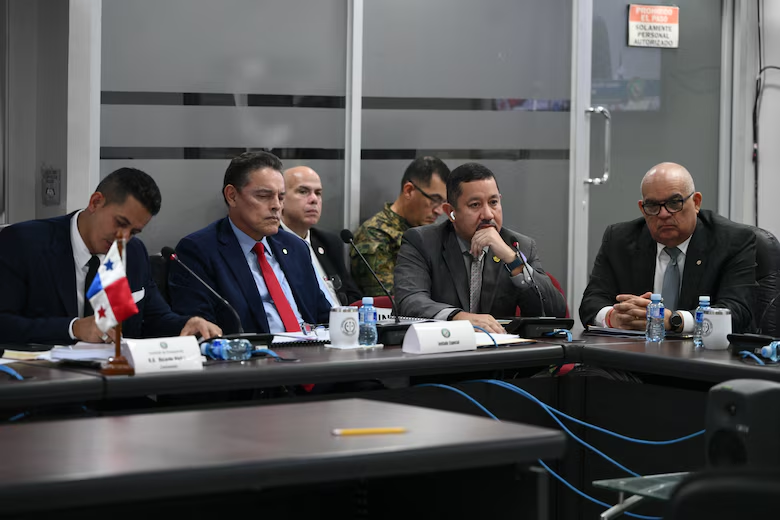
Officials from the Ministry of Security appeared before the Budget Committee.
The Funds Will Come From Operating Expenses.
Duke asked where the $12.9 million annually would come from. Ábrego explained that it wouldn’t come from the surplus that the Panama Canal Authority (ACP) gives to the State each year, but from the waterway’s operating expenses. At that point, Justo Botacio, Director of Budget at the Ministry of Economy and Finance (MEF), intervened, explaining that the money would continue to be deposited into the Treasury’s single account, but would not initially be part of the Ministry of Security’s (Minseg) budget. To use it, the ministry would have to request additional funding, which would require authorization from the Budget Committee of the National Assembly.
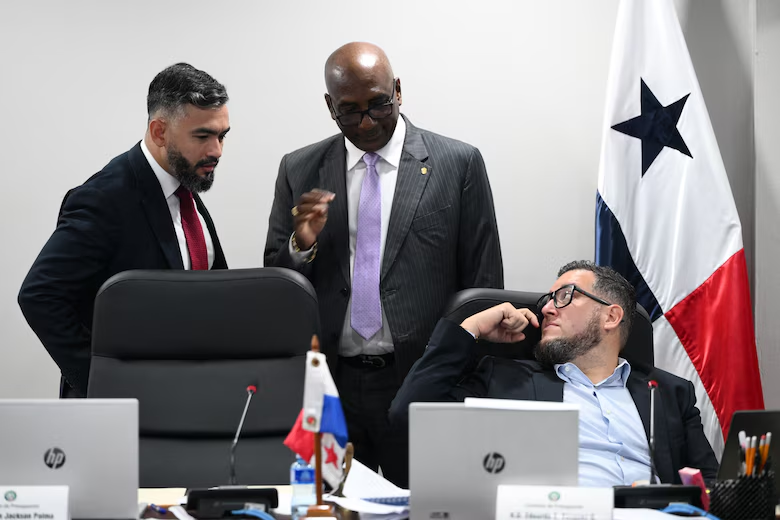
Representatives Luis Duke (Vamos), Nelson Jackson (RM), and Eduardo Vásquez (CD) at the Budget Committee.
In other words, the resources come from the operation of the Canal, enter the State financially, and then must be incorporated into the Minseg budget in order to be executed. The head of the budget department at the Ministry of Security explained that this formula was chosen because the Panama Canal Authority (ACP) wanted to maintain a record of its resources and ensure they were used exclusively for the agreed-upon purposes. He also stated that the agreement stipulates that if the funds are not used, they will be returned to the ACP. He added that the agreement stipulates that unspent funds must be returned to the ACP no later than 60 days after the agreement ends. The reason, he said, is precisely to prevent the money from being lost within the state budget. If the funds remain as a budget item and are not spent within the fiscal year, they would revert to the Treasury. If they remain as financial funds in the CUT (Central Unit of Transfer), they can be held until it is determined what portion should be returned to the ACP (Panama Canal Authority).
The Canal’s Version.
About four kilometers from the Assembly was the new administrator of the Canal, Ilya Espino de Marotta. She was at the Riu Hotel, attending a forum on competitiveness.
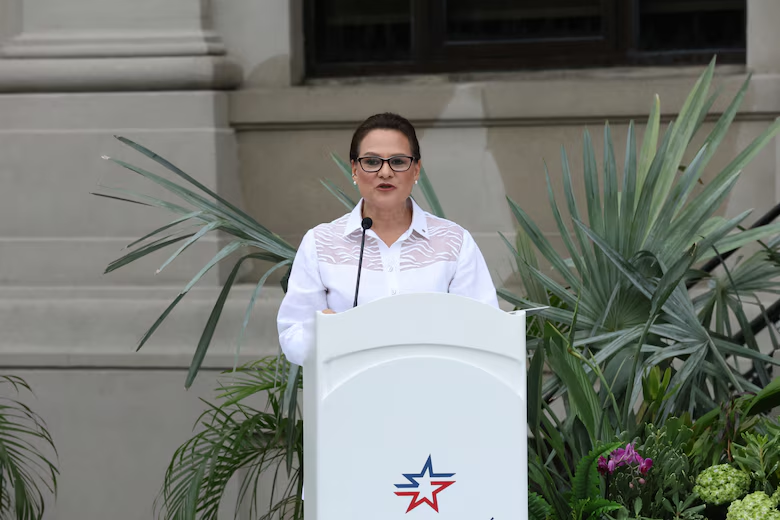
Ilya Espino de Marotta at the Sheraton.avif
During a break, journalists asked him about the Canal’s notorious security fund. Marotta gave an explanation that could open another gap in this story: that the reservation requested by the Canal refers to the security plans and that confidentiality was not requested about the operational part. But Resolution 230 declares not only the operational plans reserved and confidential, but also “the accounting records linked to the financial execution” of the fund. He also said that the issue is not new, since in the last 25 years the ACP has agreed to agreements with multiple government institutions: the National Land Authority, the Ministry of Environment, the Ministry of Health, the Ministry of Labor, the National Institute of Aqueducts and Sewers… The list goes on. “This is routine. Let’s remember that the Panama Canal also acquired additional assets, meaning we have more land to protect,” he added. He added: “It’s always important that the relevant entities can give us the support we need to ensure the Canal is a reliable, efficient, neutral, and effective waterway. Security is the responsibility of the State, not us, so that’s how they are supporting us.”
Security Needs.
And this is also part of the Executive’s discourse. In pragmatic terms, it says that the fund responds to specific security needs. Ábrego reminded the legislators of the international context, the increase in threats, and the need to strengthen the waterway’s security. He cited the use of drones in attacks as an example and said that the Canal already has anti-drone systems, but needs to increase that capacity. The head of the Minseg budget added that the program will cover seven areas and that the Canal is responsible for some 123 communities and 26 districts. He explained that the ministry will provide 176 officials for those areas, while the infrastructure and equipment acquired with the resources will remain the property of the Canal and will be used for its security and surveillance.