Ilya Espino de Marotta was Born to Operate the Panama Canal.
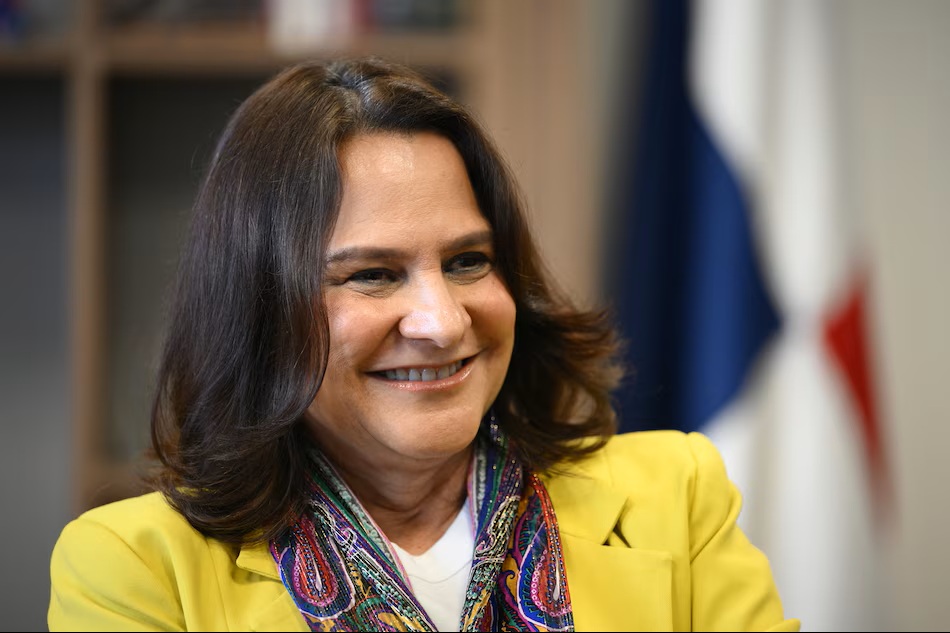
Ilya Espino de Marotta pictured below, assumed the role of administrator of the interoceanic waterway Monday, September 7, for the period 2026-2033. Her first job was repairing the Panama Canal’s floating dock in Colón. Today, decades later, she manages the country’s most important asset. In this interview, she discusses the timelines set for major projects.
There is a photograph that sums up a good part of the story of Ilya Espino de Marotta: an engineer of barely 23 years in a shipyard in Colón, her first destination in the Canal, where she began to acquire the technical knowledge of the waterway and move in a world that was still, above all, of men. Years later came another image that many Panamanians remember: Ilya, the one with the pink helmet, in front of the expansion, one of the most ambitious infrastructure projects undertaken by the country.
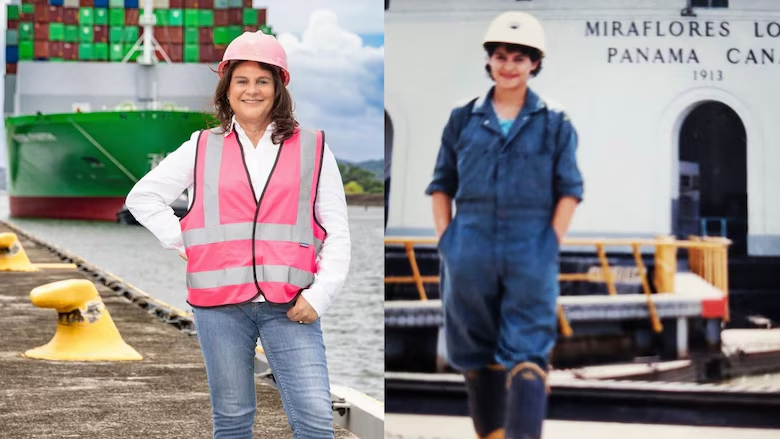
Ilya Espino de Marotta and her Journey Along the Waterway.
Between one photograph and the next, decades of work, learning, and decisions passed. Today, that young engineer who started at the shipyard holds in her hands the future of the very institution that trained her, the one that, in her own words, “saw her professional birth.” After 41 years at the Canal, Espino de Marotta takes over as its first female administrator. She does so at a time when the interoceanic waterway faces questions that extend far beyond its locks: how to guarantee water supply, how soon the Río Indio reservoir will be ready, how far the expanded Canal can grow, how to diversify its revenue streams, and what kind of institution it wants to leave for the next generation. But before we talk about everything that’s coming, we wanted to focus on the woman who has traveled that path. On what she learned, what she had to sacrifice, those who accompanied her, and what still moves her after four decades at the Channel.
The conversation took place in what, until Friday, September 4, was her office as deputy administrator in the iconic Administration Building of the Panama Canal. She had just returned from a conference, and outside, several cameras and microphones awaited their turn. Time was short, and there were many questions; each journalist sought to extract an exclusive piece of information from the woman who, starting this Monday, would bear one of the country’s greatest responsibilities: managing its most precious resource, water, and its most valuable asset, the Panama Canal. That morning, inside the Canal, the atmosphere was different. There was something akin to the quiet celebration of those who feel that one of their own has achieved something significant. One employee summed it up with a simple phrase: it was like seeing a child graduate, a sibling reach a goal, a friend accomplish something. And then Ilya Espino de Marotta appeared. She arrived with that energy that seems to have accompanied her for decades, greeting everyone, chatting, and ready to answer, once again, questions about a canal she knows from the inside out.
A Woman who Doesn’t Want her Story to be Explained Solely by the Fact that she is a Woman.
Being the first woman to reach the administration of the Canal has a meaning for her that transcends the position, but Espino de Marotta does not tell her story from an exceptional perspective. “Women can achieve the same things as men,” she maintains. She also believes that different perspectives on how to approach a problem are a strength and would like to see more women on the Canal’s executive team. But when she speaks about her own journey, she makes a clarification. “My meritocracy was recognized. What has brought me here is not being a woman, but those 41 years of dedication.”
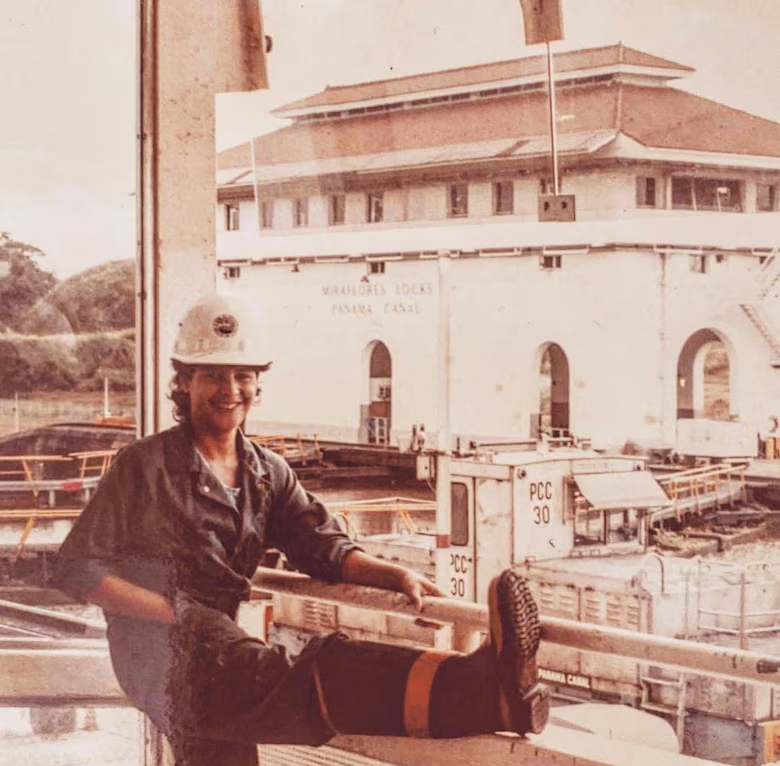
The current administrator of the Canal, during her first years on the road.
She spoke of the sacrifices it took to get here, of the people who shaped her path, and of what still moves her after 41 years at the Canal. But she also spoke of what’s to come: water, new businesses, growth, and the decisions that will define the next few years for the interoceanic waterway.
The Canal that Receives.
Beyond personal history, there are decisions that will define the course of the Canal during her administration. The expanded Canal still has room to grow. A fourth set of locks could be studied in the future, although Espino de Marotta acknowledges that it would not be a project undertaken during her administration. The aim is to expand the business beyond ship traffic. Ports, a gas pipeline, a logistics corridor on the west bank, and new opportunities linked to sustainability are all part of the strategy that will have to be developed over the next seven years.
“It is important for the Canal to diversify its revenue streams so that it can continue to provide benefits to the State. We have given more than $31 billion to the State and that must continue to grow,” Espino de Marotta told news media. But before thinking about how much the Canal can grow, there is a more urgent question: how much water will it have to do so. The portfolio inherited by the new administrator includes two ports currently out for tender: one in Corozal and the other on Telfers Island. These are in addition to the logistics corridor and the gas pipeline.
The construction of the ports could take between two and three years and their awarding could take place at the end of 2027 or in 2028, according to Espino de Marotta’s estimates. The pipeline project could be awarded by the end of 2028 and would take approximately three years to complete. The aim is for Panama to further leverage its geographic location and increase the movement of goods through the country beyond just the transit of ships through the Canal. These are projects that won’t transform the interoceanic waterway overnight. Some will even be left to whoever succeeds the current administration. But they are part of a long-term vision: for the Canal to have more sources of income and to continue contributing to the State.
The Water Challenge.
For Espino de Marotta, the main challenge of her administration will be climate change and, in particular, the return of a strong El Niño phenomenon. The Canal Authority will have to guarantee the supply of drinking water to more than two million inhabitants without affecting service to its customers. For this reason, it identifies the Río Indio project as an urgent priority. She is aware of the complexity of the project and the impact it will have on the families who will need to be resettled. Therefore, she insists that dialogue with the communities will be a fundamental part of the process.
The Canal, she says, has faced “two difficult years of very large droughts” and warns: “We are going to experience another one.” Regarding the Indio River, her position is clear: “It is a complex project, I know we can do it, I know we can do it well.” The Canal intends to begin construction in 2028, although some resettlements will begin before then in Colón, Panama Oeste and Coclé. Espino de Marotta argues that the project will make the road more reliable and fulfill the constitutional mandate to guarantee water for the population. Two roads have also been awarded for $17 million within the territory of Río Indio. Water will not, however, be the only major project on her desk.
What the Canal Can Teach Panama.
Perhaps one of the most revealing parts of the conversation came when the question shifted from the Canal to Panama. Espino de Marotta believes that the country can take as a reference some of the practices that have allowed the Canal to consolidate during the 25 years of Panamanian administration: the merit system for entering and advancing, transparency in bidding processes, and water management. It’s not just about copying procedures. It’s about replicating a way of doing things. “I think the Canal is a replicable entity.” And then she takes the idea a little further. “I think there could be several mini Panama Canals in this country.”