Loans with Violence and the Shadow of Organized Crime in Panama is Called ‘Drop by Drop’.
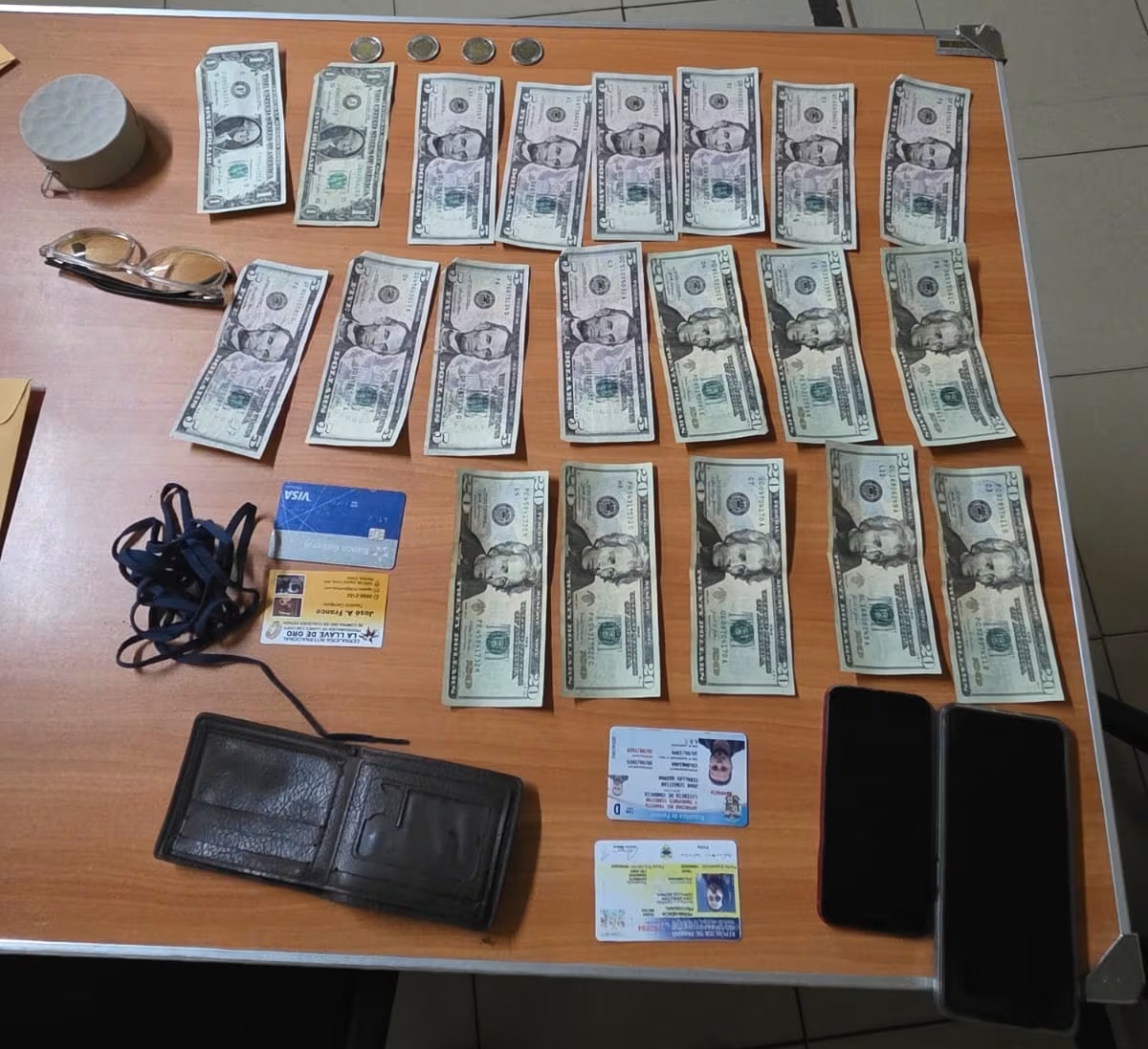
Money, documents, and cell phones found in the possession of the Colombian citizen captured in Chitré, Herrera. Loan sharking grows in Panama under police scrutiny: loans, money laundering, violence and possible links to organized crime.
On August 25, armed men opened fire on a couple inside a vehicle parked in a shopping plaza in Villa Lucre, San Miguelito. The attack occurred around 5:00 pm, a few meters from a Metro station. Their names were Luis Enrique Bonilla Santo, 32, and Julissa Esther Guerra Lorenzo, 37, who was pregnant. Bonilla died at the scene. Guerra died hours later in a hospital. The attack left three victims: the couple and the fetus the woman was carrying. Last Tuesday, September 1st, journalists asked the Director of the National Police, Jaime Fernández pictured below, what was known about the case.
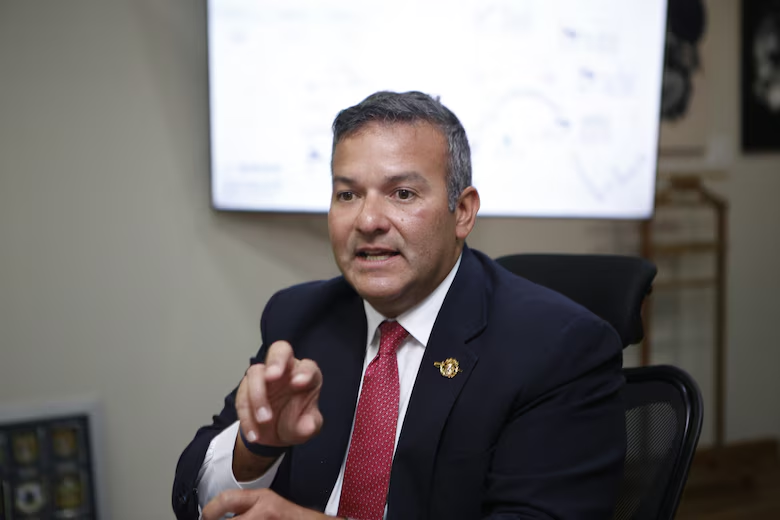
Fernández responded: “We are gathering information with the Directorate of Police Investigations, and with the footage from nearby security cameras, we have considerable evidence. The line of investigation points to organized crime or loan sharking.” News media have asked Fernández about the tentacles of loan sharking in Panama. The director confirmed that “several cases have already been presented here” and that they have carried out several operations against loan sharks, a modality he described as “structures that launder money for criminal organizations and gangs,” and that, as well as drug micro-trafficking, they are “attacking them hard.”
A Chitré Capture.
The National Migration Service (SNM) reported this Friday the capture of a Colombian citizen in the district of Chitré, province of Herrera, during Operation Perseus. According to a statement from the institution, “the collections under the daily financing modality known as ‘gota a gota’” motivated the arrest.
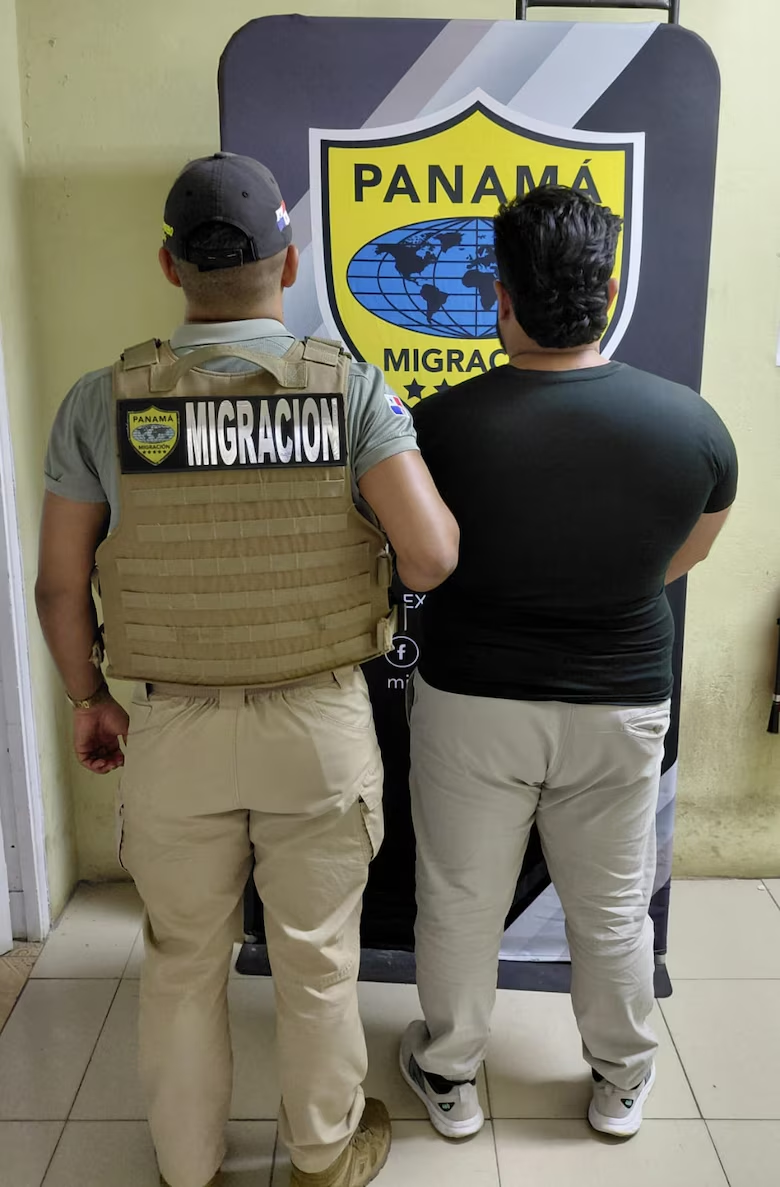
A Colombian citizen was caught in Chitré collecting loans using the “gota a gota” (loan sharking) method during Operation Perseus.
The entity noted that this activity “is incompatible with the permit to remain in the country.” The Herrera Regional Migration Field Action Liaison carried out the capture and transferred the detainee to the Male Migration Administrative Detention Center, where the procedures continue in accordance with current regulations, according to the SNM. The National Migration Service (SNM) did not link that case to the Villa Lucre homicide. The coincidence of dates, however, brought to the public agenda a business that has been growing for years in Panama, almost always in the shadows and far from the headlines.
A Business with Almost 30 Years of History.
An investigation by the journalistic alliance Connectas, dedicated to monitoring this network in Latin America, establishes its origin in the late 1990s, in Medellín, Colombia, as a mechanism to launder the surplus cash from drug trafficking that could not enter the financial system through legal means. A study by the Central University of Bogotá estimates that the system moves about 2.8 billion Colombian pesos a day, close to one million dollars.
The United Nations Office on Drugs and Crime (UNODC) confirmed that origin in a regional study it published in September 2025, through its office in Costa Rica. The document describes loan sharking as a decentralized illegal market with four defined roles: the owners of the capital, the lenders, the logistics network, and the collectors. According to the study, most of these networks operate with small structures, averaging eight people, although it also documents larger, hierarchical organizations linked to larger criminal structures.
This is How this Business Works. No Guarantor – No Contract – With Motorcycle.
The scheme offers quick cash, with no collateral or credit check. All you need is an ID. Collectors travel by motorcycle as pictured below, to the homes and businesses of debtors to collect the daily payment. Rates vary by country and organization: the UNODC study documented rates of between 20% weekly and 20% monthly in Costa Rica, well above the legal limit allowed in that country. When the debtor does not pay, the UNODC study documented three typical responses from these structures: refinancing with higher interest rates, reselling the debt to criminal organizations, or direct intimidation, with threats, theft of property, and physical violence.
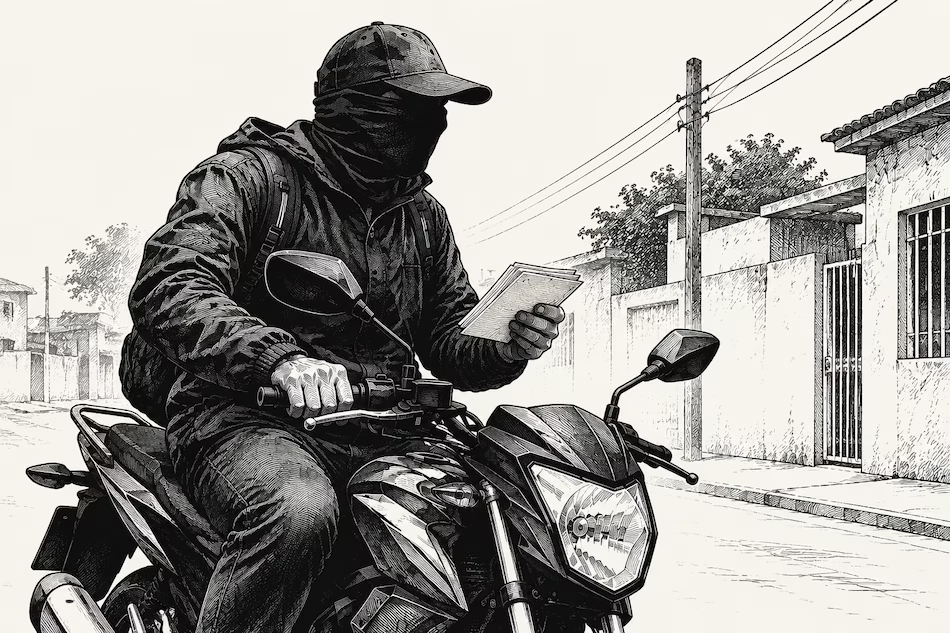
The image of the debt collector on a motorcycle has become the most visible symbol of the “gota a gota” (drop by drop) model, an informal lending network that operates with daily collections and is associated with possible links to criminal organizations.
In Panama, the SNM expelled a Colombian citizen last August through the Tocumen airport, identified as the third leader of “La Inmaculada”, an organization dedicated to extortion and “gota a gota” loans. The newspaper El Tiempo reported that the man, known as Carlos, had been involved in criminal activities for 17 years. Through extortion, he demanded at least one billion Colombian pesos, the equivalent of $320,000, but when the victims were unable to pay, he ordered attacks and murders.
What is the Crime?
In Panama, usury is not a crime. The current Penal Code, Law 14 of 2007, does not include this offense: anyone can lend money at the interest rate agreed upon with the borrower, without the State setting a limit. It was not always like this. The Penal Code of 1982 punished, in its article 192, anyone who lent money “at a monthly interest rate higher than that established by the National Banking Commission”, with a fine of 50 to 360 days.
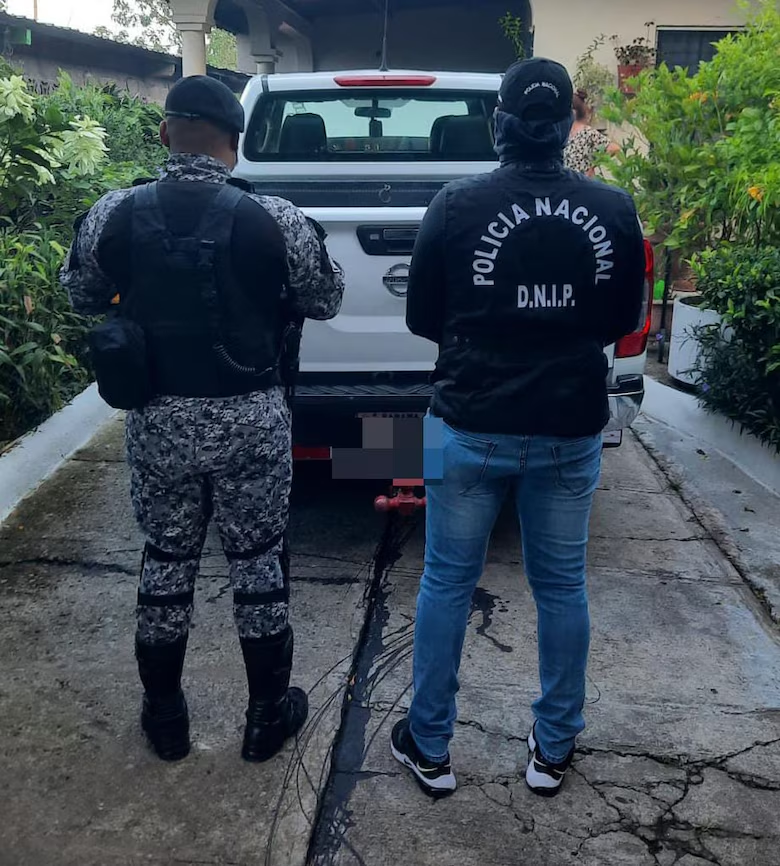
Operation against organized crime.
However, Decree Law 9 of February 26, 1998, which created the Superintendency of Banks and liberalized the financial market, eliminated that regulatory cap. That leaves loan sharking off the criminal radar, except when the collection becomes violent. In other words, the law does not target the loan itself, but what happens when the debtor does not pay: extortion, classified in article 151 of the Penal Code with a penalty of 5 to 10 years in prison, or money laundering, which Fernández mentioned when linking these networks with criminal structures and gangs. Foreign lenders, like the one captured in Chitré, can also have their residency permits revoked by the State and even be deported, even if there is no criminal charge against them.
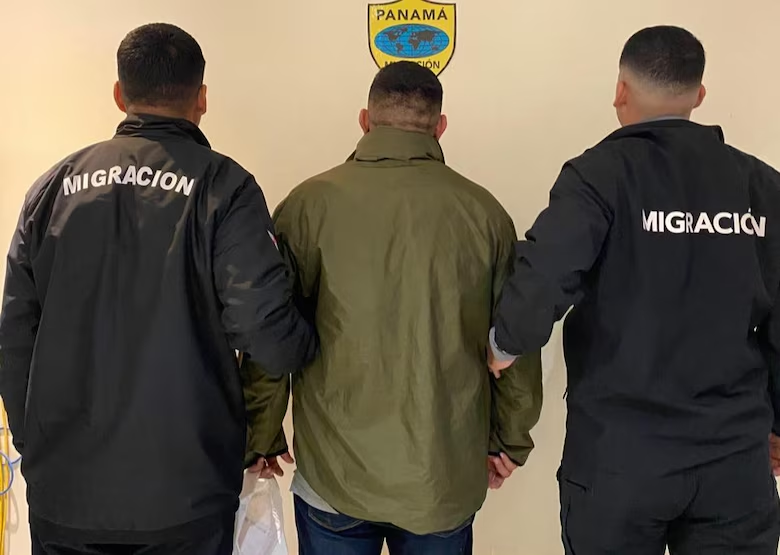
Colombian man involved in extortion and loan sharking was detained at Tocumen Airport.
The Network that Operated in Brisas del Golf.
In May 2019, the National Police dismantled a loan sharking operation in a house in Brisas del Golf, San Miguelito, and arrested 10 Colombian men. Officers seized 18 motorcycles, cash, computers, and notebooks containing clients’ names, addresses, and loan amounts, as well as the lenders’ business cards. The then-commissioner of the National Police, Cinthia Meneses, explained that the raid was prompted by a citizen’s complaint about unusual activity at the residence. The officers were searching for weapons and drugs. Instead, they discovered the headquarters of an illegal lending network. Seven years separate that operation from the triple homicide in Villa Lucre. During that time, no Panamanian authority released official figures on the number of active loan sharking operations in the country, according to a review of public records and press reports.
From Medellín to 16 Countries.
Connectas’ investigation documented how the “gota a gota” (loan sharking) system originated in Colombia: Ecuador was the first to import it, around 2010; then it arrived in Peru and was later replicated in at least 16 countries, including Mexico, Brazil, Argentina, Honduras, and Bolivia.
In Panama, the business no longer depends solely on Colombian operators. Former commissioner Carlos Icaza told TVN that “there are also Panamanian loan sharks entering the market” and warned that this money comes “from illicit activities” and that its operators seek to launder it through the loan collection system. The former commissioner did not publicly identify any local operators.
In La Chorrera, Panama Oeste, for example, people interviewed say the networks operate in the district center. Collectors travel the area on motorcycles, targeting lottery ticket sellers, street vendors, and small business owners in general.