With a 7% ITBMS Tax on Purchases from Amazon – Temu – Netflix – and Other Platforms Panama Expects to Raise $100 Million in Taxes.
The tax will be levied on electronic transactions, primarily credit cards. The mechanism, which still needs to be regulated, has been discussed with banks and companies such as Visa, Mastercard, and American Express.
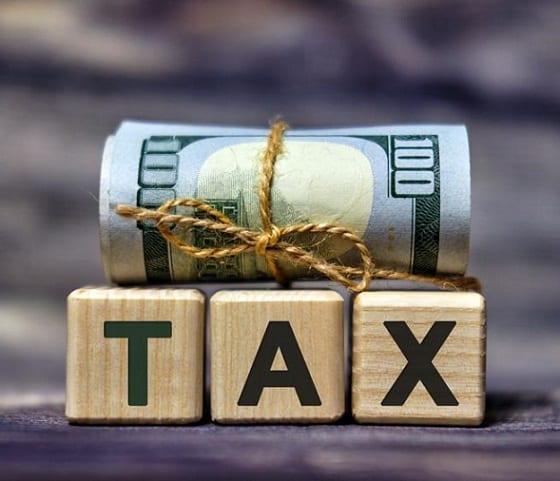
The government expects to collect more than $100 million annually by applying the 7% Transfer Tax on Movable Tangible Goods and the Provision of Services (ITBMS) to purchases and services contracted through digital platforms such as Amazon, Temu, Netflix, Airbnb and other companies in the digital economy and e-commerce. This was announced by the Minister of Economy and Finance, Felipe Chapman, who explained again this Wednesday, August 19, that the 7% tax does not represent the creation of a new tax, but the implementation of a mechanism to collect the ITBMS on transactions in the digital economy.

“What we are estimating very conservatively, based on what those who provide these services have told us, may exceed 100 million dollars a year,” Chapman said. Chapman made the statements to the media upon leaving the 30th Hemispheric Congress for the Prevention of Money Laundering, held at the Panama Convention Center. “No new tax is being created, it’s important to clarify that, no new taxes are being created, what is being done is filling a legal void that had obviously fallen behind in technology,” the minister reiterated.
How will They Collect the Tax?
According to Chapman pictured below, the application of the tax will take advantage precisely of the electronic mechanisms used to make purchases on digital platforms. “The vast majority are carried out electronically through electronic payment methods such as credit cards,” he explained. The head of the MEF indicated that the Government has already spoken with the main card-issuing banks and with the companies that support these means of payment, including Visa, Mastercard and American Express, to establish the mechanism that will allow the collection to be made effective.
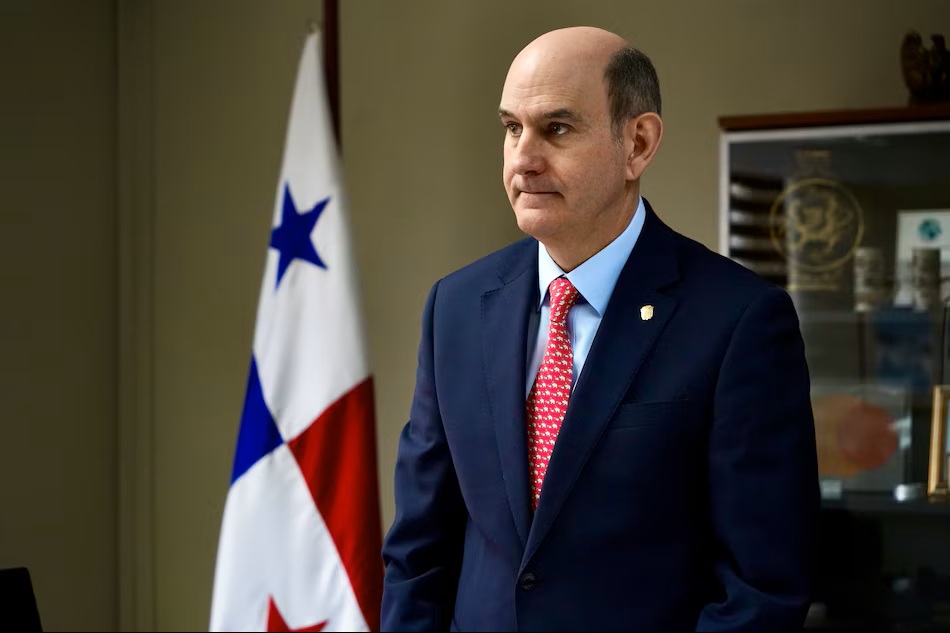
In practical terms, when a person makes a purchase or pays for a subscription subject to ITBMS using their card, the transaction can be identified within the payment system to apply the corresponding 7%. Chapman noted, however, that they are still working out the operational details of exactly how the withholding will be done and how it will be reflected for the consumer. The minister stated that the scheme has already been studied with card issuers and that Panama would take as a reference mechanisms that work in countries like Costa Rica and Colombia. “The wheel has already been invented and is being used, and it has already been properly studied and analyzed with credit card issuers to make this effective,” he assured.
Netflix, Amazon, Temu and Airbnb.
The minister used the Netflix case to explain how an operation that could previously be carried out through the physical purchase of a product or software moved to the digital environment without adequate regulations to effectively collect the tax. As he explained, the obligation will be related to a purchase and sale transaction of a product or service and not simply to the use of a platform. The scope would also include lodging services contracted through platforms like Airbnb . Chapman noted that one of the objectives is to eliminate the disparity that exists compared to businesses physically established in Panama that do collect and pay the ITBMS (Panamanian sales tax).
It is now tax time takes on a whole new meaning. “The famous Airbnbs or similar platforms, where it is well known that hotels pay sales tax they rightly said: here are others who provide the service who do not pay that because it is not regulated by law,” he stated. In the exchange with journalists, he confirmed, later in the conversation, that the scheme would reach platforms like Amazon and Netflix, although the details about the withholding and issuance of receipts are still being defined. The minister stated that several companies offering digital services had previously approached the government expressing their intention to comply with the payment, but that there was no regulation establishing how to do so. He also explained that the transactions must generate a digital invoice, which could eventually be used even within the tax lottery mechanism.
Project Must Go Through the Assembly.

The proposal is part of the bill that Chapman announced on Tuesday, August 18, after it was approved by the Cabinet Council. The project must now be presented and discussed in the National Assembly before becoming law. Chapman indicated that, once approved, the new mechanism will need to be regulated. He estimated that this process could take between 60 and 90 days. “I estimate a minimum of 60 days, a maximum of 90 days for it to be properly regulated,” he said. The minister insisted that the initiative seeks to equalize the tax treatment of transactions carried out in physical establishments with those that are now carried out through the internet. According to Chapman, for years small and medium-sized enterprises have warned that while their sales made in Panama are subject to the ITBMS (Panamanian sales tax), numerous similar operations carried out through digital platforms were left out of the effective collection mechanism, creating a difference between the physical and digital economy.