Criticism Grows Over the Transfer of Prisoners to Coiba: ‘The Law was Violated’
The government’s decision could jeopardize the conservation agreements Panama has made with UNESCO and put Coiba’s recognition as a World Heritage Site at risk.

As more details emerge about the transfer of 29 prisoners to Coiba National Park, two concerns that transcend the political debate are beginning to surface among environmental law and conservation specialists.
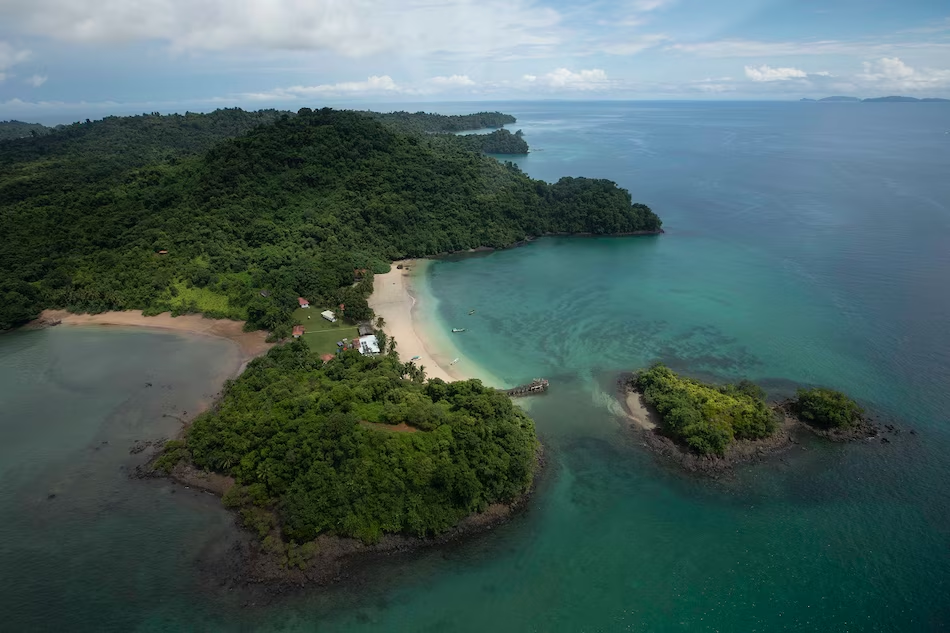
Ricardo Wong, director of the Foundation for the Protection of the Sea (Promar) and president of the National Committee of Members of the International Union for Conservation of Nature (IUCN) in Panama, warned that the measure represents an outburst and a violation of the regulations that protect one of the most important natural areas in the country.
The New Tenants of Coiba: Gang Leaders and Murderers
Among those transferred to Coiba Island are gang leaders and highly dangerous murderers. Eduardo Macea pictured below, alias Marshall, is one of the inmates transferred to Coiba.

Among the prisoners transferred to a National Aeronaval Service (Senan) base on Coiba Island are leaders of some of the country’s most dangerous gangs and drug traffickers whom authorities attribute to the control of drug trafficking routes, homicides and settling of scores. Carlos Mosquera (alias Calitín) was also transferred to Coiba. He was arrested in 2022 during Operation Alpes, which dismantled another criminal structure dedicated to drug trafficking in the coastal areas of the provinces of Los Santos, Herrera, Coclé, Panamá Oeste and Veraguas.
The Transfer of Inmates to Coiba in Panama Ignored the Coiba National Park Board of Directors and Ciam
CIAM Panamá (Centro de Incidencia Ambiental) is an environmental advocacy organization in Panama. They are dedicated exclusively to the legal defense of the environment, operating through citizen participation, policy advocacy, public awareness campaigns, and strategic litigation against environmentally harmful projects. Their primary focus areas include:
- Anti-Mining Campaigns: They advocate against polluting open-pit mining projects (such as gold and copper mining) and have pushed for reforms to Panama’s Mining Code.
- Wetlands and Mangrove Protection: They work to protect vital ecosystems from deforestation and unchecked urban expansion.
- Community Rights: They have represented indigenous and local communities in conflicts regarding large-scale infrastructure projects, such as the Barro Blanco Dam.
The government’s decision to transfer 29 inmates to Coiba National Park in Veraguas not only violated the legal provisions that regulate this protected area, but was also carried out without the opinion or participation of the Coiba National Park Board of Directors, the body responsible for overseeing the administration and conservation of the site. The five municipalities with representation on the Board of Directors of Coiba National Park —Montijo, Soná, Río de Jesús, Las Palmas and Mariato— expressed their rejection of the transfer of people deprived of liberty to the archipelago, considering that the measure contradicts the conservation principles that govern the protected area.
The five municipalities with representation on the Board of Directors of Coiba National Park expressed their rejection of the transfer of people deprived of their liberty to the archipelago.