Eager to Make History and then I’ll See What the Future Holds: Thomas Christiansen
Thomas Christiansen, Danish by birth and with Spanish nationality, now also holds a Panamanian passport. We are ambitious. We want to make history. Returning to a World Cup is a great achievement, said Thomas Christiansen.
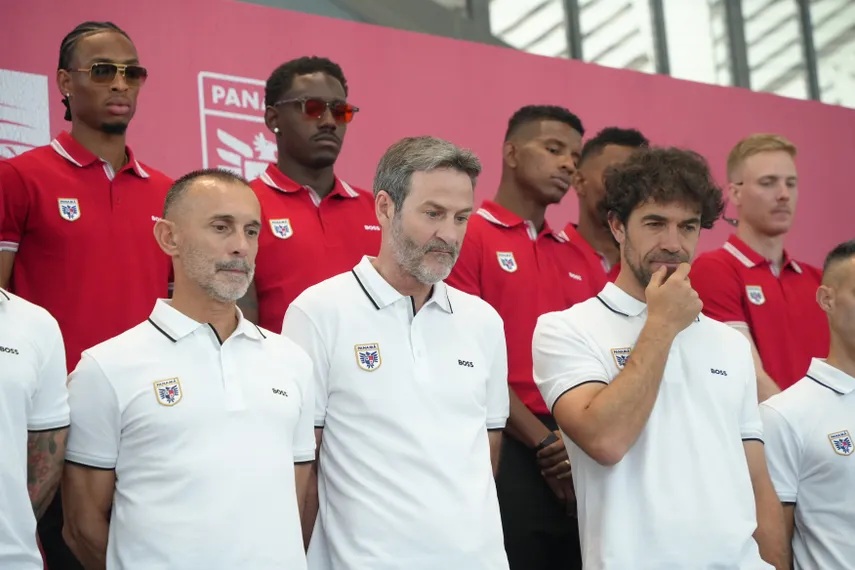
He will coach Panama at the 2026 World Cup, which he enters “eager to make history.” Therefore, he is putting his future on hold until after the World Cup, despite being aware of interest from leagues in other countries. Thomas Christiansen, Danish by birth and with Spanish nationality, now also holds a Panamanian passport. He will coach Panama at the 2026 World Cup, which he enters “eager to make history.” Therefore, he is putting his future on hold until after the World Cup, despite being aware of interest from leagues in other countries. Since his arrival, Panama has risen from 87th in the FIFA rankings to its current 33rd. “I like it when people tell me I make my teams better,” he says in a telephone interview, in which he points to Morocco, a semifinalist in Qatar 2022, as an example to follow. Since his arrival, Panama has risen from 87th in the FIFA rankings to its current 33rd. “I like it when people tell me I make my teams better,” he says in a telephone interview with EFE, in which he points to Morocco, a semifinalist in Qatar 2022, as an example to follow.
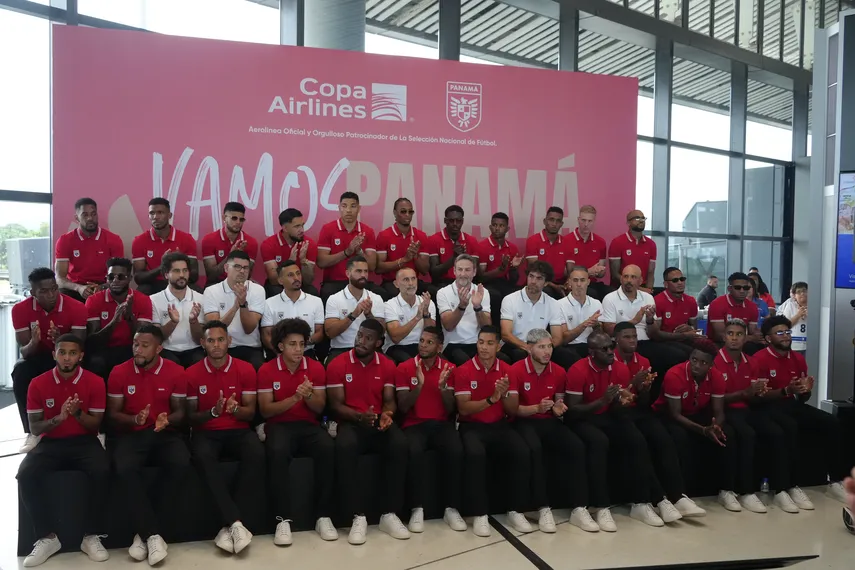
Question: There are two weeks left until the World Cup starts. It is the second time in history for Panama. How does that feel?
Answer: It is a great feeling. I am happy and proud of qualifying for the World Cup as a coach. It is the most important sporting event. Being a part of it fills you with pride. Now it is time to compete and represent Panama well.
Question: This fulfills the goal you set when you took office in 2020. How difficult has it been to achieve this?
A: When I took over the national team in August 2020, the president offered me a seven-year contract to end after the World Cup, and I refused because there were elections in 2022, and I did not want the next president to be saddled with a coach on a long-term contract. Ultimately, the main objective was to qualify for the 2026 World Cup, and that requires a long-term process. When I arrived in 2020, Panama was practically out of contention, and we qualified for the final round, but it was not enough to get us into the Qatar World Cup. However, that was not the right time for the process.
Q: England, Croatia, Ghana… What are your team’s chances of advancing to the next round?
R: We know it is a friendly group, let us say -he jokes-, to put it mildly -he laughs-. We are very motivated by the fact that we have two European teams and one African team. Our chances depend on our physical, mental, and tactical condition when we arrive.
We are ambitious. We are eager to make history. Returning to a World Cup is a great achievement. Nevertheless, the important thing is to improve on what we did before, which is trying to get points in our group. I would like to advance from the group stage, but we need to win at least one match.
Q: Do you expect a World Cup with surprises?
A: Maybe, but not many. At the last World Cup, Morocco surprised me; they had a great tournament and were not expected to go so far. I would like to be the Morocco of this World Cup. We do not have that same level, but we will try to put Panama on top, playing good football and making sure, it translates into results.
Q: Did the defeat against Brazil (6-2) hurt?
R: The first half was very good. They scored a goal against us that was clearly offside, the video scoreboard showed the goal before the referee, with the assistant referee’s flag up… It was like they were saying goodbye. Up until that point, we were playing Brazil on equal terms.
In the second half, the team fell apart in every aspect. They made 11 changes, and each one came on better than the ones they came off. That is Brazil. It was a good learning experience; we were punished for our mistakes, and if we make the same mistakes at the World Cup, we will be punished. In addition, we have to prevent that. We showed character in the first half, dominating the game at times.
Q: You chose Panama after coaching several European teams. What has this experience brought you?
R: It’s taught me a lot, of course. The day-to-day work is different. At a club, you can work on technical and tactical aspects with the players every day, but with the national team, you have very little time for that. Moreover, you have to ensure proper recovery, then two days later work on the tactical aspects for the matches… it is very little time. You have to be very clear about the instructions and ideas you have in order to implement them with your players.
Q: How difficult is it to track footballers away from the global spotlight?
A: The other day the Federation announced that it had called up 122 players in these six years. That means we have analyzed many players. Looking ahead to the World Cup, we have been monitoring around 50 players.
Q: You also work as a coach now, even though you coach the senior national team. Could you name a Panamanian player we might see at the elite level in the coming years?
R: There will be players. Right now, we have Amir Murillo, Carrasquilla, José Córdoba, who is playing for Norwich, Andrés Andrade… They are players with a lot of potential, especially the center backs, being left-footed. Many teams call me asking about them because the Big Data shows very good stats. We have players playing in interesting leagues; we are developing players and trying to help them improve their quality and gain that experience to translate to international football.
Q: Javier Aguirre, the Mexican national team coach, spoke highly of your work and asked for an opportunity for you in Liga MX. Would you consider taking on an adventure in Mexico?
A: I have met Javier several times now that we are part of CONCACAF. I am very grateful for his words. He is a coach with extensive and successful experience. In addition, his words fill me with pride. Nevertheless, right now, I am focused on the national team, on doing well, and then we will see what the future holds.
Q: Would you like to return to Europe?
A: I enjoy working with national teams, but the day-to-day life at the club level is something you miss. Especially because of the players’ development. At Royale Union Saint-Gilloise, they told me I made the teams I was with better. And I like that, seeing players evolve.
Q: You were born in Denmark, but you played for Spain internationally. What do you think of Luis de la Fuente’s team for the World Cup?
A: I see them as favorites. France, England, Germany, Brazil, Argentina… the world champion will be among these teams.
Q: You could say you have something of the “Barça school” in you. You were coached by Johan Cruyff, Juanma Lillo… Do you apply much of their philosophy today?
A: It had a big impact on me. Nowadays, there are Luis Enrique, Mikel Arteta… many coaches who came through Barcelona and are now successful elsewhere. Koeman with the national team… There are many things from when I was a player that I’ve absorbed. With Johan, of course, you learn; from Guardiola when he was at Barça; the things that Luis Enrique changed, who was a bit more direct but without losing the essence… You keep learning, getting information and gaining experience from what is useful to you.