As a Retaliatory Measure, Panama Halts Energy Sales to Costa Rica
President Mulino reacts to statements by Costa Rican President Laura Fernández and warns that he will defend the national sector after ten years of blockades against Panamanian companies.
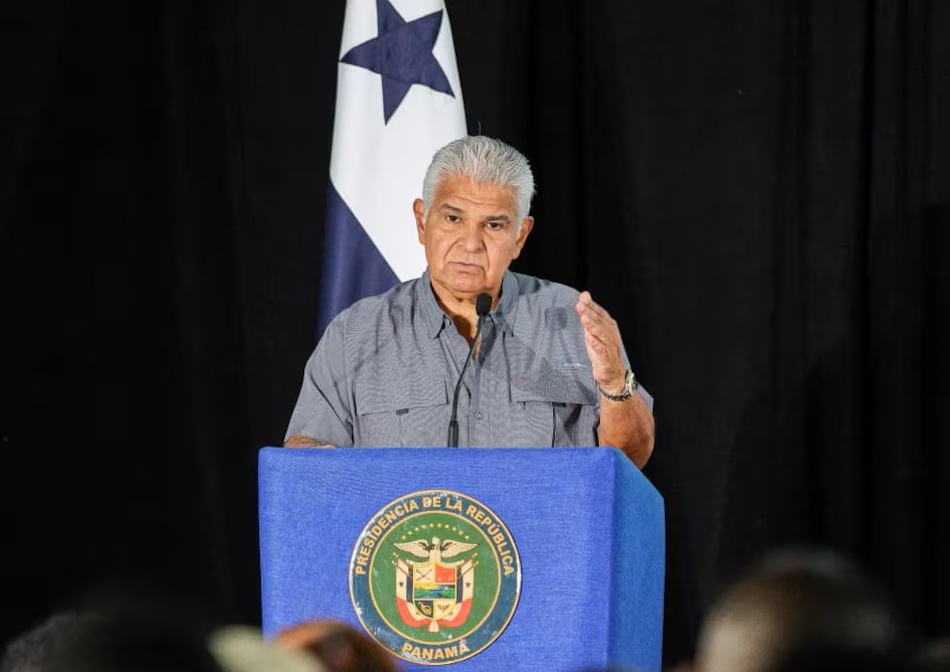
The President of the Republic, José Raúl Mulino, announced this Thursday the suspension of the sale of electricity to Costa Rica, using the measure as a counterweight to the pressures from the Costa Rican government due to the trade differences that both countries have in the agricultural sector. The abrupt halt to energy exports comes in response to ongoing trade disputes and critical public comments made by Costa Rican authorities and in particular newly appointed president, Laura Fernández, regarding longstanding agricultural trade barriers between the two countries. In her first week in office, during an agricultural tour, she accused Panama of arbitrarily applying a “trade blockade” and announced the activation of international diplomatic pressure mechanisms through her Foreign Ministry to defend her potato, onion and dairy producers.
Key Details of the Suspension
- The Cause: The decision was triggered by a renewed push from Costa Rica requesting that Panama open its borders to specific agricultural products—a point of contention and WTO disputes dating back to 2019.
- The Response: President Mulino stated, “Por lo pronto, no hay venta de energía a Costa Rica. Así es sencillo” (For now, there is no sale of energy to Costa Rica. It’s that simple). He expressed surprise and frustration at the Costa Rican government’s public criticisms and demands, prompting him to halt electricity negotiations completely.
- Policy of Reciprocity: Mulino emphasized that Panama must prioritize protecting its own local producers, citing that Costa Rica has maintained blockades against Panamanian goods for over a decade.
- The Trade Dispute: Panama has maintained restrictions on key Costa Rican agricultural exports (including meat and dairy) from 26 Costa Rican processing plants since June 2020, citing sanitary and phytosanitary concerns.
- WTO Ruling: Costa Rica took this to the World Trade Organization (WTO), which ruled in favor of Costa Rica. However, Panama appealed the decision in January 2025.
- Recent Escalation: The dispute escalated further recently as Costa Rica’s newly appointed president, Laura Fernández, heavily criticized Panama’s stance, placing the issue into the hands of the Foreign Minister to pursue international actions.
Regarding electricity specifically, Panama halted energy sales to Central American countries previously, in May 2023. That measure was not retaliatory; it was an emergency step prompted by a severe drought and a looming El Niño phenomenon, designed to safeguard water levels for domestic power plants.
Costa Rica Responds to President Mulino and Assures that it Does Not Need Energy from Panama
The Costa Rican Electricity Institute (ICE) assured this Thursday, May 21, that Costa Rica has sufficient resources to meet national electricity demand and denied that there is an immediate risk of rationing or power outages, following statements by Panamanian President José Raúl Mulino regarding the suspension of electricity sales to that country. “The National Electric System has sufficient resources to meet the country’s electricity demand,” the Costa Rican entity stated, while reiterating its support for the Framework Treaty of the Regional Electricity Market and the principles of free competition that govern transactions between the member countries of the Regional Electricity Market.
The Costa Rican Electricity Institute assured that the country has sufficient capacity to meet energy demand and stated that it currently does not import electricity from Panama.