The Moment Dark Chocolate Stops Tasting Bitter
By Lyn Bishop
Founder, Quetzal Cacao
Certified Organic Cacao Estate,
Panama
Rethinking What Dark Chocolate Tastes Like
Most people expect dark chocolate to taste bitter. They take a cautious bite. They brace for intensity. They assume they will need to get through it for the sake of health.
Then something unexpected can happen. When cacao has been carefully grown and handled, the chocolate is not bitter. It is simply not sweet.
That shift is often the moment dark chocolate begins to make sense. The flavor unfolds instead of fading quickly. The experience becomes less about sweetness and more about balance, finish, and satisfaction.
When a Small Serving Feels Complete
With sweeter chocolate, the first taste arrives quickly and disappears just as fast. You reach for another piece, not because you are hungry, but because the flavor never quite satisfies.
Fine-flavored dark chocolate behaves differently. It melts slowly. The cacao shows itself in layers. The finish lingers longer than the first impression. A small serving begins to feel like enough.
What Percentage Actually Tells You
Chocolate percentage simply tells you how much of the bar is cacao.
An 82% chocolate contains 82% cacao mass and sometimes cocoa butter. The remaining portion is what else is added, most often sugar. In chocolate made with only two ingredients, like the chocolate we craft at Quetzal Cacao, the math is simple. In others, that remaining portion may include emulsifiers, added flavors, and vanillin designed to mask off flavors.
Percentage does not tell you how carefully the cacao was grown, fermented, dried, or roasted. Those steps shape flavor long before sweetness is adjusted.
A carefully crafted 72% chocolate can taste layered and complete. A carefully crafted 90% can taste just as nuanced, simply with less sweetness. The difference comes from the care taken at each stage, not the number printed on the wrapper.
In our chocolate, the 72% still carries expected sweetness, while allowing the cacao to show clearly.
At 82%, which is our most popular selection, sweetness softens further. The cacao becomes more present, the finish lasts longer, and a small serving often feels complete.
At 90%, the sweetness found in our chocolate is minimal. People often expect bitterness, yet are surprised to find nuance instead. Without much sugar, subtler notes are easier to notice.
Even 100% cacao is becoming more common among those seeking no sugar options. When fine-flavor cacao is handled carefully, 100% chocolate is not bitter. It is simply unsweetened.
Percentage does not determine quality. It changes the balance between cacao and sweetness.
The Finish Tells You More Than the First Taste
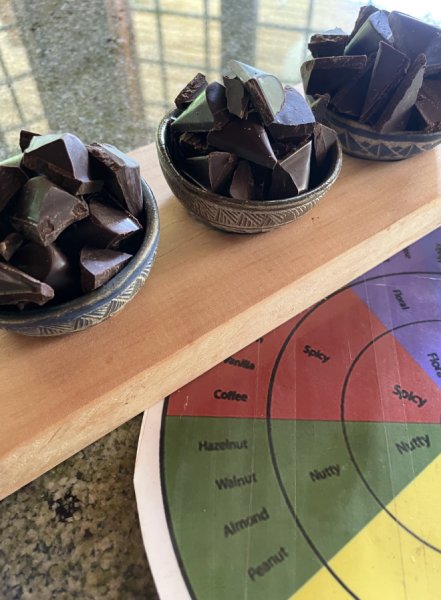
Chocolate reveals itself over time. The first moment may be cacao forward. As it melts, other notes begin to appear. You may notice flavors like spice, coffee, or fruit depending on the cacao and how it was handled.
After the chocolate melts, the flavor continues. Sometimes the finish lingers for several minutes. This lingering taste is what allows a small serving to feel satisfying.
Chocolate designed to be candy fades quickly. Chocolate with balanced cacao stays with you longer and unfolds gradually.
Fine-Flavored Dark Chocolate Isn’t Meant to Be Eaten Quickly
Fine-flavored dark chocolate invites a slower pace. It melts gradually. The flavor develops in stages. The finish lingers.
When sweetness dominates, the flavor fades fast. You reach for more to recreate the experience. When cacao is balanced and expressive, the experience lasts longer. A small serving becomes enough.
Discover Fine-Flavor Dark Chocolate
More people are looking for chocolate with fewer ingredients, less sugar, and clearer origin. They want chocolate that tastes like something, not just something sweet.
This shift is bringing attention to fine-flavor cacao grown and handled with care. Panama fits naturally within this movement, still largely undiscovered by many chocolate lovers beyond its borders. Farmers are working closely with fermentation, drying, and roasting to reveal nuance rather than mask it.
The result is chocolate that tastes different. Not louder. Just more complete.
Taste Chocolate with Attention
Select a bar of dark chocolate you are interested in getting to know. Choose a place where you can enjoy it, either alone or with a friend. Have a glass of water nearby, and if you like, a plain cracker to clear the palate. Avoid perfume or strong aromas.
Begin by looking at the chocolate. Notice the surface and color. Bring it to your nose and take in the aroma before tasting.
Take a small bite. Chew once or twice, then let it melt slowly in your mouth.
As it melts, notice what happens first, what follows, and what remains after the chocolate is gone. The flavor may begin cacao forward, then open to subtler notes. Sometimes the most interesting part comes after it melts, when the finish lingers and a small serving begins to feel complete.
An Invitation to Experience It Together
On Saturday, April 18, I will host a live guided online tasting for those who would like to experience these differences side by side.
Each participant will receive a curated tasting selection of 72%, 82%, and 90% dark chocolate crafted from cacao stewarded on our estate in Chiriquí. Your tasting will be delivered to your nearest Uno Express or Fletes Chavales branch anywhere in Panama.
We will gather in a small evening circle on Zoom. This is a guided tasting where you can ask questions, compare percentages, and notice how each one changes the experience.
Set aside a quiet hour. Pour water, wine, or a favorite spirit. Let this be an evening, not a screen.
Spots are intentionally limited so the tasting remains conversational. Registration closes April 12 so tasting kits can be shipped in time.
If you would like to join us, you may reserve your place here:
lynbishop.com/chocolate-tasting-kit
Dark chocolate does not need to be bitter.
Sometimes what makes it memorable is the care taken long before the bar is wrapped.
Lyn Bishop grows cacao at Finca Las Heliconias in Chiriquí Province, Panama, where she founded Quetzal Cacao, an organic tree-to-bar chocolate brand.