
More Than 1,196 tons of Garbage Collected in Panama Bay in Four Months.
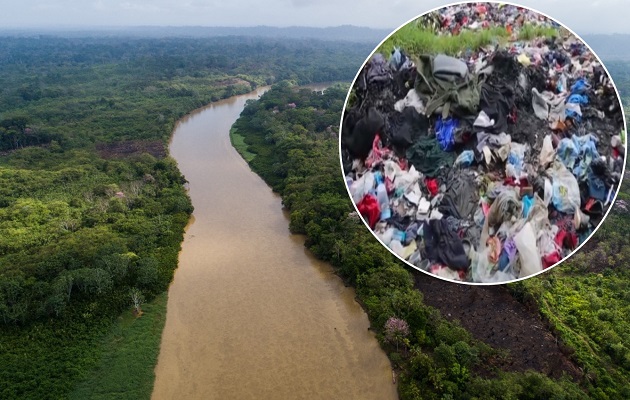
The figure reveals the scale of the problem: 1,196 tons of trash have been removed from Panama Bay between August and November as part of a cleanup project encompassing the Matías Hernández and Río Abajo rivers, the mangroves, and the Pacific coastline between the Amador Causeway and Costa del Este. The initiative is being led by the Municipality of Panama.
Work began last August to remove the accumulated waste from these natural areas. But beyond the tons collected, a fundamental question remains: how much trash ends up in the sea, and where does it come from?
Each year, 102,229 tons of land-based waste reach the sea in Panama, according to an estimate prepared for the United Nations Environment Programme (UNEP). This equates to about 280 tons per day. Of that volume, the province of Panama contributes 20,287 tons annually, nearly a fifth of the national total. This is a significant figure in a region that concentrates a large portion of the country’s population and economic activity.
Faced with this situation, the Municipality of Panama launched a cleanup plan four months ago with an investment of $4.8 million and a 425-day implementation period. The intervention covers 15 kilometers of riverbanks, distributed across four work fronts, and six hectares under restoration.
At these locations, crews collect, stockpile, and remove waste that, in some areas, had been accumulating for decades. The work encompasses tributaries of the Río Abajo, the Matías Hernández River, and various sections of the Pacific coast of Panama Bay.
Much of this waste follows the course of rivers to their mouths. Along the way, it affects mangroves and other coastal ecosystems before reaching the open sea. Therefore, the intervention also aims to reduce the amount of waste reaching these areas.
The accumulation of garbage is not solely an environmental issue. In communities near waterways, such as Juan Díaz, Parque Lefevre, and San Francisco, this waste can create conditions that affect public health, particularly due to the proliferation of mosquitoes that transmit dengue fever and other diseases.
The trash that ends up in the bay has several entry points. Among the river basins that flow into it are those of
Tocumen, Cabuya, Tapia, Juan Díaz, Matías Hernández, Matasnillo, and Río Abajo. Their waterways pass through densely populated areas before reaching the coast.
The composition of the waste also offers clues about the nature of the problem. A characterization carried out on the collection network found that cellulose represented 56.5% of the material by weight, followed by organic matter at 15.2%, and textiles at 9.55%. The report cautions that these results correspond to a specific system and cannot be directly extrapolated to all marine litter.
Municipal authorities insist that removing accumulated waste is not enough. It is also necessary to prevent it from continuing to reach rivers and streams from streets and other public spaces. The Sub-Directorate of Resilience and Climate Change of the Municipality of Panama asks citizens to dispose of their waste properly and reminded them that throwing it into waterways and public spaces constitutes a crime.